
Is the Intel Apple Foundry story finally turning Intel’s US fab gamble into a real threat to TSMC’s dominance?

How is Intel trading on the Apple news?
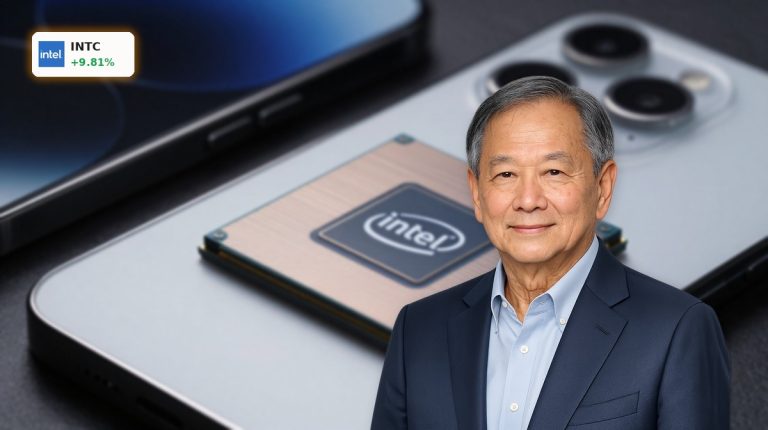
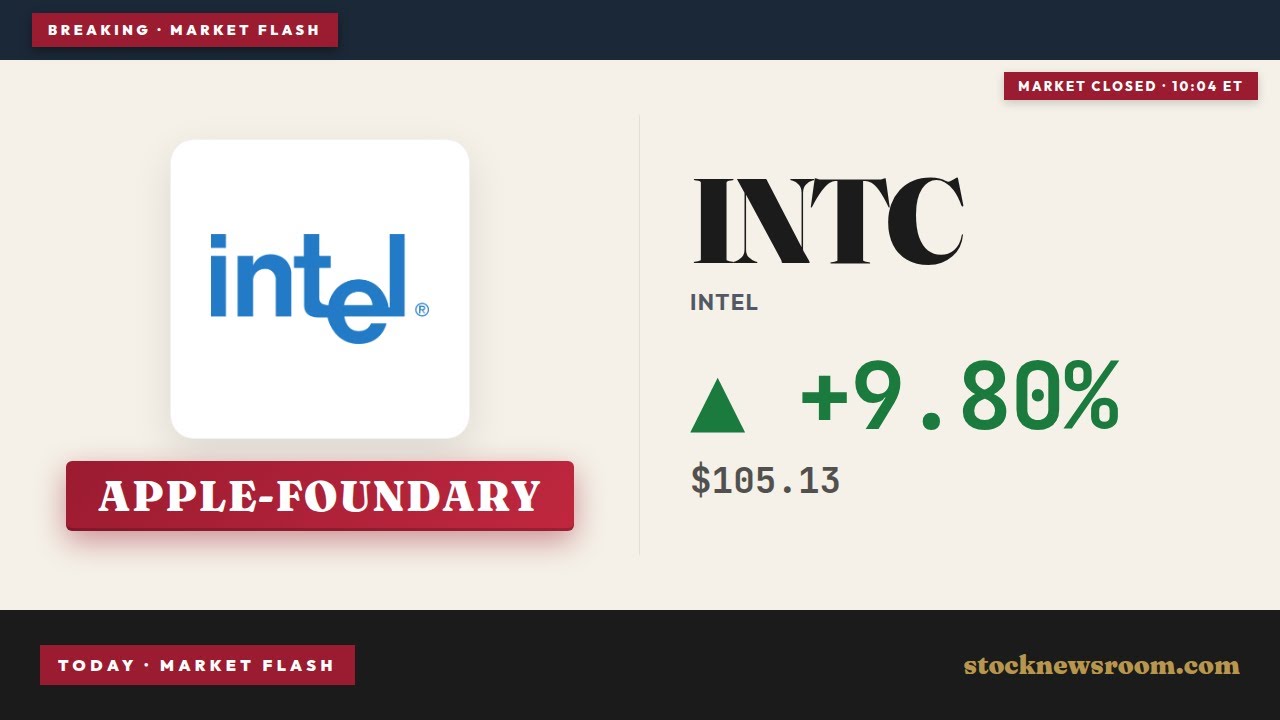
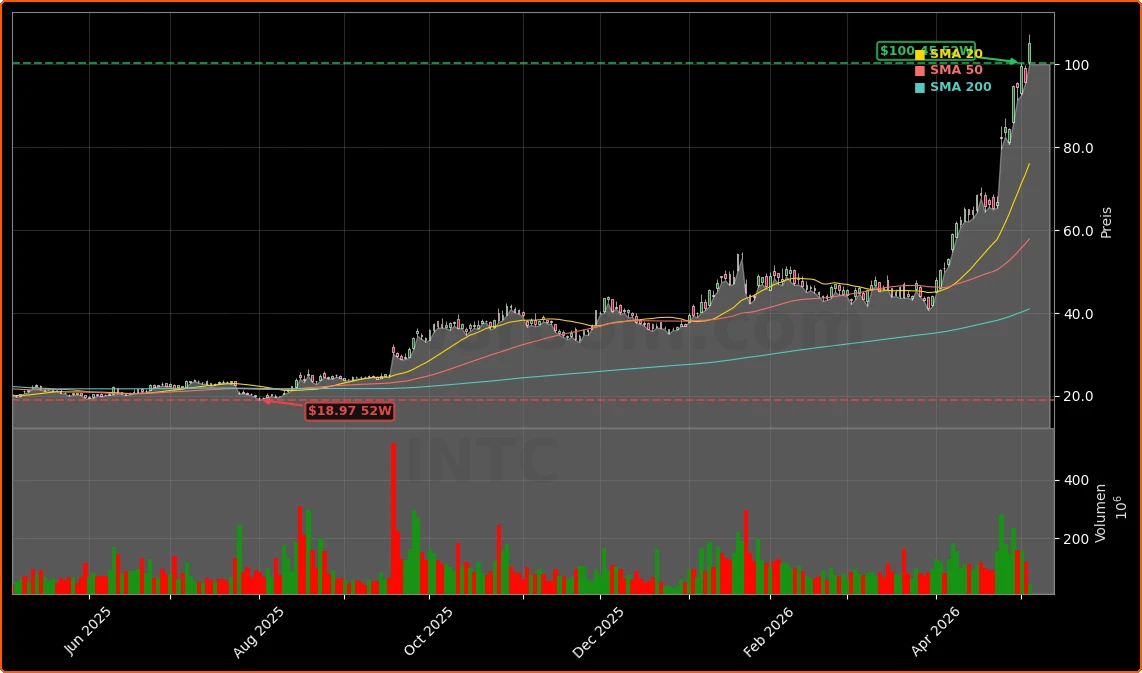
Intel Corporation shares traded sharply higher on Tuesday, recently changing hands around $105.15, up roughly 9.8% from Monday’s close of $95.80. The move extends a stunning multi-quarter rally in which the stock has multiplied several times from its 2023–2024 lows, outpacing much of the broader semiconductor space on the NASDAQ and S&P 500.
The latest catalyst is renewed focus on the Intel Apple Foundry angle: reports that Apple has held preliminary talks with Intel and Samsung about producing its main device processors in the United States. Traders are positioning for the possibility that Intel’s massive US fab build-out – heavily backed by Washington – could finally secure a marquee external customer after years of lagging foundry ambitions.
The rally also comes on top of strong Q1 earnings in late April, when Intel crushed Wall Street expectations and highlighted booming demand for data center CPUs tied to agentic AI workloads. That results surprise has already pushed Intel into the top tier of major semiconductor holdings in AI-focused ETFs.
Why is Apple reconsidering its chip supply?
Apple today relies overwhelmingly on Taiwan Semiconductor Manufacturing (TSMC) to fabricate its custom-designed processors, from A-series chips in the iPhone to M-series silicon in the Mac. Recent years, however, have exposed the vulnerability of this single-supplier model, as chip shortages and geopolitical tensions put a ceiling on Apple’s growth and raised questions about long-term supply security.
Against that backdrop, Apple executives have reportedly opened early-stage discussions with Intel and Samsung about shifting at least part of future production to US-based fabs. Site visits to a Samsung facility under development in Texas and talks around Intel’s upcoming advanced US plants suggest Apple is exploring concrete options rather than merely testing the waters. Any Intel Apple Foundry deal would likely start as a secondary or backup source, but even a partial allocation of iPhone or Mac volumes would be a major win for Intel’s foundry ambitions.
Apple is not seeking a “better” manufacturer than TSMC; instead it wants redundancy, geographic diversification and political alignment with US policymakers who have pushed Big Tech – including NVIDIA and Apple – to commit to American manufacturing. That makes Intel’s US-centric footprint and deep government backing particularly attractive.
Can Intel match TSMC and Samsung on execution?
The biggest question for investors is whether Intel can deliver the reliability, yields and capacity that Apple demands. Industry watchers broadly agree that TSMC still leads the pack in cutting-edge process technology and large-scale, high-yield production. Samsung has narrowed the gap, especially in advanced nodes and 3D packaging, but Intel is playing catch-up after years of execution missteps.
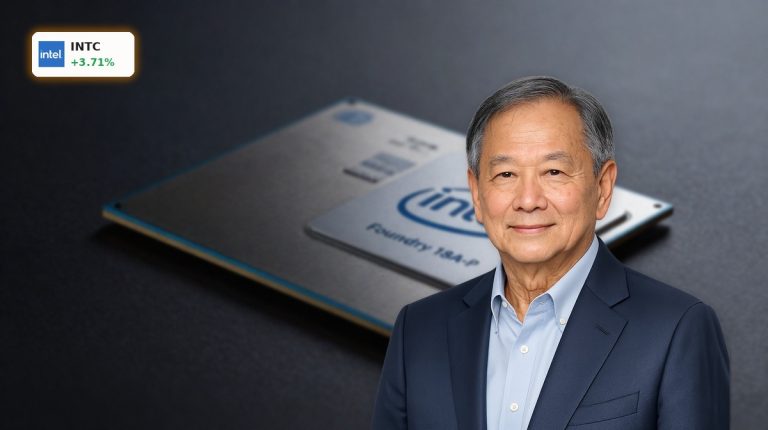
Intel’s strategy has been to leverage unprecedented US support to close that gap. The company has secured about $11.1 billion from the US government through a mix of CHIPS Act awards, Secure Enclave funding and a direct equity stake, giving Washington close to a 10% holding that has already produced tens of billions in paper profits. Those funds are helping finance new leading-edge fabs and advanced packaging lines designed explicitly to attract external customers like Apple.
On the technology side, Intel has overhauled its leadership to accelerate the shift from PC-centric chipmaker to diversified foundry and AI powerhouse. Qualcomm veteran Alex Katouzian now runs the “Client Computing and Physical AI Group,” tasked with expanding Intel silicon into robotics, XR and autonomous systems. New CTO Pushkar Ranade is steering long-horizon bets in quantum, photonics and neuromorphic computing, signaling that Intel intends to compete at the frontier, not just defend legacy CPU share.
How does Intel Apple Foundry fit into the AI boom?
Wall Street’s renewed enthusiasm for Intel is grounded less in smartphones and more in AI infrastructure. While rivals like NVIDIA dominate high-end GPUs, Intel’s strength in CPUs has become critical as enterprises deploy “agentic AI” systems that rely on CPUs to orchestrate, pre-process and route workloads. Recent commentary from AI infrastructure vendors such as Broadcom’s VMware Cloud Foundation 9.1, which explicitly optimizes for hybrid stacks across AMD, Intel and NVIDIA hardware, shows how CPUs and GPUs are converging in real-world deployments.
A successful Intel Apple Foundry relationship would layer a second growth engine on top of this AI story. Foundry revenues are typically high visibility, capital-intensive and long-dated, which could help smooth Intel’s earnings cycles and justify premium valuation multiples more akin to TSMC than a traditional PC-chip supplier. It would also validate Intel’s multi-year bet that once capacity tightened globally, outside designers would be forced to consider non-TSMC options.
Institutional investors are taking notice. MarketBeat recently reported that M&T Bank boosted its Intel stake by 6.5% in Q4, part of a broader trend that has pushed institutional ownership north of 60%. While analyst opinions remain mixed – with firms like Goldman Sachs and Morgan Stanley previously cautious on Intel’s execution risk – the combination of AI demand, government support and potential Apple volumes is forcing a reassessment of long-term earnings power and price targets across Wall Street research desks.
Related Coverage
For a deeper dive into Intel’s leadership overhaul and what it means for the AI strategy behind the Intel Apple Foundry narrative, readers can explore Intel Leadership -3.8% Plunge: Can New AI Chiefs Deliver?. That analysis looks at whether the new AI-focused management team can turn short-term volatility into sustained competitive advantage versus rivals in data center and foundry markets.
In the end, the Intel Apple Foundry story captures how AI demand, supply-chain risk and US industrial policy are converging to reshape the chip industry. For investors, Intel now offers not only a leveraged play on AI CPUs but also a credible, if still unproven, shot at becoming a strategic US foundry partner to Apple. The next key milestones will be any concrete Apple orders and Intel’s execution on new US fabs, which could cement the company’s revival as a long-term Wall Street winner.