Is the Applied Optölectronics Plunge a temporary reset, or an early warning that AI network spending is starting to cool?

Why Is Applied Optoelectronics Plunge So Severe?
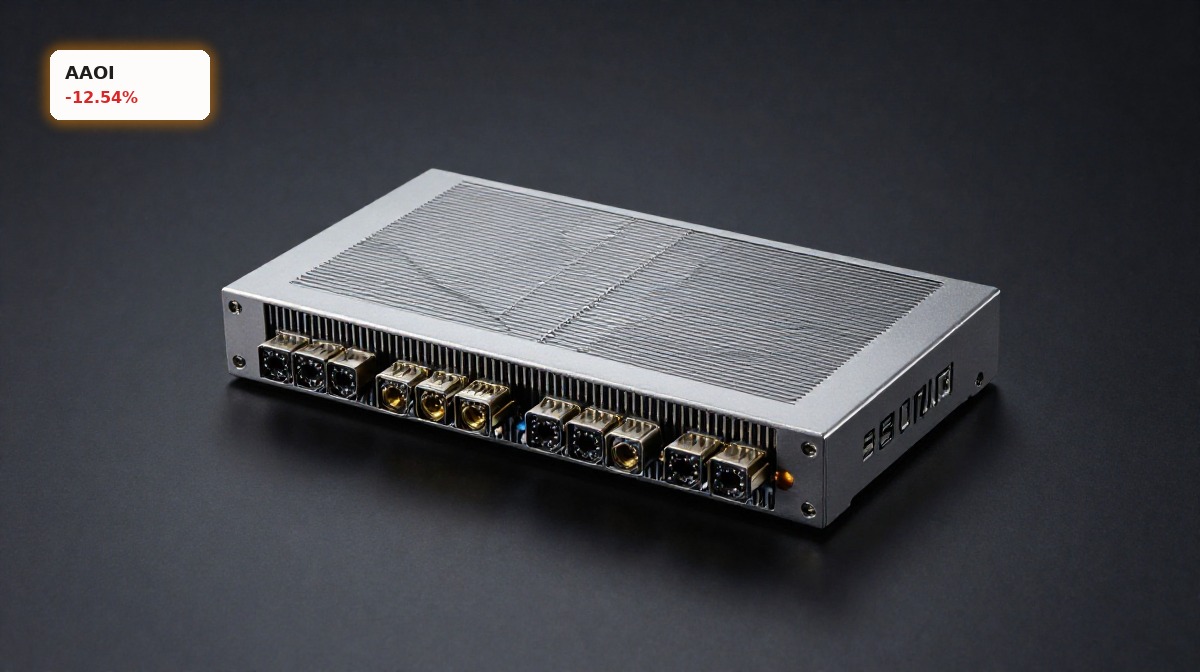
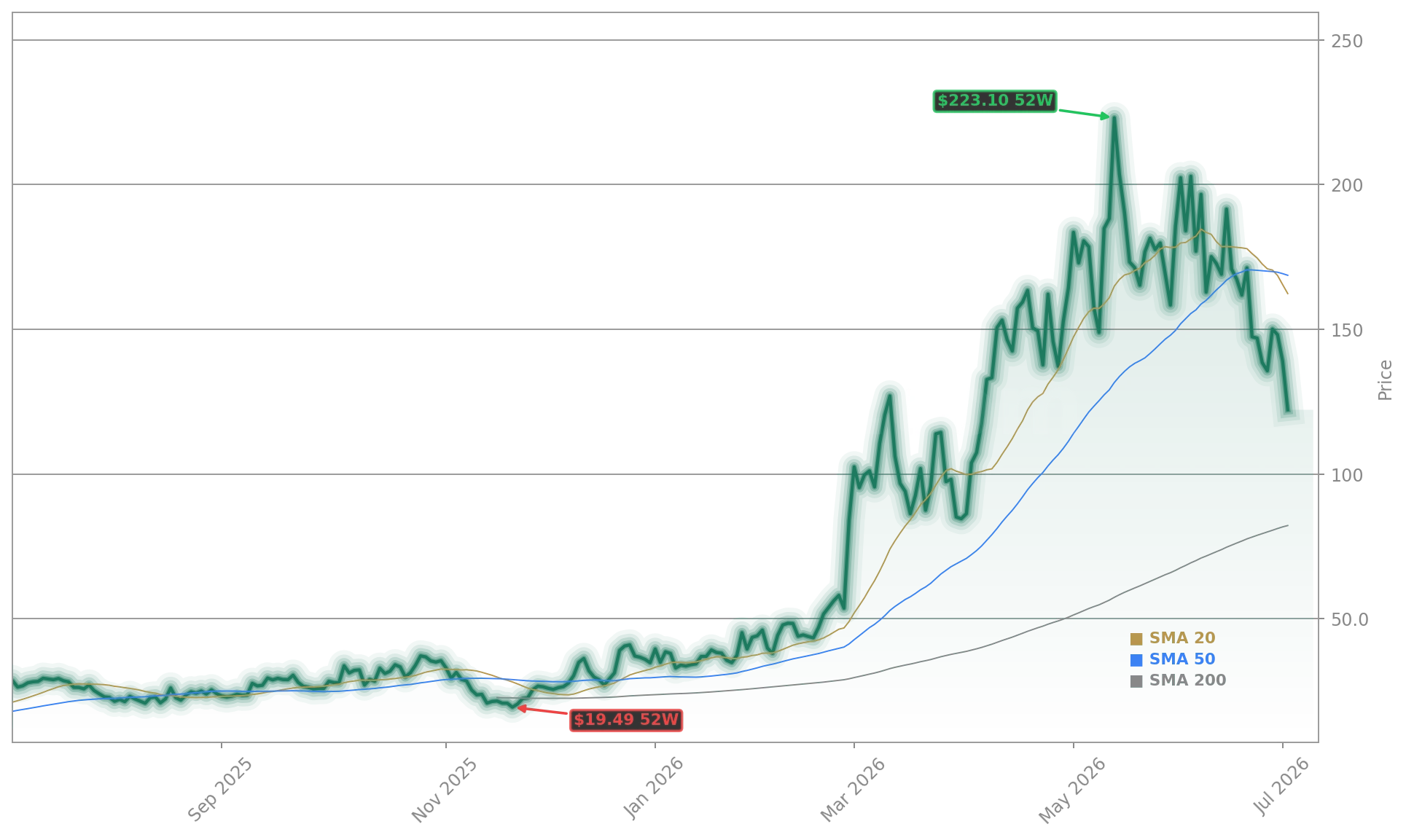
Applied Optoelectronics, Inc. is down 12.54% to $121.57 as of 21:29 CET — well below its 100-day moving average of $132.68 and nearly 30% beneath its 50-day SMA of $168.60. The Applied Optoelectronics Plunge comes amid mounting investor concerns over hyperscaler capital expenditure discipline. While Meta, NVIDIA, and other cloud leaders continue to deploy record AI infrastructure budgets, recent guidance from multiple Tier-1 data center operators signals a tactical pause in 800G optical module procurement — a core revenue driver for Applied Optoelectronics, Inc. Morgan Stanley analysts flagged this shift in a note issued this morning, downgrading the stock to ‘Underweight’ and cutting their 12-month price target to $92.00 from $145.00.
How Does This Compare to Broader Tech?
The Applied Optoelectronics Plunge is part of a wider selloff in photonics and interconnect stocks. Shares of Lumentum (LITE) and II-VI (IIVI) fell 7.2% and 6.8%, respectively, while the iShares U.S. Semiconductor ETF (SOXX) dropped 3.1% — underperforming the S&P 500 by 220 basis points. Unlike Apple or Tesla, which benefit from diversified revenue streams and consistent profitability, Applied Optoelectronics, Inc. remains unprofitable on a GAAP basis and carries a 92% institutional ownership concentration, amplifying volatility. Its 69.4% annualized five-year return — vastly outpacing the Nasdaq 100 — has now reversed nearly 20% from its May 13, 2026 peak of $199.48.
What’s Behind the Hyperscaler Uncertainty?
Investors are reacting to subtle but material shifts in cloud infrastructure planning. While total AI capex remains elevated, the pace of 800G deployment has slowed as hyperscalers prioritize thermal efficiency and power density over raw bandwidth — favoring co-packaged optics and silicon photonics solutions from larger, vertically integrated suppliers. Applied Optoelectronics, Inc. lacks the scale or chip-level integration of NVIDIA’s networking stack or Cisco’s (CSCO) optical portfolio. Citigroup analysts noted in a July 1 report that ‘AAOI’s exposure is largely to discrete pluggable optics — the segment most vulnerable to architectural shifts and pricing pressure.’ The firm maintained its ‘Neutral’ rating but slashed its 2026 revenue forecast by 18%.
Is Technical Damage Reversible?
Technically, the damage is significant. The Relative Strength Index (RSI) sits at 36.1 — signaling strong selling pressure — and the MACD histogram has turned decisively negative. Applied Optoelectronics, Inc. is now trading 29.9% below its 50-day SMA and 10.9% under its 100-day SMA, while still holding above its 200-day average ($82.22), preserving the longer-term bull thesis. Key near-term resistance sits at $119.00 — a pivot level where short-term rallies have repeatedly stalled. RBC Capital Markets reiterated its ‘Sector Perform’ rating but warned that ‘a sustained break below $110 could trigger algorithmic selling and accelerate the downtrend.’
What’s Next for AI Infrastructure Stocks?
AAOI’s exposure is largely to discrete pluggable optics — the segment most vulnerable to architectural shifts and pricing pressure.— Citigroup analysts
The Applied Optoelectronics Plunge is less about company-specific failure and more about Wall Street’s recalibration of AI infrastructure valuation discipline. With the S&P 500 up 14.2% YTD and the NASDAQ 100 up 22.7%, investors are rotating into higher-quality, cash-generative names. Applied Optoelectronics, Inc. remains a critical supplier for 800G and emerging 1.6T optical interconnects — but without near-term profitability or a major hyperscaler supply agreement, its risk premium is compressing sharply. Goldman Sachs analysts estimate that 70% of AAOI’s 2026 revenue is tied to just three customers, heightening concentration risk in a tightening capex environment.