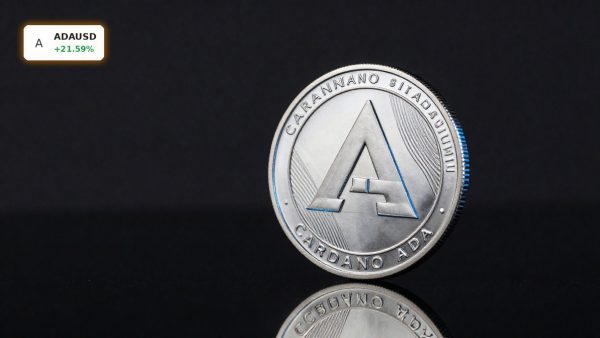

Can the historic Cardano Hard Fork trigger a permanent ADA rally, or is this double-digit surge just a temporary flash in the pan?

How Does the Cardano Hard Fork Impact Governance?
The Van Rossem upgrade was executed on July 18, 2026, at 21:44 UTC, transitioning the network to Protocol Version 11 without any downtime. What makes this Cardano Hard Fork unique is that it represents the first upgrade in the blockchain’s history to be approved entirely through decentralized, on-chain governance. Delegated representatives (dReps) voted 77.63% in favor, stake pool operators (SPOs) provided 52.7% approval, and the Constitutional Committee voted unanimously 6 to 0. Notably, Input Output, the development firm behind the original codebase, was not involved in coordinating the launch, proving that the ecosystem can now self-govern.
Beyond governance, the upgrade introduces critical technical enhancements. It significantly lowers the execution costs for Plutus smart contracts and integrates advanced cryptographic tools, such as BLS12-381 multi-scalar multiplication. These features provide developers with cheaper and more flexible infrastructure, laying the groundwork for the upcoming Ouroboros Leios scaling upgrade later this year, which aims to boost throughput to over 1,000 transactions per second.
Will Large Investors Drive Cardano Higher?
While retail interest has shown some hesitation, institutional and large-scale investors are aggressively accumulating ADA. On-chain data indicates that whale wallets holding between 10 million and 100 million ADA have increased their share of the total supply to 38.13%. Furthermore, wallets with more than one million ADA now control 67.5% of the circulating supply, representing the highest concentration of large-scale ownership since 2023. This massive accumulation during a prolonged market consolidation highlights strong institutional conviction in the network’s long-term utility.
Traditional financial integration is also accelerating. Clearstream, the post-trade services provider owned by Deutsche Börse, recently integrated ADA into its regulated digital custody product. Additionally, CME Group has expanded its offerings with Cardano futures, providing Wall Street with a robust framework for institutional trading.
What Do Analysts Predict for Cardano in 2026?
Despite the technical success of the Cardano Hard Fork, ADA remains roughly 95% below its September 2021 all-time high of $3.10. However, the technical indicators are showing signs of a solid bottom formation. The token recently broke out of its horizontal consolidation range between $0.15 and $0.16, establishing a higher low structure.
According to analysts at Changelly, ADA is projected to trade within a range of $0.15 to $0.17 for the remainder of July 2026. Looking further ahead, CoinCodex models a price target between $0.17 and $0.24 for the rest of the year. Some market commentators point to Grayscale’s spot ADA ETF filing with the SEC as a potential major catalyst. The SEC review window opens on August 9, following six months of regulated CME futures trading. If approved, some analysts believe ADA could rally toward $0.45, though immediate gains may remain capped by broader macroeconomic factors.
For investors tracking the broader layer-1 landscape, comparing these developments with rival networks is essential. Our previous analysis in Cardano Hard Fork: ADA Surges 9% as Upgrade Nears Key Vote explores how the initial market momentum built up ahead of this historic governance transition. Meanwhile, the entire smart-contract sector is experiencing dramatic shifts, as detailed in Ethereum Forecast: Why Wall Street Is Shocked by $22,000 Target, which examines the massive institutional expectations surrounding Cardano’s primary competitor, Ethereum.
The successful activation of the Cardano Hard Fork marks a monumental achievement in decentralized blockchain governance and technical efficiency. For long-term investors, the combination of growing whale accumulation and upcoming scaling upgrades suggests a solid foundation is being built for future recovery. As institutional products like potential spot ETFs move closer to regulatory decisions, the network is well-positioned to capture renewed capital inflows in the coming quarters.