
Can the Cardano Upgrade turn whale conviction into a lasting breakout, or is this rally just another short-lived crypto head fake?

What Does the Cardano Upgrade Actually Deliver?
The upcoming Cardano Upgrade centers on the RealFi testnet launch scheduled for July 6, 2026, followed by mainnet deployment shortly after. According to The Crypto Basic, the initiative aims to bridge blockchain liquidity with real-world economic activity — targeting financial inclusion for the unbanked through verifiable, asset-backed yield mechanisms. Parallel to this, the Leios testnet ‘Musashi Dojo’ went live on June 23, testing a 100x throughput upgrade — scaling capacity from ~10 to ~1,000 transactions per second. Also pending is the van Rossem hard fork, which would reduce smart contract execution costs, subject to community vote. These developments collectively represent the most ambitious technical expansion in Cardano’s decade-long history — and the first to directly confront its chronic adoption gap.
Why Are Whales Buying While Retail Flees?
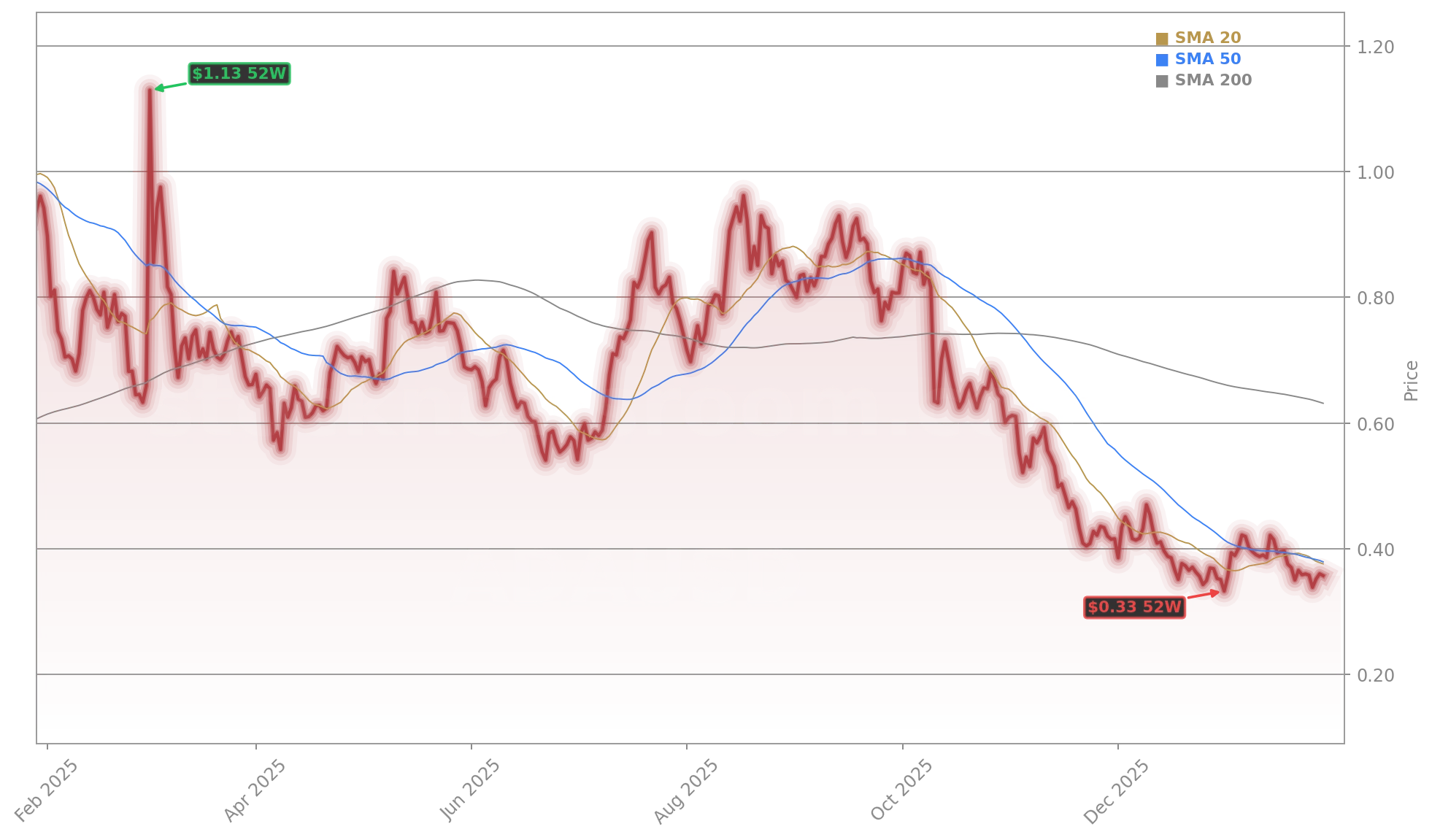
Despite a 40% June collapse and daily active addresses hitting a 45-day low, wallets holding 10–100 million ADA increased their share of the total supply from 37.66% to 38.13%, per on-chain analytics. This divergence — smart-money accumulation amid broad retail exhaustion — mirrors patterns seen before prior recoveries in 2021 and 2023. Notably, the $0.18 level now acts as immediate resistance, a psychological and technical threshold that could define near-term momentum. Yet analysts caution that structural weakness remains: DeFi total value locked has plunged to $82 million — down from $266 million a year ago — and TapTools, one of Cardano’s longest-running analytics platforms, shuttered after four years. Founder Charles Hoskinson publicly acknowledged a ‘wave of failures’ across ecosystem dApps, citing governance gridlock and bear-market pressure on developers.
How Does Cardano Stack Up Against Its Peers?
While NVIDIA powers AI infrastructure and Apple navigates regulatory headwinds in the S&P 500, Cardano competes in a crowded Layer-1 arena where network effects dominate. Ethereum (ETH) maintains over $35 billion in DeFi TVL; Solana (SOL) recently crossed $8 billion. Cardano’s $82 million pales in comparison — and its academic governance model has yet to translate into developer traction. Morgan Stanley analysts noted in a June 2026 note that ‘Cardano’s theoretical rigor has not yet yielded practical adoption velocity,’ contrasting it with protocols like Tesla-backed energy-token experiments or stablecoin-integrated chains gaining traction in emerging markets. Meanwhile, Grayscale’s SEC filing for a Cardano ETF (GADA) — now publicly accessible via SEC EDGAR — adds regulatory legitimacy but no near-term catalyst for capital inflow.
Is This a Real Reversal — or Just Seasonal Noise?
Historical seasonality offers limited comfort: July has delivered a median +5.1% gain for ADA over the past eight years, but August and September have been consistently negative — with losses in seven of eight Augusts. This year’s rally coincides with both the Cardano Upgrade timeline and CME ADA futures reaching their six-month minimum trading period on August 9 — a potential catalyst for institutional positioning. Still, Citigroup’s digital asset team recently downgraded ADA to ‘Neutral’ with a $0.20 price target, citing ‘lack of near-term catalysts beyond testnet milestones.’ RBC Capital Markets echoed that view, labeling the current move ‘technically driven but fundamentally unanchored’ — emphasizing that even the most optimistic forecasts cap upside at ~50% from current levels, given ADA’s $5.8 billion market cap and 95% discount to its $3.09 all-time high.
What Comes After the Cardano Upgrade?
Cardano’s theoretical rigor has not yet yielded practical adoption velocity.— Morgan Stanley
The RealFi testnet launch is only the first act. Success hinges on developer onboarding, real-world asset (RWA) integrations, and measurable traction in emerging-market banking corridors. Absent those, the Cardano Upgrade risks becoming another technical milestone without economic resonance — much like prior forks that failed to move the needle on active users or TVL. Meanwhile, competitive pressure intensifies: Ethereum’s Pectra upgrade looms in Q4, and Solana continues scaling with sub-second finality. For U.S. investors holding ADA as a satellite crypto position, the Cardano Upgrade presents a high-risk, low-duration trade — not a core portfolio allocation. The next inflection point arrives on August 9, when CME futures reset — and institutional flow decisions will reveal whether this rally has legs.