
Can the Cardano Upgrade turn whale accumulation into a lasting ADA breakout, or is this just another crypto head fake?

What Does the Cardano Upgrade Mean for ADA?
The upcoming Cardano Upgrade represents more than incremental improvements — it’s a foundational shift toward RealFi (Real-World Finance), aiming to bridge blockchain liquidity with tangible economic activity. Slated for July 6, the RealFi testnet will enable tokenized real-world assets, cross-border micro-lending, and decentralized identity solutions for the unbanked. Unlike prior upgrades focused on scalability or governance, this initiative directly targets revenue-generating use cases long absent from Cardano’s ecosystem. Concurrently, the Musashi Dojo testnet — launched June 23 — has already demonstrated a 100x throughput boost, scaling from ~10 to ~1,000 transactions per second. That performance leap is essential to support RealFi’s latency-sensitive applications, including payroll settlements and insurance claims processing.
Why Are Whales Buying While Retail Exits?
On-chain analytics confirm a sharp divergence: wallets holding 10–100 million ADA increased their share of total supply from 37.66% to 38.13% over the past 10 days — even as daily active addresses fell to a 45-day low. This ‘smart money’ accumulation coincides with ADA’s rebound from $0.15 to $0.18, breaking through a critical resistance level last tested in April. The timing is no accident: insiders note that Grayscale’s SEC-filed Cardano ETF application (GADA) remains under active review, and CME ADA futures will exit their mandatory six-month lock-up window on August 9 — potentially unlocking institutional hedging and arbitrage flows. Notably, this accumulation occurs despite Cardano’s DeFi TVL remaining subdued at $82 million — down from $266 million a year ago — underscoring that the Cardano Upgrade is being priced as a catalyst for future capital inflows, not current metrics.
How Does Cardano Compare to Ethereum and Solana?
Cardano’s RealFi push arrives amid intensifying competition. While Ethereum focuses on rollup-centric scaling and Solana emphasizes high-frequency trading infrastructure, Cardano is betting on regulatory-compliant, audit-driven financial primitives — a niche increasingly valued by central banks and development finance institutions. Morgan Stanley analysts recently highlighted Cardano’s peer-reviewed governance as a structural advantage in emerging markets, where legal enforceability and audit trails matter more than raw speed. Still, Cardano’s developer activity remains well below Solana’s (32% fewer GitHub commits over Q2) and Ethereum’s (68% less active smart contract deployments). The success of the Cardano Upgrade will hinge on whether RealFi’s early use cases — including a pilot with the Philippines’ Bangko Sentral for remittance tokenization — attract third-party builders at scale.
What’s Next After the RealFi Testnet?
Following the July 6 testnet launch, Cardano’s community will vote on the van Rossem hard fork — a critical update that slashes smart contract execution costs by up to 70%, directly addressing a key barrier to DeFi adoption. If approved, mainnet deployment is expected by late August. Separately, the Cardano Summit — previously stalled by treasury vote failures — has been rescheduled for October in Lisbon, with confirmed participation from the World Bank’s Digital Economy Unit and the African Development Bank. Bloomberg reports that three Tier-1 custodians are preparing ADA custody infrastructure ahead of potential GADA ETF approval — a development that could bring $1.2 billion in passive inflows within 90 days of SEC clearance. That timeline puts ADA squarely in the crosshairs of Q3 2026 portfolio rebalancing cycles on Wall Street.
Is ADA a Buy for U.S. Investors Now?
This isn’t just another upgrade — it’s Cardano’s first real shot at becoming infrastructure, not infrastructure theater.— Charles Hoskinson, Cardano Founder
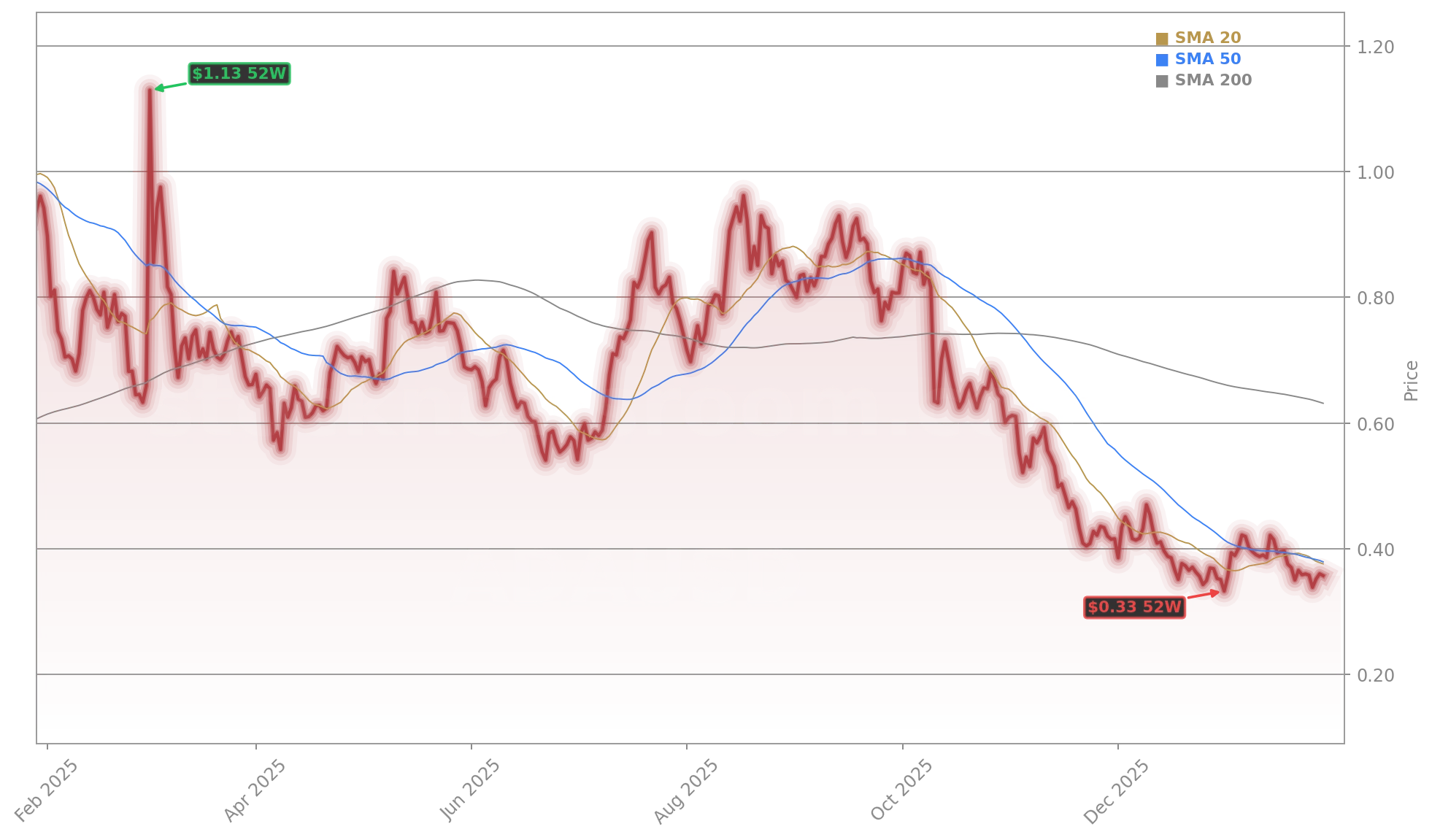
At $0.18, ADA trades 95% below its all-time high of $3.09 — but valuation alone doesn’t justify exposure. RBC Capital Markets maintains a ‘Sector Perform’ rating on ADA, citing ‘limited near-term catalysts beyond the RealFi testnet’ and ‘uncertain monetization pathways.’ Citigroup analysts note that ADA’s 52-week range ($0.12–$0.21) implies tight technical boundaries — meaning any breakout above $0.21 could trigger algorithmic long entries across NASDAQ-linked crypto ETFs. For U.S. investors, ADA remains a high-conviction, low-weight satellite position: its upside is asymmetric only if the Cardano Upgrade delivers measurable onboarding of real-world capital — not just code. With the S&P 500 trading near record highs and volatility subdued, ADA offers portfolio diversification into a protocol with tangible infrastructure ambitions — not just speculative tokenomics.