
Can the Cardano Upgrade finally turn whale conviction into a real comeback, or is this just another crypto head fake?

What Does the Cardano Upgrade Actually Deliver?
The Cardano Upgrade launching July 6 introduces the RealFi Testnet — a foundational layer designed to bridge on-chain liquidity with real-world economic activity, including unbanked financial services and tokenized real-world assets (RWAs). Unlike previous hard forks, this iteration integrates parallel transaction processing (via the Musashi Dojo Testnet, live since June 23) and targets a 100x throughput increase — from ~10 to ~1,000 transactions per second. Crucially, it also prepares the network for the van Rossem Hard Fork, which will slash smart contract deployment costs by up to 85%, a key bottleneck cited by developers who abandoned the ecosystem in 2025. While Ethereum (ETH) and Solana (SOL) continue to lead in DeFi TVL, Cardano’s focus on verifiable governance and peer-reviewed architecture remains its differentiator — if execution delivers.
Why Are Whales Buying While Retail Flees?
On-chain data confirms a stark divergence: wallets holding 10M–100M ADA increased their share of the circulating supply from 37.66% to 38.13% — even as daily active addresses plunged to a 45-day low. This ‘smart money’ accumulation pattern — observed historically before multi-month rallies in 2021 and 2023 — suggests conviction around the Cardano Upgrade timeline. Notably, the surge coincides with Grayscale’s public SEC EDGAR filing for the GADA spot ETF, which, if approved, would provide institutional-grade exposure on NYSE and NASDAQ-listed platforms. For U.S. portfolio managers, ADA’s current $5.8 billion market cap represents a high-risk, high-conviction satellite position — especially as S&P 500 tech stocks trade near all-time highs and crypto correlations to Nasdaq remain elevated.
How Does Cardano Compare to Major Competitors?
Cardano’s 2026 challenges are structural, not cyclical. Its DeFi TVL has cratered to $82 million — down from $266 million a year ago — while Ethereum’s TVL holds near $42 billion and Solana’s exceeds $7 billion. Even Tesla’s recent foray into energy-backed tokenization highlights how real-world integration is now table stakes. Charles Hoskinson’s June warning about an impending ‘wave of failures’ across Cardano dApps reflects deeper ecosystem fragility: TapTools, a four-year-old analytics platform, shuttered in June, and the community rejected funding for the 2026 Cardano Summit. By contrast, Ethereum’s upcoming Pectra upgrade and Solana’s Firedancer integration are backed by venture capital, corporate partnerships, and developer grants — none of which Cardano currently commands at scale. Citigroup analysts recently downgraded ADA’s near-term catalyst score to ‘Low’, citing ‘insufficient evidence of developer re-engagement’.
What’s the Real Catalyst Window for U.S. Investors?
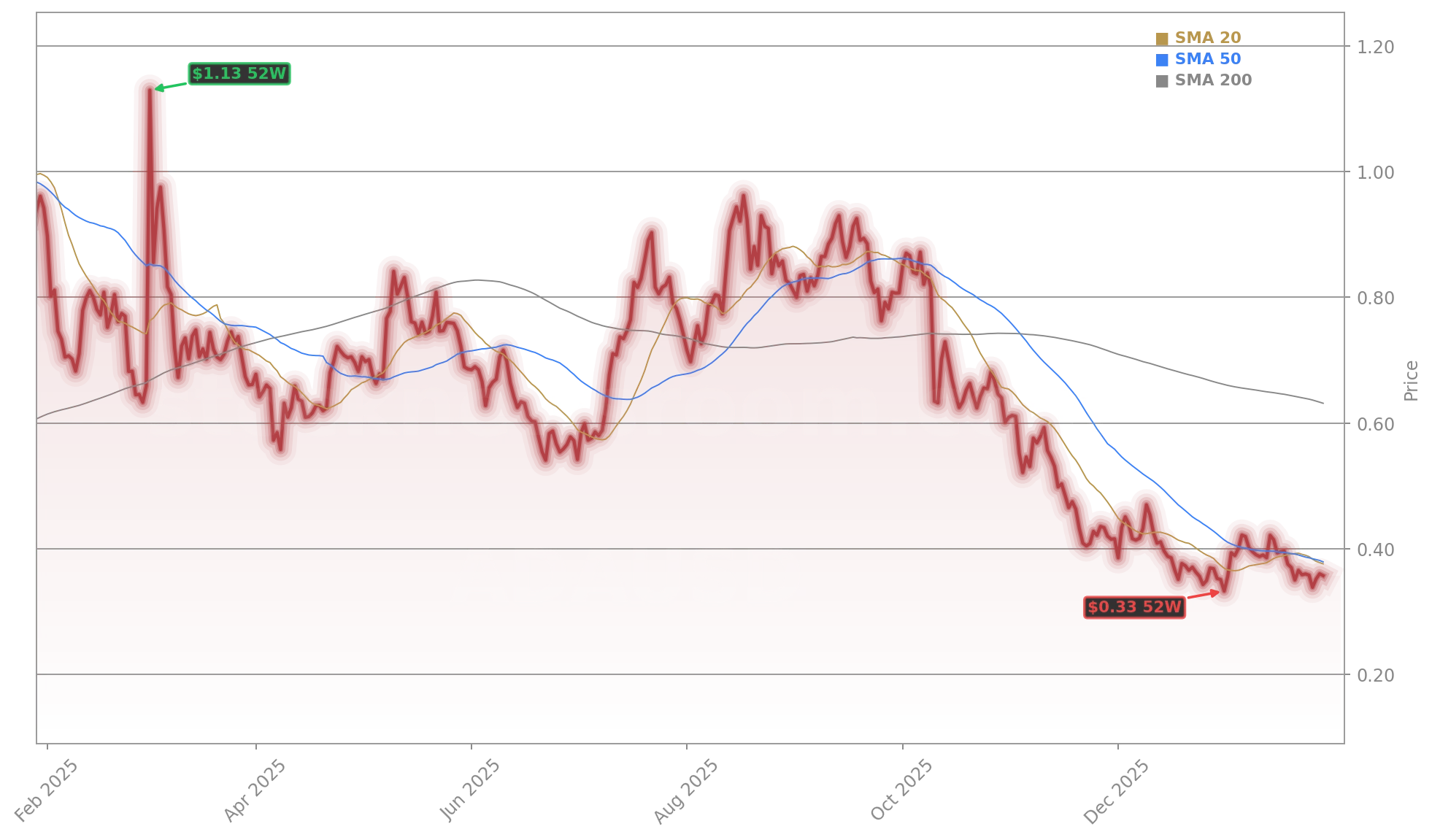
July 6’s RealFi Testnet launch is just the opening act. The true catalyst window opens August 9, when CME’s ADA futures contracts complete their mandatory six-month trading period — potentially triggering institutional rebalancing and new derivative product launches. Concurrently, the SEC’s review timeline for Grayscale’s GADA ETF remains fluid, but approval would instantly elevate ADA’s status alongside Bitcoin and Ethereum ETFs now trading on NYSE Arca. RBC Capital Markets notes that ‘a spot ETF approval would compress ADA’s volatility premium by 30–40%’, making it more palatable for large-cap equity fund managers. With ADA still trading 95% below its $3.09 all-time high and near December 2020 lows, the risk/reward asymmetry favors patience — but only if the Cardano Upgrade delivers measurable traction by Q3 2026.
Is This a Buy Signal — or Just a Bear Market Bounce?
A spot ETF approval would compress ADA’s volatility premium by 30–40%, making it more palatable for large-cap equity fund managers.— RBC Capital Markets
Seasonality offers limited comfort: July has delivered a median 5.1% gain over the past eight years, but August and September are historically Cardano’s weakest months — with declines in 15 of 16 combined instances. More critically, the $0.24 price target cited by some bulls implies just a 50% upside from current levels — far less compelling than asymmetric opportunities in AI chip equities like NVIDIA or infrastructure plays tied to Web3 adoption. Morgan Stanley’s latest crypto infrastructure report underscores that ‘network upgrades alone don’t drive adoption — developer velocity and revenue capture do.’ Until Cardano demonstrates measurable growth in active builders, revenue-generating dApps, or stablecoin volume, its rally remains speculative. For U.S. investors, this Cardano Upgrade is less about immediate entry and more about watching for validation — or failure — in real time.