Did FedEx Earnings really signal strength, or did Wall Street spot a deeper warning in margins and weaker guidance?

Did FedEx Earnings Beat Justify the Rally?
FedEx Corporation reported fiscal Q4 results ending May 31, 2026, with a clear beat: $25.01 billion in revenue and $6.31 in adjusted EPS — topping LSEG estimates by $970 million and $0.35, respectively. The Federal Express segment drove the strength, posting $21.57 billion in revenue (+14% YoY) and delivering 3% growth in U.S. domestic and Priority package volume. CEO Raj Subramaniam declared, ‘Our profitable growth strategy is working,’ citing Network 2.0 efficiencies and B2B-focused yield gains. Yet the stock fell 5.1% in after-hours trading — the largest single-session decline since March — signaling Wall Street’s prioritization of forward metrics over backward-looking strength. This dynamic is critical for S&P 500 and NASDAQ investors: logistics names like UPS and Amazon are increasingly benchmarked not on quarterly execution, but on margin sustainability and capital return discipline.
What’s Driving the Margins Squeeze?
Fuel costs surged 66% year-over-year to $1.43 billion — a headwind magnified by the Strait of Hormuz reopening and volatile crude markets. Though FedEx reported no discernible demand pullback, its operating margin compressed to 8.4%, down 70 basis points from Q4 2025. That’s below the 9.5% target set under the DRIVE transformation program and notably weaker than rival UPS, which posted 9.9% operating margin in its latest quarter. Deutsche Bank analysts noted in a June 11 report that ‘margin expansion remains the single most critical valuation lever’ for the post-Freight FedEx. With fuel now accounting for 5.7% of total operating expense (up from 3.4% last year), investors are watching whether AI-driven route optimization — touted as delivering $1 billion in annualized savings — can offset commodity volatility.
How Does the FedEx Freight Spinoff Change the Game?
Tuesday’s report marked the final consolidated earnings for FedEx Corporation, as FedEx Freight officially became an independent NYSE-listed company (FDXF) on June 1. The spinoff delivered $4.1 billion in cash to FedEx — boosting ending cash to $13.3 billion — and removed $2.26 billion in lower-margin LTL revenue from the books. While this cleans up the core parcel business, it also eliminates a natural hedge against economic cycles: freight volumes typically lead parcel demand by 2–3 months. Now, FedEx Corporation is 95% parcel and integrated logistics — more exposed to e-commerce trends and less diversified than UPS, which maintains both ground and freight arms. Morgan Stanley maintains its Underweight rating on FDX, citing ‘increased cyclicality and reduced optionality post-spinoff.’
Is the Guidance Cut a Red Flag for Wall Street?
FedEx Earnings brought more than a beat — they brought a pivot. The company guided fiscal 2027 adjusted EPS to $16.90–$18.10, a range that falls $1.76 below the $19.86 consensus. Bank of America Securities lowered its price target from $440 to $376, stating the ‘guidance implies decelerating momentum in Express yield and slower-than-expected Network 2.0 savings realization.’ Meanwhile, Wells Fargo and Barclays both maintained Overweight ratings but cut targets to $425 — reflecting confidence in execution but caution on macro headwinds. Crucially, the guidance excludes the freight unit, yet analysts hadn’t fully baked that exclusion into prior estimates. That mismatch amplified the negative reaction — and highlights why investors are now demanding clearer, calendar-year-aligned reporting as FedEx transitions from a May-to-May to December fiscal year.
What Do the Options and Technicals Say?
Our profitable growth strategy is working. We are building momentum across our global industrial network, driving structural improvements and winning in high-value growth markets.— Raj Subramaniam, CEO of FedEx Corporation
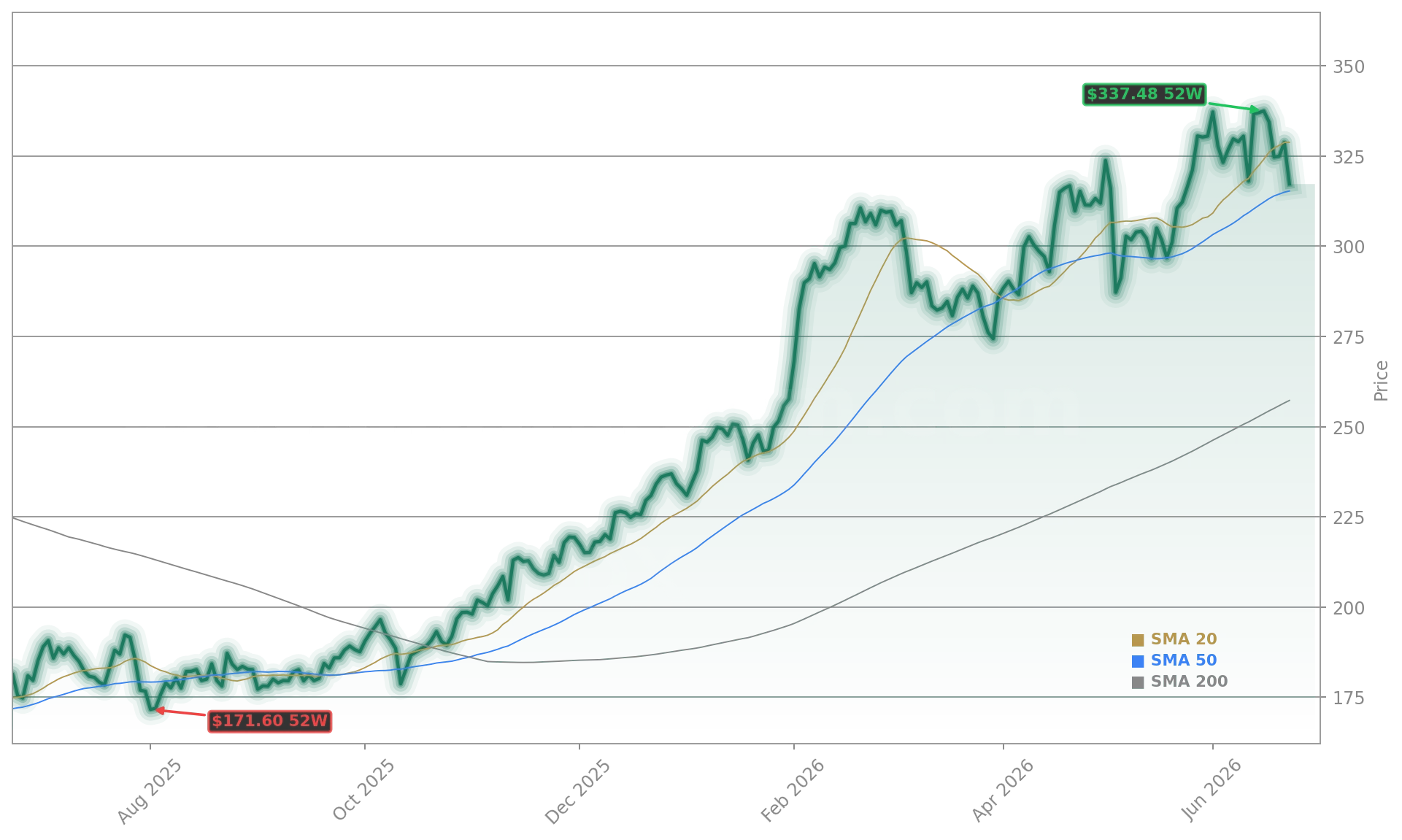
Before the print, FedEx options activity spiked: 62% of contracts were puts, with implied volatility pricing a ±6.99% move — the smallest among volatile names this week, yet still $20+ in dollar terms. Technically, the stock dipped below its 5-day EMA at $326 and tested support near $309 — a level not seen since late March. With RSI drifting lower and volume concentrated between $285–$317, the near-term bias is cautious. Yet long-term investors note FedEx’s 40% YTD gain still outpaces the S&P 500’s 9% rise and dwarfs UPS’s 5% — reinforcing its status as a Wall Street bellwether for industrial health. As Jim Cramer noted on CNBC, ‘FedEx is a juggernaut under Raj — buy it, put it away.’