Can Fraport Fuel Supply stay stable enough to protect Frankfurt’s crucial summer travel season from another costly disruption?

Why does Fraport Fuel Supply matter now?
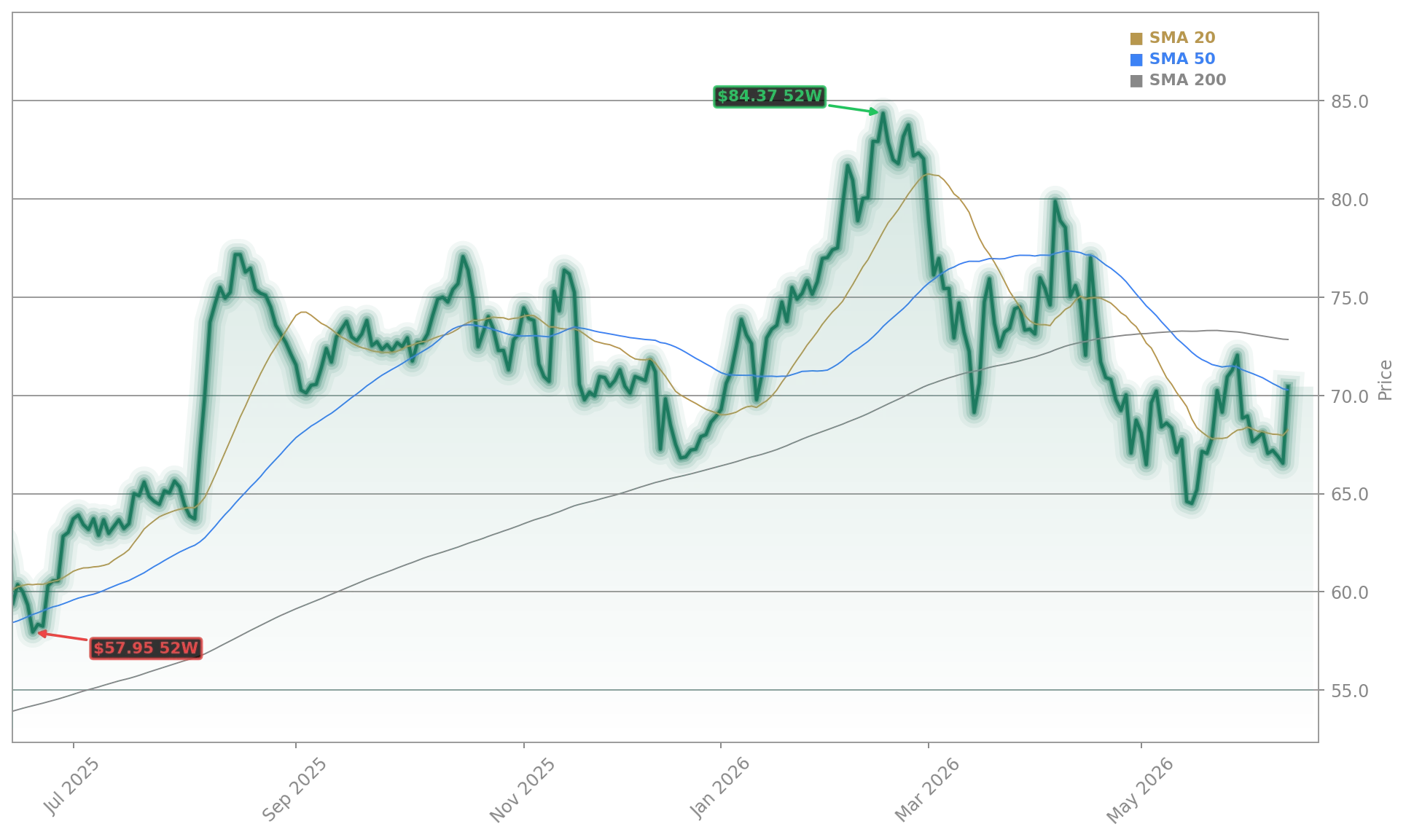
Fraport AG shares rose 1.52% to $70.20 in intraday trading, up from a previous close of $68.95, as investors weighed management’s reassurance on aviation fuel availability. Chief Executive Stefan Schulte said Europe, including Germany, should have sufficient kerosene over the next few months and potentially through year-end if conditions improve. That is a notable signal for a market worried that the Iran war and the effective blockage of the Strait of Hormuz could choke off deliveries of a product that remains essential for airline schedules and airport throughput.
The timing matters. Summer is the most important travel season for many European airports, and concerns about canceled flights had already hit consumer confidence. A recent SAP Concur survey showed that nearly one in five German travelers had already canceled or rebooked a flight, or saw an airline cancel one, because of the fuel debate. In that setting, Fraport Fuel Supply has become more than an operational talking point; it is now a traffic and revenue issue.
How exposed is Fraport?
Fraport operates Frankfurt Airport and also has airport interests in Greece, Turkey, Brazil, and Peru, giving investors a broad read on international travel conditions. Schulte’s message was that passengers should not worry about being stranded. Even if a regional bottleneck emerges, he argued that rebooking and refunds would limit traveler disruption. He also pointed to reserve-building efforts in countries such as India and China, suggesting that the global aviation system is adapting more professionally than headline fears imply.
That does not remove all risk. Schulte said a prolonged closure of Hormuz would mean much broader economic damage, far beyond aviation. He also underscored a structural issue that matters for equity investors: airports do not control the jet-fuel ordering process. Airlines buy the kerosene, which means airport operators like Fraport bear traffic risk without having direct control over fuel procurement. If flights are cut, airport revenue falls while fixed costs remain largely unchanged.
What does Lufthansa mean for Fraport?
The fuel backdrop lands at a delicate moment for Frankfurt. Schulte said strikes at Lufthansa in April cost Fraport around 500,000 passengers and more than EUR 20 million in lost revenue. Those sales are not recoverable, while staffing and infrastructure costs continue. That magnifies the importance of smooth summer operations and gives additional relevance to the Fraport Fuel Supply outlook.
Management is also renegotiating long-standing ground handling contracts. Schulte said the issue is not about clawing back strike losses but updating terms that no longer reflect sharply higher wages and material costs. He noted that an agreement with Lufthansa Cargo has already been reached and said he expects a deal with Lufthansa Passage as well, though negotiations remain difficult in a fragile operating environment.
How does Fraport compare globally?
For US investors, Fraport sits in a global airport group that can be compared with operators and travel infrastructure names tied to demand resilience rather than flashy growth. The company is also navigating high domestic operating costs in Germany while trying to ramp the new Terminal 3 in Frankfurt. Schulte said a project of that size needs traffic growth and, in part, higher charges to support returns, but pricing power is limited. He added that international margins are generally better because building in Germany is far more expensive than in other countries.
The read-through extends beyond Fraport. Airline and travel investors tracking names such as Delta Air Lines, United Airlines, Boeing, and Airbus are watching whether European fuel logistics stabilize enough to protect peak-season schedules. No fresh analyst rating from firms like Citigroup, RBC Capital Markets, Goldman Sachs, or Morgan Stanley was tied to Tuesday’s fuel comments, but those desks will likely monitor traffic trends, airport charges, and energy costs closely.
I assume that in the coming months we will have enough kerosene in Europe and therefore also in Germany. If things go well, even until the end of the year.— Stefan Schulte
For now, Fraport Fuel Supply appears manageable rather than acute. That reduces one headline risk for summer travel, supports confidence around Frankfurt traffic, and gives investors a clearer lens on what matters next: labor stability, pricing discipline, and the ramp of Terminal 3. If fuel flows hold and disruption stays contained, Fraport Fuel Supply could shift from a crisis narrative back to a routine operational metric, which would be a constructive outcome for shareholders.