
Can Hormel Foods Earnings keep lifting HRL, or was this quarter just a rare bright spot for a pressured packaged-food name?

Why did Hormel Foods Earnings impress?
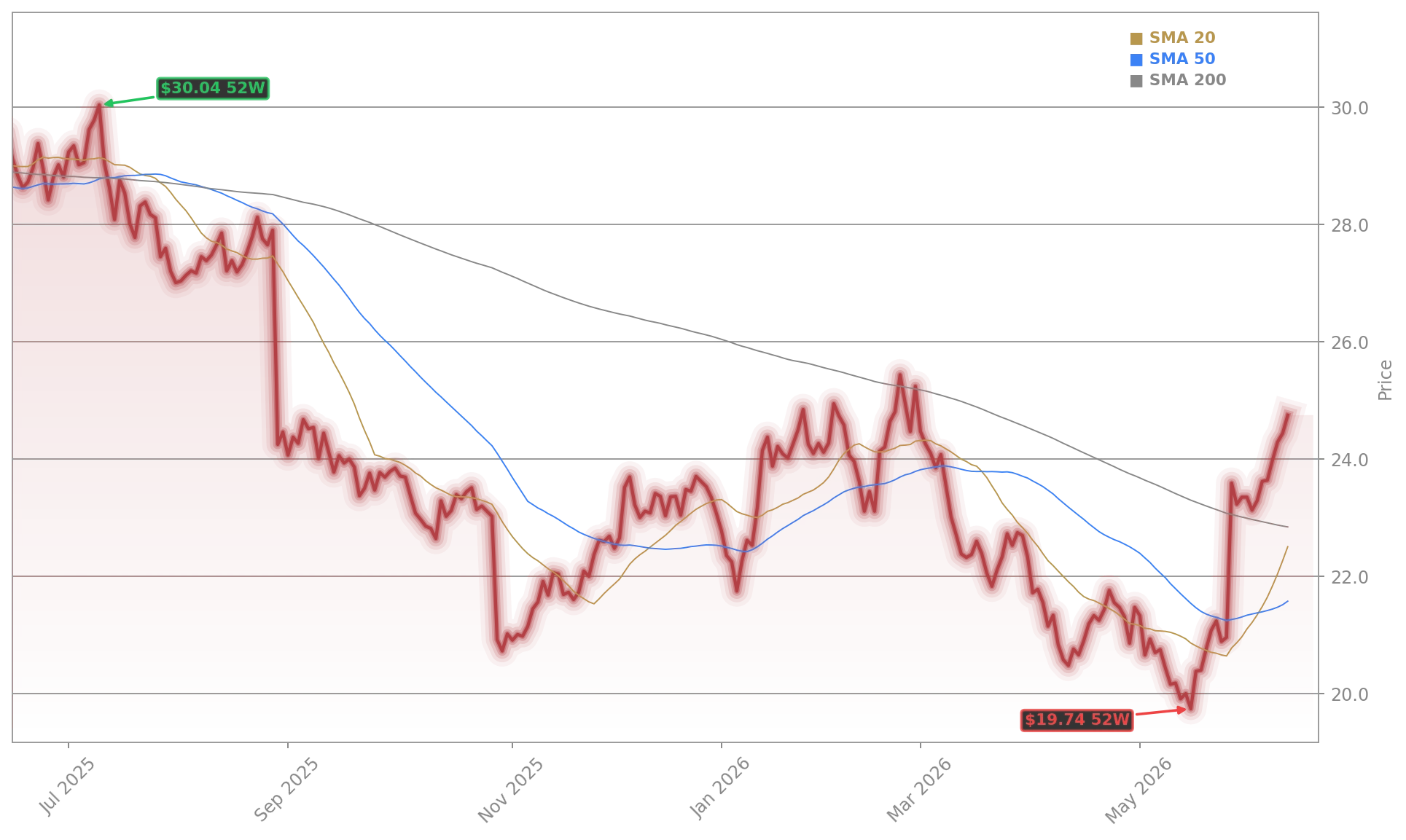
Hormel Foods Corporation reported adjusted earnings per share of $0.40, up 14% from a year earlier and ahead of the roughly $0.35 consensus highlighted by market coverage. Net sales reached $2.97 billion, also topping expectations. The market reaction was swift, with HRL climbing sharply after the release from a previous close of $21.11.
The biggest driver behind the strong print was execution rather than a one-off benefit. Organic net sales rose 3%, marking the sixth straight quarter of organic expansion. Gross profit increased 7%, while gross margin widened 70 basis points to 17.4%. Adjusted operating margin reached 9.9%, a notable improvement from consensus expectations near 8.9%.
Management said pricing, mix, supply chain gains, and productivity improvements more than offset higher pork, beef, fuel, and logistics costs. That matters for investors who had been worried that inflation and private-label competition would keep pressure on branded food companies such as Hormel Foods, Hershey, and Mondelez.
How did Hormel Foods segments perform?
Performance was broad-based. Foodservice remained the standout, with organic net sales up 7% and segment profit rising 11%. That marked the eleventh consecutive quarter of organic growth in the division, helped by market-based pricing and lower supply chain costs. Management also pointed to product innovation, including pizza toppings and other operator-focused offerings, as traffic stayed pressured across parts of the restaurant channel.
International was another bright spot. Organic net sales increased 5%, while segment profit jumped 20%, driven by demand in China and solid branded export activity led by SPAM. Retail posted more modest top-line growth, with organic sales up 1%, but profit still rose 13% thanks to value-added poultry, Jennie-O momentum, and strength at Applegate and Herdez.
There were still weak areas. Planters underperformed expectations as shoppers traded down from higher-priced nuts such as cashews, while Skippy was still recovering from an earlier fire-related disruption. Management said recent consumption trends for Skippy have improved, but some retail brands continue to face structural pressure.
What changed at Hormel Foods?
One key portfolio move was the completed sale of the whole-bird turkey business. Hormel said the divestiture should reduce fiscal 2026 net sales by about $50 million but have only a minimal effect on adjusted earnings. The move fits the company’s broader shift away from more volatile commodity exposure and toward branded, higher-value products.
Cash generation also stayed healthy. Operating cash flow totaled $179 million in the quarter, capital expenditures were $82 million, and the company ended the period with $827 million in cash. Hormel returned $161 million to shareholders through dividends, extending its long-running payout streak.
For income-focused investors, that dividend remains a major part of the story. Still, the payout ratio has been elevated, and some valuation measures suggest the stock is no longer especially cheap even after a multiyear pullback. That makes continued margin recovery central to the next leg of the thesis.
Can Hormel Foods Earnings momentum continue?
Hormel reaffirmed full-year guidance for net sales of $12.2 billion to $12.5 billion and adjusted EPS of $1.43 to $1.51. Management said results are trending toward the upper half of that earnings range, though it expects third-quarter adjusted earnings to be roughly in line with the prior year because of fuel and logistics headwinds, plus inventory rebalancing actions.
That cautious near-term tone tempers some of the excitement from this quarter’s beat. Still, Thursday’s report suggests the turnaround in operational execution is gaining traction. Hormel Foods Earnings showed that all three segments can contribute to growth at the same time, a key signal for a packaged-food company trying to rebuild investor confidence.
We delivered an excellent second quarter, highlighted by continued top-line momentum and meaningful improvement in bottom-line performance.— Jeffrey Ettinger
There were no fresh analyst rating changes from firms such as Citigroup, RBC Capital Markets, or Goldman Sachs in the materials reviewed Thursday. Even so, the strong reaction indicates Wall Street had positioned too defensively. If margins keep improving and retail brands stabilize, Hormel Foods Earnings could remain a positive catalyst into the second half of 2026. For investors, the next quarter will test whether this rebound is durable rather than just encouraging.