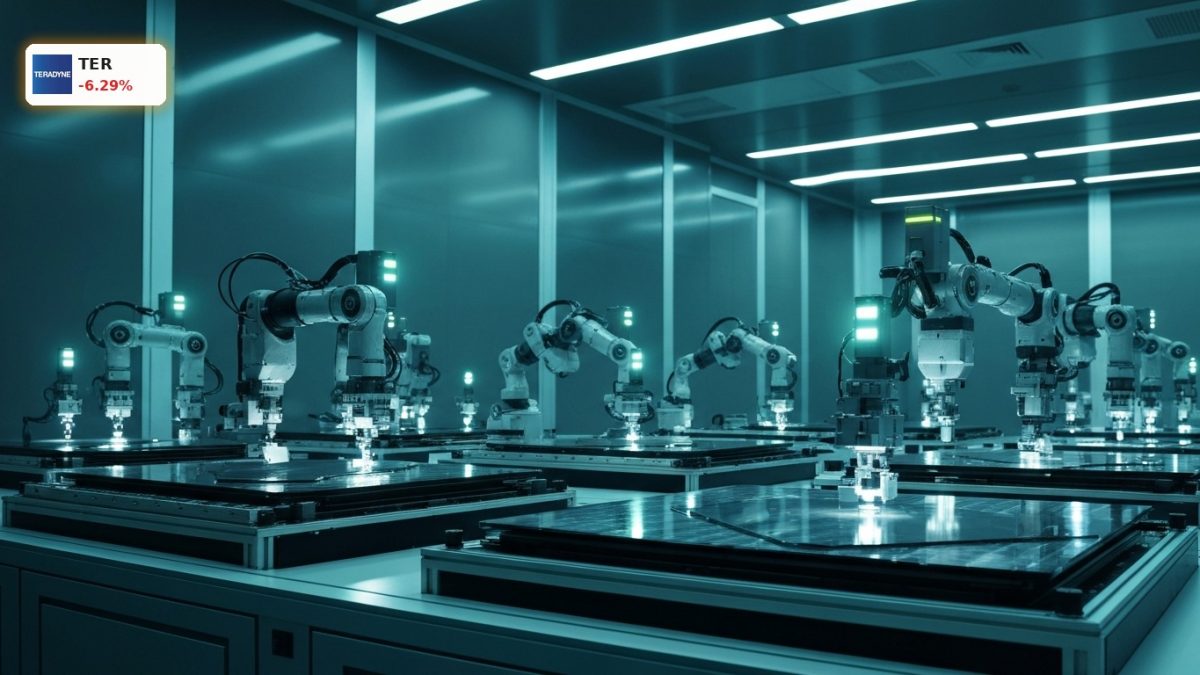

Will the recent Teradyne Insider Sales trigger a deeper correction for the high-flying semiconductor testing giant, or is this just routine profit-taking?

Why Did the Recent Teradyne Insider Sales Occur?
According to regulatory filings with the SEC, Teradyne, Inc. CEO and President Gregory Stephen Smith and Director Marilyn Matz both executed stock sales on July 15, 2026. Smith sold 4,000 shares of common stock at a weighted average price of $356.31, netting approximately $1.4 million. On the exact same day, Matz liquidated 1,200 shares at the identical average price of $356.31, yielding roughly $428,000.
These transactions were not spontaneous market decisions. Both executives utilized Rule 10b5-1 trading plans, which were adopted in February 2026. These regulatory plans allow corporate insiders to establish predetermined schedules for selling stock, effectively shielding them from accusations of trading on non-public, material information. Because these plans were locked in months in advance, the timing of the sales is separated from the executives’ immediate outlook on current operational performance.
How Do These Teradyne Insider Sales Impact Executive Stakes?
Despite the liquidations, both insiders maintain substantial skin in the game. Following his transaction, Gregory Stephen Smith continues to hold 116,495 shares directly, representing a stake valued at nearly $40 million based on recent market pricing. His sale of 4,000 shares represents less than 4% of his total direct equity exposure in the semiconductor testing firm.
Similarly, Marilyn Matz retains direct ownership of 16,240 shares, carrying a market value of approximately $5.56 million. For global investors on Wall Street, the modest scale of these transactions relative to their overall holdings suggests routine personal financial planning and portfolio diversification rather than a structural loss of confidence in the company’s future. Over the 12-month period leading up to these sales, the stock experienced a stunning 268% surge, making profit-taking a highly anticipated move.
Does Teradyne Face Valuation Risks After the AI Surge?
The core catalyst behind the massive stock appreciation is the company’s critical role in the global semiconductor supply chain. Teradyne designs and manufactures automated testing equipment essential for validating advanced microprocessors, memory chips, and graphics processing units. The company has successfully capitalized on the ongoing artificial intelligence boom, with AI-related demand now driving roughly 70% of its total revenue.
In its most recent quarterly financial release, Teradyne posted record-breaking revenue of $1.28 billion, marking an outstanding 87% year-over-year increase. During the company’s earnings call, management highlighted their “wafer to AI data center strategy” and confirmed receipt of their first merchant GPU test orders. This rapid expansion has positioned the firm alongside hardware heavyweights like NVIDIA in the portfolios of tech-focused institutional investors.
However, the semiconductor sector has experienced heightened volatility recently. While the stock previously flirted with all-time highs near $490, it has recently faced a sharp pullback, closing at $320.59 down 6.29% in the latest trading session. This volatile environment highlights the concentration risks associated with relying heavily on lumpy capital expenditure cycles from major chipmakers.
What Is the Outlook for Teradyne Investors?
The broader investment community remains focused on the sustainability of the current chip-testing demand. Wall Street analysts are closely monitoring whether the massive hardware buildout by hyperscalers will translate into long-term, stable order books for testing equipment providers. While some market bears worry about cyclical cooling, bulls point to the company’s solid trailing twelve-month revenue of $3.8 billion and net income of $854.1 million as evidence of a highly profitable business model.
Ultimately, the recent Teradyne Insider Sales represent minor portfolio adjustments rather than a warning sign of operational trouble. With the company scheduled to report its next round of quarterly earnings on July 29, investors will soon get a clearer picture of whether the AI-driven growth trajectory remains intact. For long-term shareholders, the underlying financial metrics and upcoming order guidance will carry far more weight than scheduled executive stock liquidations.