Is Intel’s sharp drop just panic selling in semiconductors, or an early warning that the AI spending boom is losing steam?

Why Did Intel Corporation Lead the Selloff?
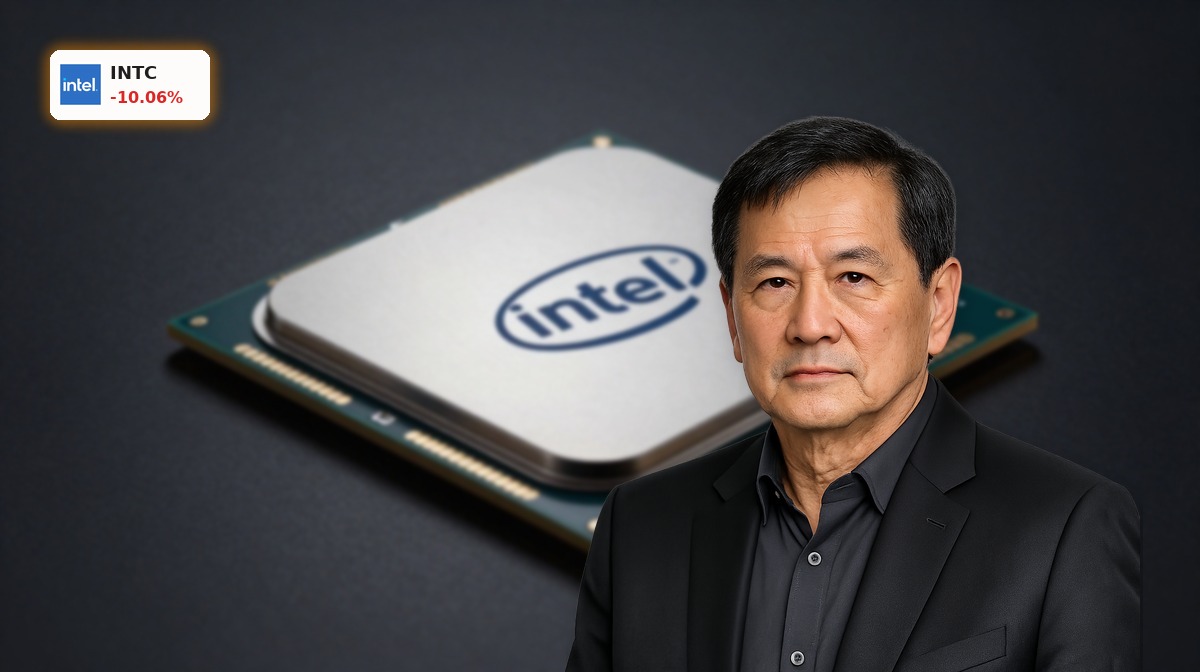
Intel Corporation wasn’t hit by company-specific news — it was collateral damage in a sector-wide repricing. Samsung Electronics’ preliminary Q2 2026 earnings, while record-breaking in revenue and profit, failed to quell Wall Street’s mounting anxiety over AI infrastructure spending. Investors interpreted the results as evidence that hyperscalers may be slowing purchases — a concern amplified by Reuters’ report that DeepSeek is developing its own AI chip, threatening the entire merchant silicon model. Intel’s 10.6% drop made it the worst performer in the S&P 500, outpacing even Teradyne and Sandus in losses. The stock’s decline accelerated in after-hours trading, reflecting growing institutional concern about valuation disconnects in the chip space.
How Does the Intel Chip Selloff Compare to Peers?
Intel’s pain was shared — but not equally distributed. Micron Technology fell 7.2%, Lam Research dropped 7.7%, and Applied Materials slid 8.0%. Meanwhile, NVIDIA edged down just 0.2%, underscoring its relative insulation amid AI demand uncertainty. That divergence is telling: while Intel trades at a premium to memory and equipment peers despite minimal AI revenue contribution, Shai Balor of RBC Capital Markets recently noted the dislocation — citing Intel’s valuation as ‘unsustainable in a maturing AI capex cycle.’ Citigroup cut its Intel price target to $98, citing ‘excessive AI optimism baked into forward guidance.’ Morgan Stanley downgraded Intel to ‘Underweight,’ warning of ‘structural margin pressure beyond 2026.’
What Does This Mean for the Nasdaq and S&P 500?
The Intel Chip Selloff reverberated across major indices. With Intel representing 1.4% of the SOX and 0.3% of the S&P 500, its underperformance dragged down both benchmarks — especially the tech-heavy Nasdaq Composite, which closed down 1.8%. The semiconductor sector now accounts for nearly 22% of the Nasdaq’s weight, meaning any sustained weakness in chip stocks poses a material risk to broader index stability. Notably, Intel’s decline coincided with a 15% drop in Rivian Automotive and a 7.3% fall in GE Vernova — suggesting AI-related sentiment is spilling over into adjacent infrastructure plays. This cross-sector contagion signals deeper portfolio-level recalibration, not just a sector rotation.
Is This a Buying Opportunity — or a Warning Sign?
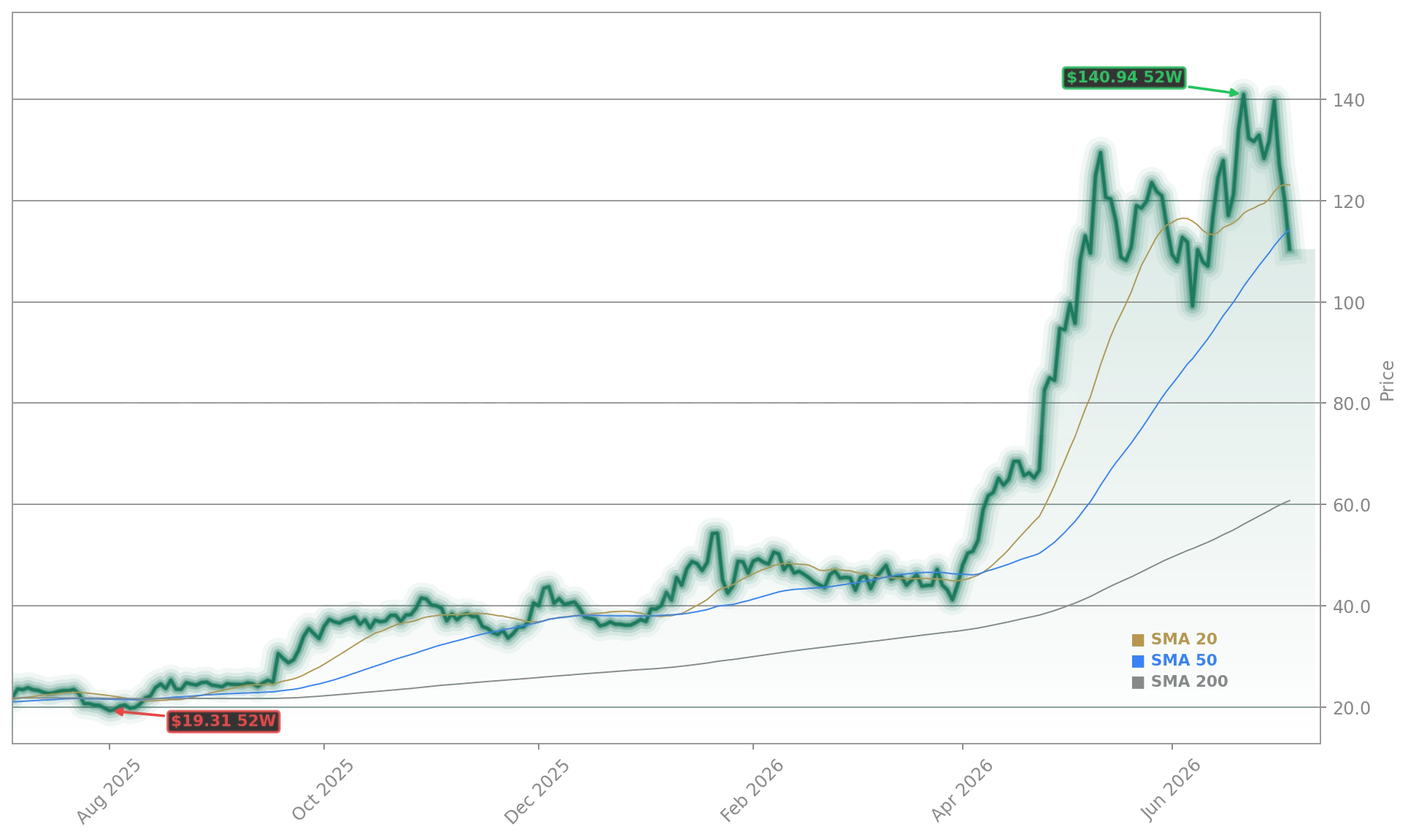
Not all analysts see red. Goldman Sachs maintained its ‘Neutral’ rating on Intel Corporation but raised its 12-month price target to $115, citing ‘foundational gains in foundry momentum and AI PC adoption.’ However, the firm acknowledged ‘near-term pressure from inventory corrections in client and data center segments.’ Oppenheimer, meanwhile, sees value elsewhere — upgrading Corning on the AI unwind, calling it a ‘compelling entry point.’ The market’s message is clear: the Intel Chip Selloff reflects skepticism about Intel’s ability to monetize AI in the near term, not a rejection of its long-term foundry strategy. With the stock down 32% from its 52-week high of $162.40, technical indicators show oversold conditions — but sentiment remains fragile.
What’s Next for Intel Corporation’s Earnings Trajectory?
Intel Corporation’s Q2 2026 results — reported last month — showed revenue of $13.2 billion, up 12% year-over-year, but with gross margins flat at 48.1%. Management reaffirmed its $16 billion foundry investment plan and forecasted AI PC shipments to reach 120 million units in 2026 — yet Wall Street is increasingly focused on execution risk. The company’s upcoming Q3 2026 guidance, due August 1, will be scrutinized for signs of hyperscaler order softness. With Apple and Microsoft both delaying AI server deployments in early Q3, Intel faces mounting pressure to prove its AI roadmap isn’t overpromised. RBC Capital Markets expects ‘a cautious outlook that could trigger another 5–7% downside in early August.’
Related Coverage: Analysts are debating whether this Intel Chip Selloff is a temporary correction or the start of a deeper re-rating — Intel Forecast -8%: AI Bubble Warning Hits Hard explores valuation extremes, while ServiceNow Upgrade +2.4% as Wall Street AI Fears Fade highlights how enterprise AI adoption continues accelerating even as infrastructure stocks wobble.
Intel trades significantly higher than Micron and NVIDIA despite minimal AI revenue contribution — this dislocation doesn’t make sense given AI cycles.— Shai Balor, RBC Capital Markets
Intel Corporation remains a pivotal barometer for AI infrastructure sentiment. Its selloff isn’t just about one company — it’s a stress test for Wall Street’s entire AI thesis. For investors holding semiconductor-heavy portfolios, the next 30 days will determine whether this is a rare entry point or the beginning of a broader tech correction. The Intel Chip Selloff has exposed valuation fragility — but also sets the stage for a more rational, fundamentals-driven semiconductor rally.