
Did one brutal global tech selloff just expose how fragile the AI trade has become for Nasdaq 100 investors?

What triggered QQQ’s steepest weekly drop since 2025?
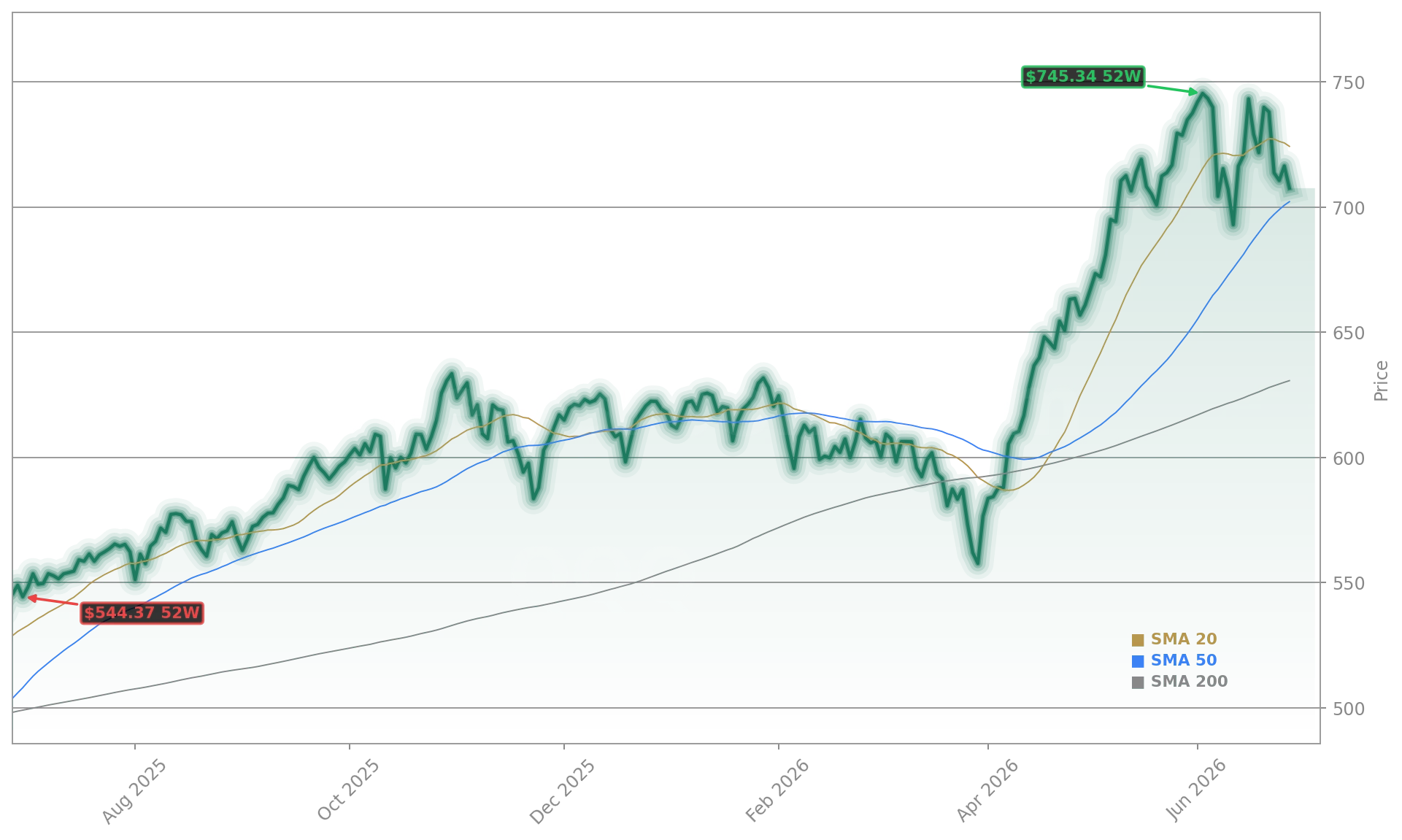
This week’s Nasdaq 100 Weekly Recap centers on a single, cascading shock: a 10% plunge in South Korea’s Kospi index overnight on Tuesday — driven by a brutal selloff in SK Hynix and Samsung — that spilled directly into U.S. tech. The Invesco QQQ Trust (QQQ) fell 4.8% from Monday’s open of $742.02 to Friday’s close of $706.52, with a weekly high of $745.45 and a weekly low of $702.81. The outlier day was Tuesday — a -3.3% rout — as investors fled AI-adjacent names amid fears of overspending, margin pressure, and tightening liquidity. Micron’s pre-earnings volatility fueled the fire: its stock dropped 13% Tuesday, then surged 17% Thursday after reporting $41.45 billion in revenue and $28.2 billion in profit — quadrupling year-over-year. Yet QQQ failed to sustain the rebound, closing down again Friday amid fresh OpenAI IPO delays and renewed global tech weakness.
How did Micron’s earnings reshape the AI narrative?
Micron’s fiscal third-quarter report was the week’s defining catalyst — and its duality defined the week’s tension. While Morgan Stanley analysts called the memory shortage a multiyear structural tailwind, they cautioned that opaque long-term agreements — like Micron’s newly disclosed deal with Anthropic — could pressure near-term margins. Meanwhile, Wedbush’s Dan Ives insisted the AI revolution remains firmly in the ‘third inning,’ labeling Tuesday’s selloff a ‘gut check moment,’ not a fundamental reversal. His view was echoed by Carson Group strategist Ryan Detrick, who noted that rapid 19.5% market gains over 42 days have historically preceded further rallies — every single time since WWII. Yet the market’s reaction was skeptical: QQQ rebounded just 0.8% on Thursday — far less than Micron’s 17% — suggesting investors are now pricing in AI’s capital intensity, not just its growth.
Why did Apple and NVIDIA drag QQQ lower despite Micron’s strength?
Even as Micron soared, other QQQ heavyweights weighed on the index. Apple shed over 6% on Thursday after raising Mac and iPad prices — a direct consequence of soaring memory costs. NVIDIA extended its losing streak to five sessions, falling another 1% Friday and retreating further below its 50-day moving average. UBS reaffirmed its Buy rating on Advanced Micro Devices and raised its price target to $670, citing CPU momentum — but AMD’s 3.75% Thursday gain couldn’t offset broader chip fatigue. Tesla plunged nearly 6% Tuesday, undercutting its 50-day line, while Oracle dropped 4% after announcing 21,000 job cuts — 13% of its workforce — citing AI-driven automation. The message was clear: AI is reshaping corporate America, but not always in ways that lift equity valuations.
What macro and policy shifts dominated investor attention?
Two macro forces anchored the week: inflation and policy credibility. The May core PCE index — the Fed’s preferred gauge — surged to 3.4% year-over-year, the highest since October 2023. That reinforced fears of a July rate hold followed by a September hike, especially after Treasury Secretary Scott Bessent publicly criticized the Fed’s ‘always wrong’ dot plots. Meanwhile, U.S.-Iran talks advanced a 60-day roadmap toward a final deal — lowering oil prices and easing geopolitical risk — yet failed to calm tech-specific jitters. Wells Fargo’s Luis Alvarado warned that markets must now adapt to a ‘more market-driven investment landscape’ as central bank intervention recedes — a shift that inherently increases volatility.
What should investors watch next week?
Next week brings the first major test of whether Micron’s results reset AI sentiment. Key catalysts include: the June PCE inflation report (Thursday), Chicago Fed President Austan Goolsbee’s speech (Thursday evening), and earnings from NVIDIA, Apple, and Microsoft — all QQQ mega-caps whose guidance will determine whether the AI narrative regains momentum. Also watch for OpenAI’s official IPO timeline confirmation and any Fed commentary ahead of the July 29–30 meeting. With the CNN Fear & Greed Index stuck at 25.5 — deep in ‘Fear’ territory — investor psychology remains fragile. A sustained QQQ close above $720 would signal conviction; failure risks retesting the $702.81 weekly low.
Nasdaq 100 Micron Earnings: QQQ Faces a Q3 Warning dissects how Micron’s $50 billion revenue forecast may mask emerging supply-chain bottlenecks and margin compression for QQQ’s semiconductor holdings. The analysis warns that single-day drawdowns in semis are typically buyable — but only if fundamentals hold. S&P 500 Weekly Recap: Micron’s $50B Shock and Fed Pivot explores whether Micron’s outlook just revived the AI trade — or whether the Fed’s inflation response will spoil the rebound, especially as Apple raises prices to absorb memory cost shocks.
We continue to believe this AI Revolution is in the 3rd inning and today’s tech sell off was a ‘gut check moment’ after the Korea led memory chip sell off overnight.— Dan Ives, Wedbush
This week’s Nasdaq 100 Weekly Recap confirms that the AI trade isn’t broken — it’s maturing. The 4.8% QQQ drop reflects not a collapse in demand, but a recalibration of expectations around capital efficiency, margin sustainability, and policy risk. For investors, the takeaway is clear: stay exposed to AI’s structural growth — but prioritize quality, cash flow, and pricing power over pure momentum. The rebound may be delayed, not denied — and next week’s earnings from NVIDIA, Apple, and Tesla will be the ultimate stress test. This Nasdaq 100 Weekly Recap isn’t a warning to exit — it’s a signal to refine.