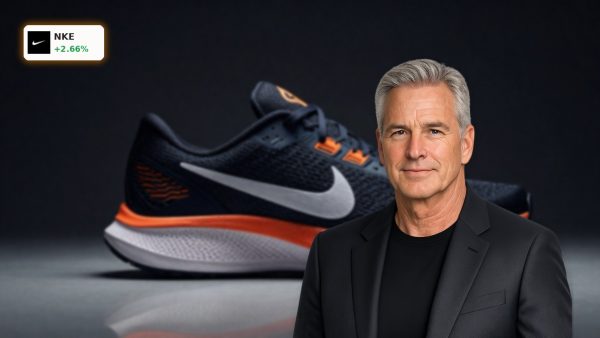

Can a massive $302 million regulatory windfall help Nike overcome its deep operational struggles and fuel a long-awaited stock recovery?

On Thursday, shares of Nike, Inc. (NKE) rose by 3.19% to close at $44.12, recovering slightly from recent lows. While the stock remains down over 30% since the beginning of the year and sits roughly 45% below its 52-week high, the details disclosed in the official Nike 10-K Filing for fiscal year 2026 show how regulatory windfalls are helping the company manage its current operational headwinds.
How Did the Nike 10-K Filing Reveal Millions in Windfalls?
According to the annual report, Nike has benefited significantly from a US Supreme Court ruling that declared certain import tariffs levied under the International Emergency Economic Powers Act (IEEPA) unlawful. The Nike 10-K Filing confirms that the company has already received $302 million in cash refunds as of May 31, 2026. Furthermore, the retail giant has recorded an additional $684 million as accounts receivable on its balance sheet, representing outstanding claims yet to be paid by the government.
These extraordinary cash inflows arrive at a critical juncture. For the fiscal year 2026, the company reported total revenue of $46.4 billion, representing a flat growth rate of just 0.2% year-over-year. Net income dipped slightly from $3.20 billion to $3.11 billion, with net margins squeezing down from 7.0% to 6.7%. Operating income stood at $3.8 billion. However, these tariff refunds could spark new legal challenges. Similar to peers like Ford or Amazon, the company faces potential class-action lawsuits from consumer groups demanding that these tariff savings be passed back to shoppers who originally bore the brunt of inflated retail prices.
Where Is Nike Facing Operational Obstacles?
The geographical distribution of sales highlights the ongoing challenges in international markets. While the domestic US market saw its share of total revenue tick up from 43% to 44%, international markets fell to 56%. The Greater China segment remains a primary sore spot for investors, with third-quarter revenues in the region dropping 7% to $1.62 billion. Management expects total consolidated revenues to decline by a low single-digit percentage in the upcoming quarter.
On the manufacturing side, the Nike 10-K Filing highlights a heavy reliance on Southeast Asia. Vietnam accounts for 52% of footwear production, followed by Indonesia at 27% and China at 16%. Apparel production is distributed across 34 countries. In an era of shifting trade policies and potential new tariffs, this geographic concentration represents a persistent supply chain risk that Wall Street analysts continue to monitor closely.
Will the “Sport Offense” Strategy Satisfy Wall Street?
To reverse the stagnation, CEO Elliott Hill is spearheading the “Sport Offense” strategy. This plan marks a decisive shift away from the previous direct-to-consumer (DTC) focus, aiming to rebuild relationships with traditional retail partners and push the wholesale channel back to 60% of total sales. This strategic pivot is intended to counter declining online sales and restore brand visibility in physical stores.
This leadership transition has come with a high price tag. CEO Elliott Hill received a total compensation package of $36.3 million for fiscal year 2026, up from $26 million the prior year, primarily driven by over $32 million in stock and option awards. Wall Street analysts remain divided on whether this leadership expense will translate into shareholder value. BTIG currently rates the stock as a “Buy” with a price target of $55. Conversely, Berenberg maintains a “Hold” rating with a price target of $49, reflecting caution regarding a rapid recovery ahead of the annual shareholder meeting scheduled for September 8, 2026.
Related Coverage
For more insights into the company’s financial health, read our analysis on the Nike Earnings +2.7%: Beat Fails to End Turnaround Doubts article, which examines whether one-time gains are masking deeper structural issues. Additionally, explore broader market trends in our coverage of the automotive sector with the Lucid Bankruptcy Rumors Denied: Stock Surges +14.7% on CEO Comments report, detailing how executive decisions are driving volatile price movements across Wall Street.
In conclusion, the latest Nike 10-K Filing highlights a company in transition, utilizing massive regulatory refunds to buffer its bottom line while restructuring its core sales channels. For long-term investors, the success of Elliott Hill’s wholesale pivot will determine if the stock can finally break out of its current slump. The upcoming quarters will reveal whether the “Sport Offense” strategy can restore sustainable top-line growth.