Can Nike Turnaround momentum survive another delay, or is Wall Street finally losing patience with the brand’s recovery story?

Why is the Nike Turnaround taking longer?
CEO Elliott Hill, who returned to lead Nike in October 2024 after retiring in 2020, acknowledged in a recent Financial Times interview that the scope of Nike’s challenges was underestimated. ‘What I didn’t realize until I got in is the amount of work that needed to be done and the amount of time [it would take] to get us to where we are and, more importantly, where we want to go,’ Hill said. He cited inconsistent global execution — in branding, product rollout, and marketing — as the core bottleneck. Tariff pressures and rising oil prices have further dampened consumer spending, particularly in key international markets. The Nike Turnaround is no longer a Q2 2026 story; Hill now expects tangible revenue and profit acceleration to emerge only in early 2027, as new sports-focused products hit shelves across North America, Europe, and Asia.
How are Wall Street analysts reacting?
RBC Capital Markets has downgraded its outlook, lowering 2027 and 2028 profit forecasts and warning of continued market-share erosion — especially against On, Hoka (Deckers Outdoors), and Adidas. The firm now expects Nike’s revenue growth to trail the broader athletic apparel industry average through fiscal 2027. Meanwhile, Needham maintains its cautious stance, noting that while North America posted 3% revenue growth in fiscal Q3, international markets — particularly China — remain mired in elevated inventory and soft demand. Citigroup reiterated its ‘Neutral’ rating but trimmed its 12-month price target to $50, citing ‘execution risk’ and delayed margin recovery. These revisions come as Nike’s valuation metrics compress: its P/E ratio now stands at 30, slightly below the S&P 500’s 32 — but with no near-term earnings catalyst, the discount lacks conviction.
What’s happening to Nike’s competitive positioning?
Nike’s strategic pivot away from wholesale partners to direct-to-consumer (DTC) channels backfired post-pandemic. While DTC margins are higher, the move hollowed out in-store presence just as foot traffic rebounded — handing shelf space and cultural momentum to On and Hoka. Meanwhile, lifestyle overextension diluted Nike’s performance credibility: Adidas captured global headlines with two sub-two-hour marathoners, while Nike’s controversial Boston Marathon ad drew criticism instead of acclaim. Even Jordan — long a profit engine — and Converse, now at a decade-low, are failing to offset weakness. In contrast, Apple continues to leverage ecosystem strength, Tesla reasserts leadership in EV software, and NVIDIA dominates AI infrastructure — a reminder that U.S. investors increasingly favor innovation velocity over brand legacy alone.
What’s next for the Nike Turnaround?
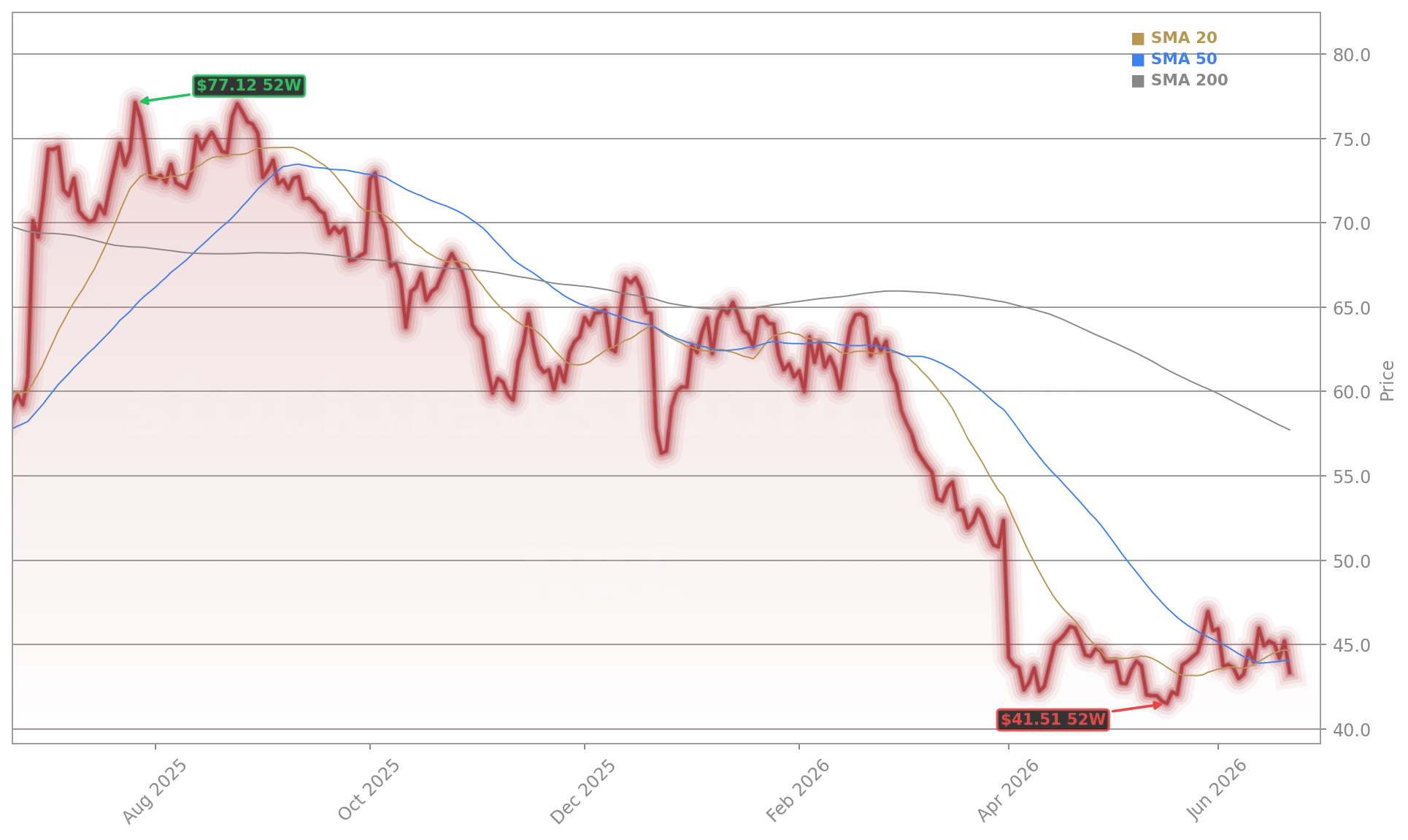
June 2026 is pivotal: the FIFA World Cup kicks off in North America, offering Nike its biggest global marketing stage since 2022 — but early reception to its official jerseys has been lukewarm due to a design flaw (puckered shoulders). Nike’s upcoming Q2 2026 earnings report — due in early July — will be dissected for signs of wholesale relationship repair, DTC stabilization, and inventory normalization. Hill confirmed that deeper structural updates — including operating overhead optimization — will be unveiled at Nike’s November investor day. With the stock down 65% over five years versus the S&P 500’s 80% gain, patience is thinning. Yet, performance footwear traction and a renewed focus on sport — not fashion — suggest the Nike Turnaround remains intact, just delayed.
What I didn’t realize until I got in is the amount of work that needed to be done and the amount of time [it would take] to get us to where we are and, more importantly, where we want to go.— Elliott Hill, CEO of Nike, Inc.
Related Coverage: Analysts are questioning whether Nike’s recovery timeline can survive another Wall Street reset — Nike Forecast -2.9% Warning After RBC Slashes Target to $50. Meanwhile, parallels are emerging across cyclical consumer sectors: Carvana Used-Car Market Falls 9.5% After CarMax Warning underscores how macro-sensitive retail models face similar margin and inventory headwinds.