
Can the latest Plug Power Earnings-fueled rally overcome deep losses and cash burn, or is this just another hydrogen head fake?

How strong were Plug Power Earnings this quarter?
For the first quarter 2026, Plug Power Inc. reported revenue of $163.5 million, up 22% year over year and well ahead of Wall Street estimates around $140–148 million. The company posted a net loss of $0.18 per share by one calculation and roughly $0.08 per share on an adjusted basis, which was slightly better than consensus expectations for a $0.10 loss and an improvement from a $0.21 loss a year ago. The mixed presentation underscores a key takeaway from these Plug Power Earnings: the direction of travel is improving, but absolute profitability remains distant.
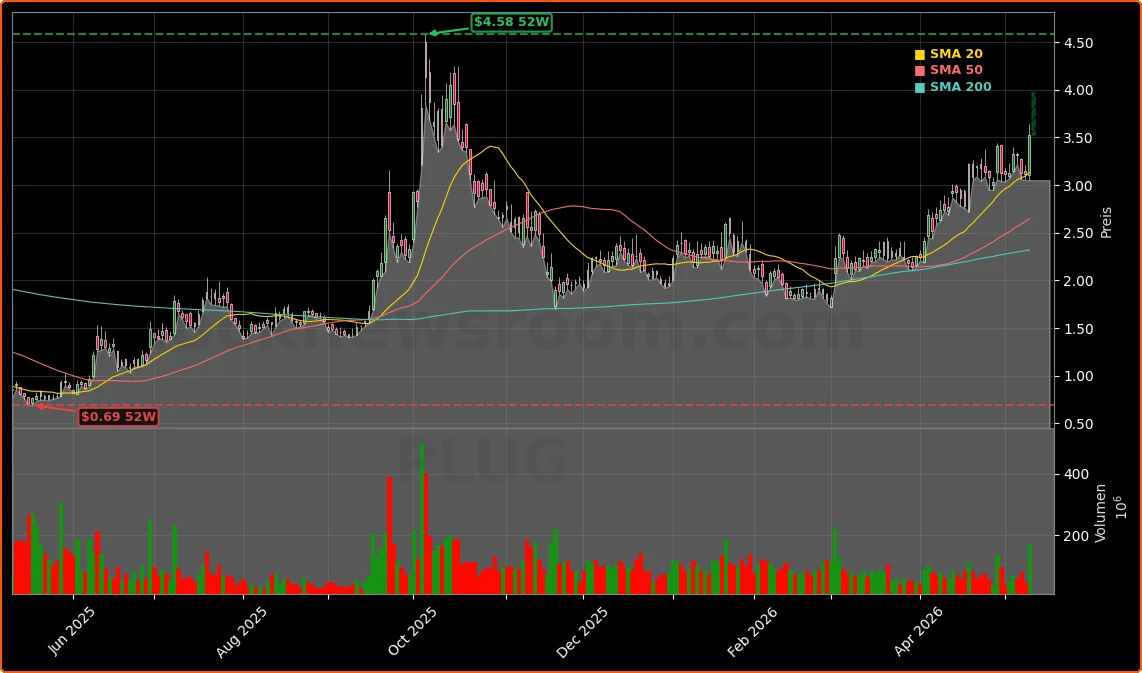
The market reaction has been resoundingly positive so far. PLUG closed Monday at $3.76, then surged to $3.52 during the US session and is indicated around $3.97 before the opening bell on Tuesday, a pre-market gain of nearly 13%. The move extends a multi-week rebound that had already lifted the stock more than 20% into the report, supported by growing interest in hydrogen solutions for data centers powering AI workloads from players such as NVIDIA and Apple. Even after the pop, however, PLUG still trades far below its 52-week high, reminding investors how brutal the prior selloff was.
What is driving growth and where are the risks?
Beneath the headline Plug Power Earnings, management highlighted a project pipeline of about $8 billion, spanning electrolyzers, fuel-cell systems and hydrogen infrastructure for logistics, industrial customers and potential AI data center deployments. That pipeline, if converted, could materially scale revenue over the next several years and support the company’s push to replicate its first-ever positive gross profit achieved in Q4 2025.
Yet the path is complicated by ongoing cash burn and balance-sheet constraints. At the end of March, Plug Power held cash and cash equivalents of roughly $802 million, but only $223 million of that is currently unrestricted. The remaining $579 million is tied up and not immediately available, leaving limited flexibility if markets turn risk-off. To shore up liquidity, the company is advancing asset sales that could bring in around $275 million, a strategy that buys time but does not by itself solve the profitability puzzle.
The Q1 2026 net loss came in at about $245 million, highlighting how far Plug Power still has to go to match the expectations now embedded after the latest Plug Power Earnings beat. The per-share loss looks narrower in part because the company has repeatedly tapped equity markets, diluting existing shareholders. For US investors, that history of capital raises is a key factor when sizing positions in speculative clean-energy names.
How does Plug Power compare to peers?
In the broader renewable and power-technology space, sentiment has been mixed. Bloom Energy and Generac posted solid recent results, setting a higher bar for execution in distributed generation and backup power. Against that backdrop, Plug Power’s revenue surprise and progress on gross margins are encouraging, but the company remains one of the riskier options in the sector.
Institutional interest offers a partial counterweight to those risks. Vanguard Group recently increased its stake in Plug Power by over 18% in Q4, now controlling roughly 9% of the company. That move followed the company’s first positive gross profit and a major electrolyzer contract, suggesting that some large asset managers see a viable long-term story if management can deliver on its margin and cash-flow roadmap. Still, analyst coverage remains cautious: many on Wall Street maintain neutral or Hold stances, often flagging execution risk, funding needs and the competitive pressure from better-capitalized energy and industrial groups, including companies supplying power solutions to high-demand AI infrastructure used by Tesla and other tech leaders.
What should investors watch after these Plug Power Earnings?
For traders and long-term investors alike, several signals will determine whether the current rally has legs. First, the sustainability of improved gross margins will be crucial. After finally turning positive in Q4 2025, any backsliding would quickly undermine confidence. Second, the pace of converting the $8 billion pipeline into signed contracts and actual revenue will tell Wall Street whether Plug Power’s technology can win at scale in high-growth segments like hydrogen-powered logistics and data centers.
Third, liquidity and dilution risk must stay in focus. With relatively limited unrestricted cash and continuing heavy losses, Plug Power may need additional financing if asset sales and operational improvements do not close the funding gap. That would likely come at the expense of existing shareholders, especially if the stock price fails to hold recent gains.
Finally, macro sentiment toward clean energy and high-growth tech remains a powerful driver. If the NASDAQ and broader growth complex stay supported, speculative names such as Plug Power can continue to attract capital. But in a risk-off environment, the company’s lack of profits could once again lead to sharp drawdowns, regardless of the latest Plug Power Earnings surprise.
Related Coverage
Investors looking for a deeper dive into the long-term profit question may want to read “Plug Power Profitability Warning as Losses Mount”, which examines whether the company’s ambitious hydrogen build-out can translate into sustainable earnings before investor patience wears thin. That analysis complements the latest Plug Power Earnings by focusing on structural challenges in the business model and what needs to change for the stock to become more than just a speculative hydrogen bet.
In summary, the latest Plug Power Earnings delivered a clear revenue beat and a modestly better-than-feared loss, reigniting interest in one of Wall Street’s most controversial clean-energy stocks. For US investors, the report underscores both the upside of a growing $8 billion pipeline and the downside of persistent cash burn and potential dilution. The next few quarters will show whether management can convert momentum into durable profitability, making Plug Power a name to watch closely in high-risk, high-reward energy portfolios.