Can a headline Tesla Safety Test win and rising China sales really justify tech-level valuations for an electric car maker?

Is the Tesla Safety Test win a game changer?
The new Tesla Safety Test headline centers on the updated U.S. New Car Assessment Program (NCAP), where the 2026 Model Y is the first vehicle to clear recently introduced advanced driver-assistance checks. The program now scores systems such as pedestrian automatic emergency braking, lane-keeping assistance, and blind-spot warning with intervention. Only Model Y units built on or after November 12, 2025 qualify under the new standard, giving Tesla, Inc. a marketing edge for upcoming model years.
For U.S. investors, this Tesla Safety Test achievement reinforces the bull case that Tesla is not just an EV manufacturer but a software and AI safety platform. On Wall Street, safety ratings matter because they can directly influence consumer demand, residual values, and insurance partnerships. While no major broker has yet published a new rating specifically on this test, firms like Goldman Sachs and Morgan Stanley already frame Tesla’s valuation around long-term autonomous and AI optionality rather than near-term auto margins alone.
The caveat is that the same U.S. safety regulators are still probing Tesla’s more controversial systems, especially Full Self-Driving (FSD). The National Highway Traffic Safety Administration continues to examine whether FSD reliably detects obstacles and hazards in poor visibility, which means the positive Tesla Safety Test news does not eliminate headline risk from future enforcement actions or required software changes.
How strong is Tesla’s China momentum?
Beyond the Tesla Safety Test story, China remains a key driver of fundamentals. The Shanghai Gigafactory delivered about 79,478 China-made Model 3 and Model Y vehicles in April, including exports, up 36% year over year and marking the sixth consecutive month of annualized growth. On a sequential basis, however, volumes fell roughly 7.2%, highlighting how domestic competitors are ramping new EV launches and tightening pricing across the segment.
For the first four months of 2026, Shanghai output reached nearly 293,000 units, up about 27% from the prior year, suggesting that Tesla is still expanding its installed base in the world’s largest EV market. U.S. investors should note that China is not only about near-term deliveries but also about software monetization: management has signaled expectations to roll out FSD more broadly in China around Q3 2026, subject to regulatory approval. If Chinese regulators greenlight FSD and accept the underlying safety data, the combination of high-volume hardware and recurring software revenue could support the high multiple many analysts, including bullish teams at Morgan Stanley and Wedbush, use in their models.
At the same time, local brands are launching dozens of new EV and plug-in hybrid models, intensifying the price war. That raises the bar for Tesla to differentiate on software, charging ecosystem, and safety-testing credentials rather than relying on hardware alone.
Where does this leave Tesla versus other tech leaders?
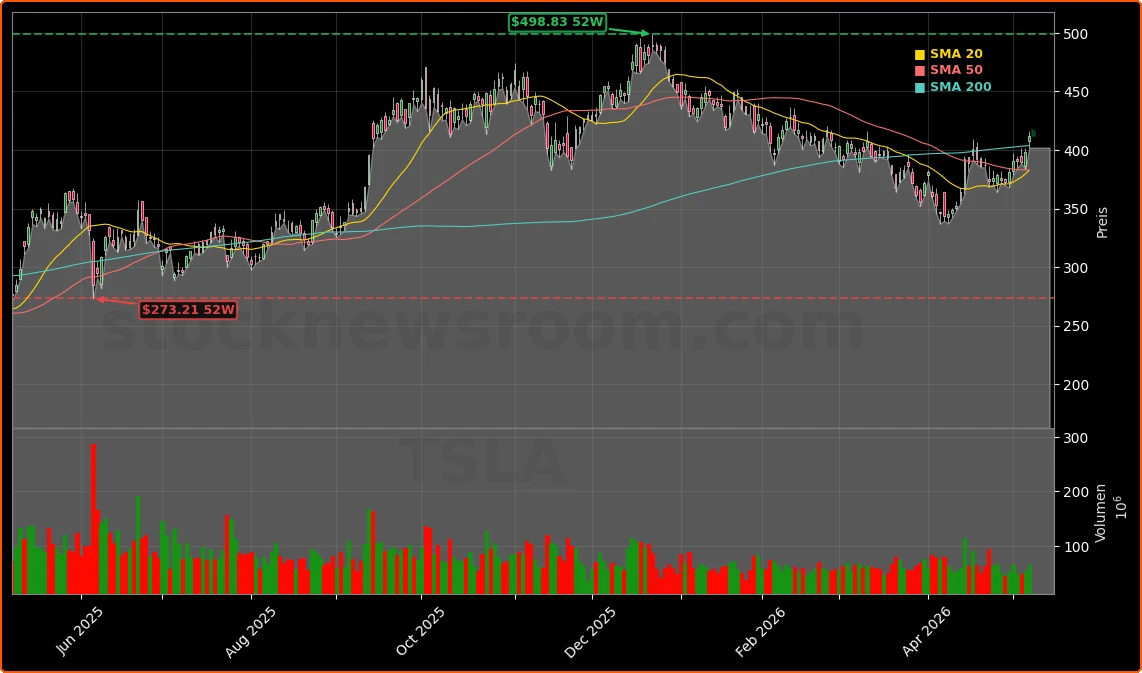
The Tesla Safety Test news lands as the Nasdaq hovers near record levels, pushed higher by AI-related names like NVIDIA and Apple. While those companies are primarily seen as pure technology or semiconductor plays, Tesla trades in a hybrid space between autos and AI. The stock’s forward valuation — around tech-like multiples near 190x forward earnings in some estimates — assumes substantial progress in areas like robotaxis, humanoid robotics (Optimus), and in-house AI chip projects such as the massive “Terafab” initiative in Texas.
On the trading side, Tesla remains one of the most actively handled names on retail platforms, often alongside NVIDIA. Implied volatility has stayed relatively elevated, reflecting both polarized sentiment and intense options activity. Products like the YieldMax TSLA Option Income Strategy ETF generate distributions by selling options on the stock, indicating ongoing demand from investors seeking to monetize Tesla’s volatility rather than simply buy-and-hold.
For fundamental investors, the safety narrative may help counterbalance legal overhangs. Recent testimony in the OpenAI-related trial revealed that Elon Musk once considered giving Sam Altman a Tesla board seat as part of a potential merger concept, adding governance and strategic complexity around Musk’s cross-company AI ambitions. Large institutions will likely watch how rating agencies like S&P Global and index providers treat any future governance changes, as bond costs and index weightings can also influence total shareholder returns.
Related Coverage
Investors looking to connect the Tesla Safety Test story with the broader AI and autonomy thesis can read more in the recent analysis “Tesla Robotaxi Rally: TSLA +2.4% on AI Boom Hopes“. That piece explores whether enthusiasm around robotaxis and AI-driven services marks a durable new chapter for the stock or simply another sentiment-driven spike. Together, these developments frame how much of Tesla’s valuation hinges on its ability to convert technological milestones into sustainable earnings growth.
In summary, the latest Tesla Safety Test success in the U.S. combined with steady China growth underscores Tesla’s unique position at the intersection of autos and AI. For U.S. portfolios, the stock remains a high-volatility, high-conviction name where safety validation, regulatory outcomes, and competitive dynamics will likely drive the next leg of performance. With the market now rewarding proven safety and software differentiation, the coming quarters will show whether Tesla can turn its testing wins into durable pricing power and cash flow.