Is Tesla’s surging Robotaxi and AI story signaling a durable new chapter for TSLA or just another hype-driven spike?

Is Wall Street repricing Tesla’s AI narrative?
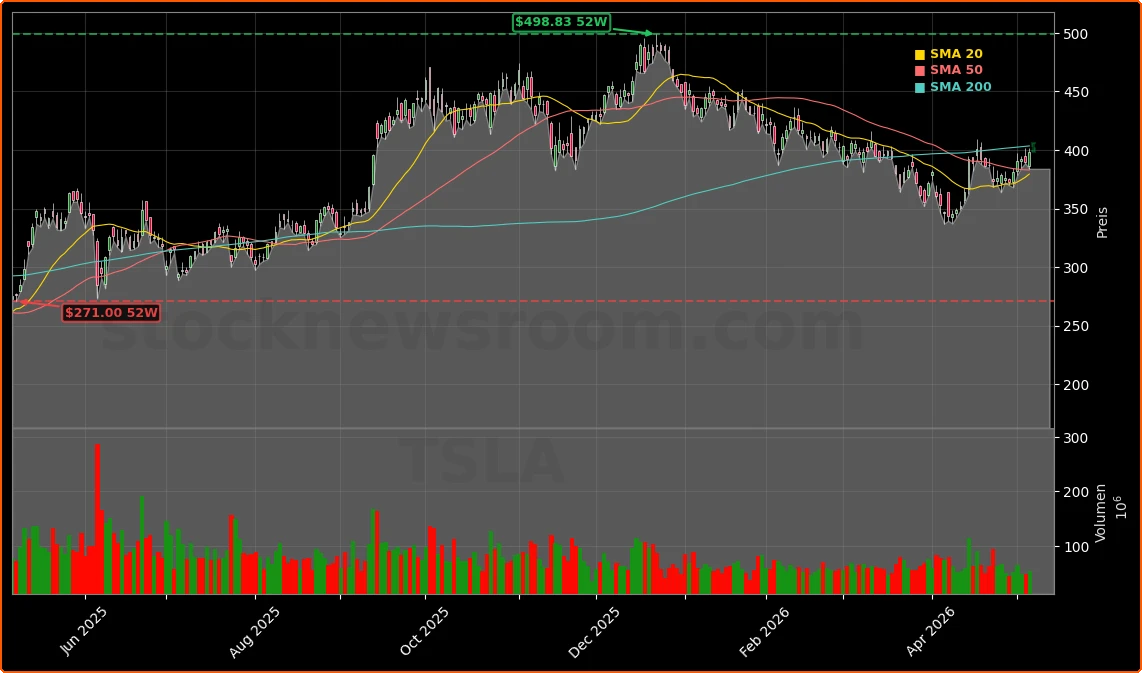
Tesla shares have staged a powerful comeback, gaining roughly 27% over the last month and turning positive for 2026 after being written off by many earlier in the year. At about $398.73 per share, with pre-market quotes near $406, the stock sits at a nine-month high but still below its 52‑week peak, leaving room before any talk of new records. Trading volumes have been almost double the three‑month average this week, underscoring renewed interest from day traders and momentum funds that thrive on TSLA’s volatility.
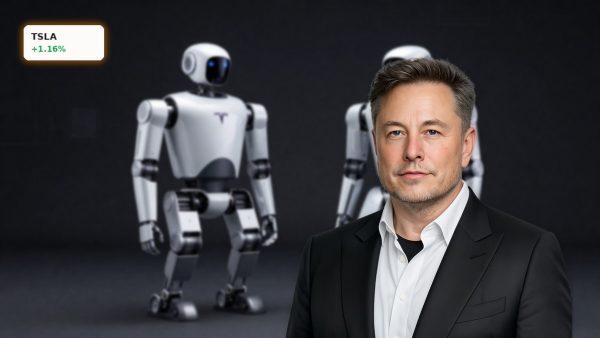
The immediate catalysts are not traditional EV metrics but software and AI. Enthusiasm around the Tesla Robotaxi unveiling expected later this year, an increasingly aggressive push into AI training and inference, and the Optimus humanoid robot have helped offset investor worries about Cybertruck delays, recalls and industry‑wide EV demand fatigue. Research desks at major banks, including Goldman Sachs and Morgan Stanley, have highlighted automation and software as the main upside swing factors, even as they caution that heavy capital spending and regulatory risk keep the risk‑reward profile elevated.
How far has Tesla Robotaxi testing progressed?
In Austin, Tesla has begun running vehicles in an unsupervised mode on public roads during evening hours, a significant step toward a commercial Tesla Robotaxi service. The company relies on a camera‑only perception stack instead of costly lidar systems used by Alphabet’s Waymo and GM’s Cruise, betting that its decade‑long investment in neural networks and in‑house AI accelerators will deliver comparable safety at far lower cost. Engineering consultants estimate Tesla’s approach could push per‑mile operating costs for robotaxis down to roughly $0.20–$0.30, compared with today’s $2.50–$3.00 per mile for human‑driven ride‑hailing.
If Tesla can validate this model at scale, it would strongly support bullish theses that treat the carmaker as a software‑first mobility platform rather than a cyclical automaker. However, regulators in North America and Europe continue to scrutinize advanced driver‑assistance systems closely. In Europe, the supervised Full Self‑Driving software is working through a country‑by‑country approval process, with the Dutch and Flemish authorities exploring faster pathways, but any wider Tesla Robotaxi deployment will still require local rulemaking and political buy‑in.
What do China sales say about core demand?
While AI and autonomy drive the multiple, Tesla’s cash flow still depends on selling Model 3 and Model Y. In April, China‑made vehicle wholesale volumes from the Shanghai plant, including exports, rose about 36% year over year to roughly 79,500 units, marking a sixth straight month of annual growth. That strong year‑on‑year gain came despite a sequential dip versus March, underscoring how competitive pricing and local brand recognition are helping Tesla defend share in the world’s largest EV market.
For U.S. investors worried about the global EV slowdown and aggressive price wars, the China data help counter the bear case that Tesla’s volume story is stalling out. With Ford retrenching from pure EVs and Toyota only now ramping its electric push, Tesla remains the clear global benchmark among Western brands, even as Chinese groups like BYD intensify pressure in the mass‑market segment. Several analysts, including teams at Citigroup and RBC Capital Markets, argue that resilient China deliveries buy Tesla time to pivot capital toward higher‑margin software, including the eventual monetization of a global Tesla Robotaxi platform.
How does Musk’s Texas chip gambit fit the puzzle?
Another piece of the AI story is hardware sovereignty. SpaceX has outlined plans for a massive “Terafab” chip campus in Texas, initially budgeted at about $55 billion and potentially scaling to roughly $119 billion over time. The facility, developed with semiconductor giant Intel, will produce advanced processors for SpaceX, Tesla, xAI and other Musk‑controlled ventures, relying on Intel’s upcoming 14A process node. The strategic aim is to reduce dependence on contract foundries like TSMC and Samsung and secure a long‑term supply of AI and autonomy chips.
For Tesla shareholders, the chip strategy offers both opportunity and complexity. On one hand, dedicated access to cutting‑edge compute could speed training for autonomy, Optimus and future vehicles, reinforcing the moat around the Tesla Robotaxi and AI businesses. On the other, Musk’s expanding web of privately held companies — from SpaceX to xAI — raises governance questions about capital allocation, related‑party dealings and how value is ultimately distributed between public TSLA holders and private investors in the rest of the empire. Large institutions in the “Magnificent Seven” have already flagged the risk that an eventual SpaceX IPO could trigger portfolio rebalancing away from Tesla to free up cash.
Are recalls and legal battles dampening sentiment?
Operationally, Tesla is managing another U.S. recall affecting more than 200,000 Model 3, Y, S and X vehicles due to delayed rear‑camera images when reversing. The company is issuing an over‑the‑air software fix, minimizing direct cost but keeping regulatory scrutiny elevated. At the same time, Elon Musk is locked in a high‑profile legal fight with OpenAI, with courtroom testimony revealing he once proposed folding OpenAI into Tesla and later poached AI talent for the automaker. While the case is widely seen by Wall Street strategists, such as Wedbush’s Dan Ives, as more “soap opera” than existential risk, it underscores just how central AI has become to Musk’s public and private ventures.
Against this backdrop, Tesla is lifting capital expenditures to more than $25 billion to support AI infrastructure, robotics and new products, a move highlighted by research at Zacks and other outlets. That spending will likely pressure free cash flow in the near term but could significantly enhance the upside if the company delivers on its autonomy goals and turns the Tesla Robotaxi vision into a scalable, high‑margin service.
Related Coverage
For investors focused on governance and incentives, the debate around Musk’s massive pay package is just as important as product news. A recent deep‑dive at StockNewsroom asks whether record‑breaking compensation truly aligns shareholders with the AI roadmap. The analysis in “Tesla Compensation Soars to $158B: Governance Shock for Investors” explores how this structure could shape capital allocation between EVs, autonomy and robotics, and what it might mean for long‑term TSLA holders.
In sum, Tesla Robotaxi progress in Austin, resilient China output and the Texas chip build‑out are pushing Tesla deeper into the AI and infrastructure mainstream, even as recalls and legal skirmishes keep risk elevated. For U.S. investors, the stock is increasingly a levered bet on software, data and compute rather than just electric vehicles. The coming earnings season, along with any formal Tesla Robotaxi reveal, will show whether today’s optimism can harden into sustainable cash flows and justify TSLA’s renewed leadership within the NASDAQ.