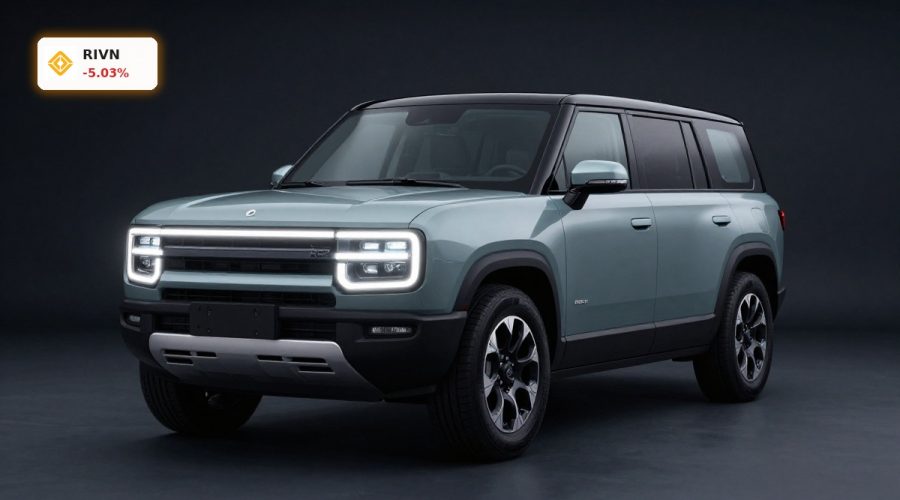

Can the Rivian R2 and a high-profile Uber partnership turn a cash-burning EV hopeful into a scaled, profitable player?

Is Wall Street underestimating Rivian Automotive, Inc.?
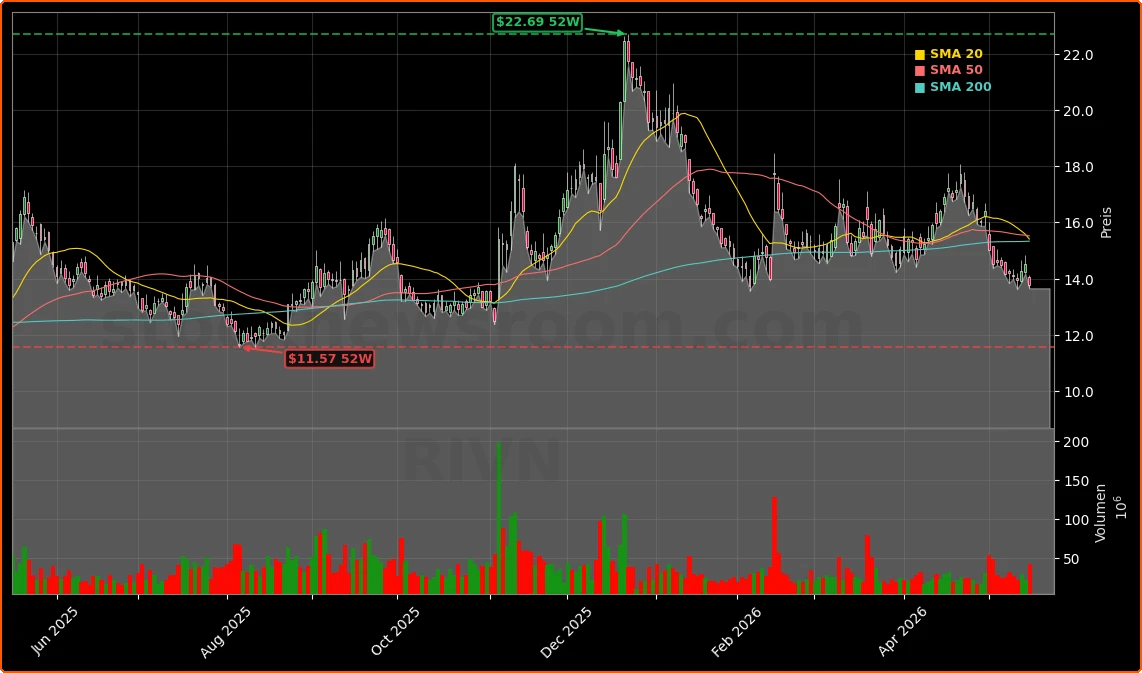
Shares of Rivian Automotive, Inc. (RIVN) trade at $13.79, down sharply from the previous close at $14.50 and about 28% lower year to date. The move comes despite a solid Q1 2026 report that showed the young EV maker outgrowing many peers. Rivian reported revenue of $1.381 billion, up 11.4% year over year and ahead of expectations, as vehicle deliveries climbed 20% to 10,365 units. Adjusted EPS improved to −$0.54, beating the estimated loss of roughly −$0.72 and signaling meaningful operating leverage.
The company’s balance sheet, however, remains a focus. Free cash flow in Q1 was deeply negative at −$1.075 billion, and management is guiding for full‑year 2026 adjusted EBITDA between −$2.10 billion and −$1.80 billion. That heavy spend reflects a deliberate choice: accelerate investment in AI, autonomy and the Rivian R2 ramp now, rather than slow the business to chase near‑term profitability.
How crucial is the Rivian R2 for scale?
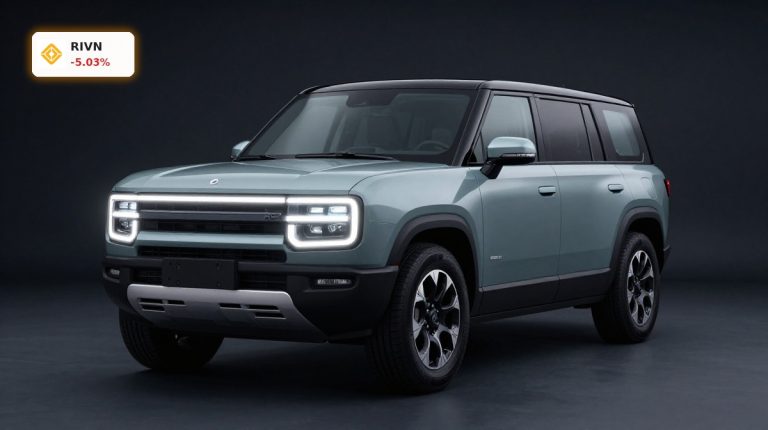
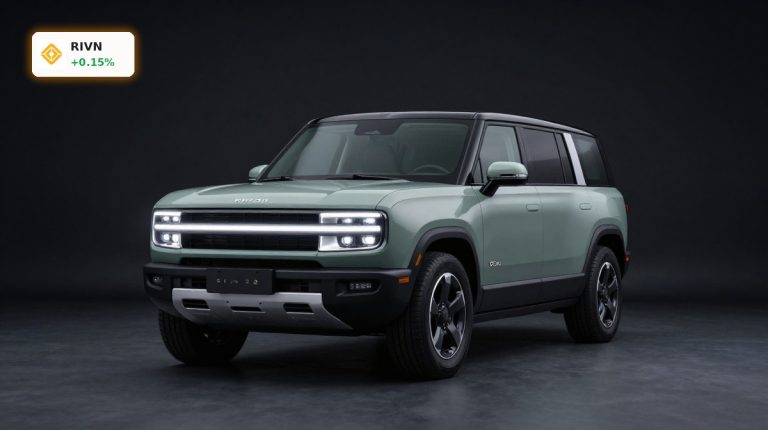
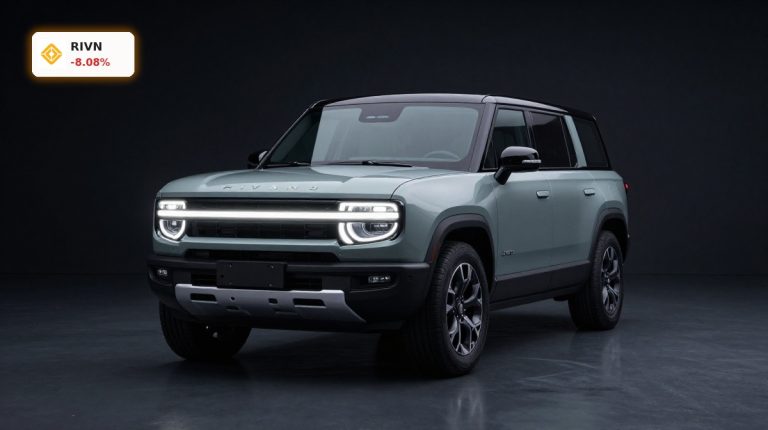
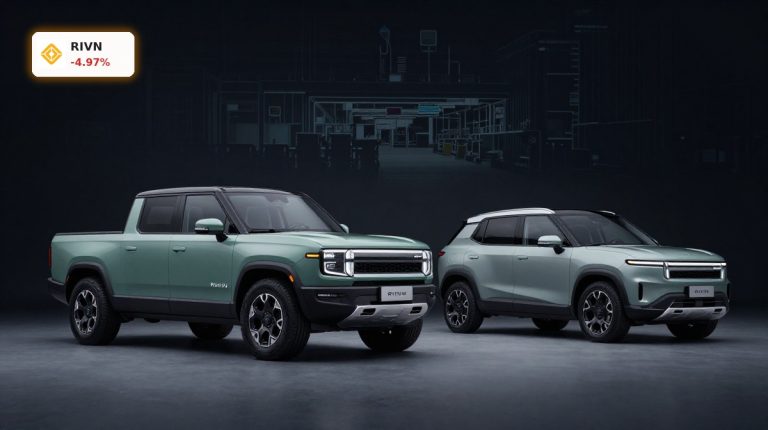
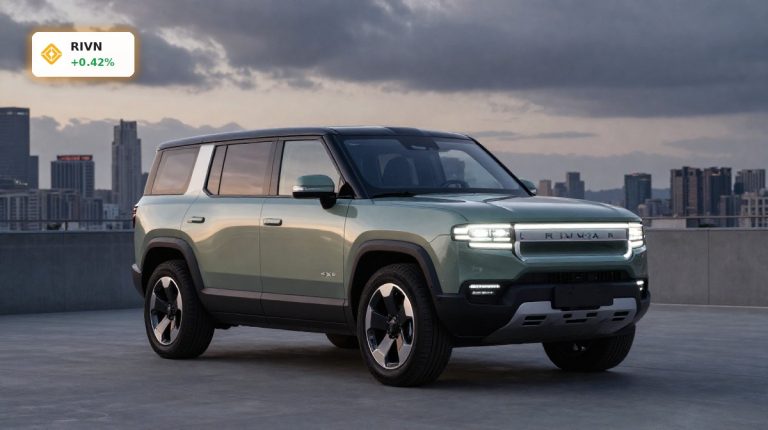
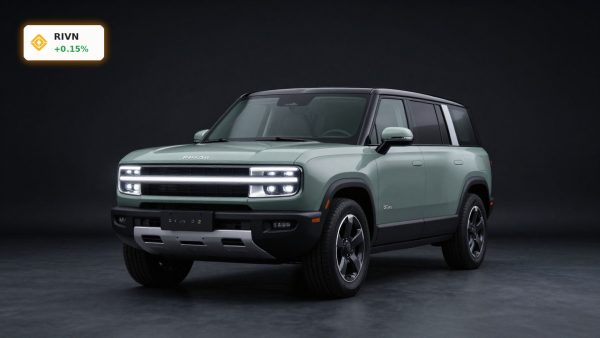
The Rivian R2 is positioned as the inflection point in Rivian’s business model. Unlike the premium R1T pickup and R1S SUV, the Rivian R2 will be the company’s first model priced below $50,000, placing it squarely in the range where most U.S. car buyers shop. SUVs remain one of the most popular segments in the American auto market, giving Rivian a natural product‑market fit if it can execute.
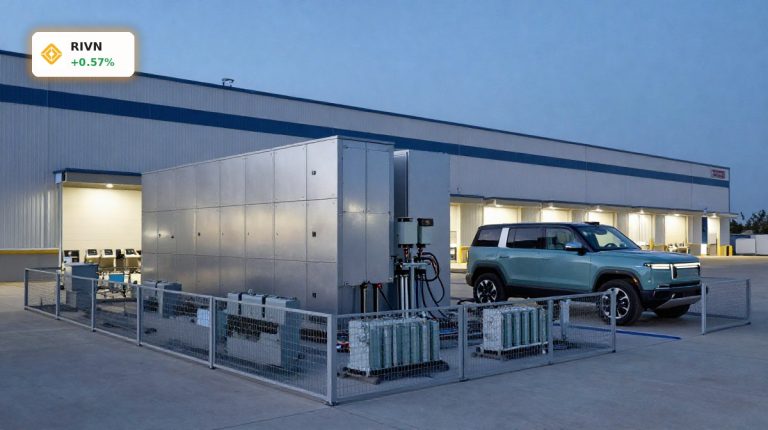
Management has indicated that the Rivian R2 carries a bill of materials roughly 50% of the R1 platform, a critical lever for margins. External deliveries are set to begin imminently, and the company is backing the launch with major capacity expansion. A $4.5 billion U.S. Department of Energy loan supports the build‑out of Rivian’s Georgia facility, targeted for up to 300,000 units of annual capacity once fully ramped. If the Rivian R2 achieves even a fraction of the volume that Tesla’s Model Y reached after its 2020 debut, Rivian’s revenue profile could look very different by the end of the decade.
For context, when Tesla launched the Model Y, its market cap was about $75 billion; today, it is roughly $1.4 trillion, an 18.7x increase. Bulls argue that the Rivian R2 could occupy a similar role as a mass‑market crossover that redefines the company’s scale, though skeptics note that competition in EVs is far more intense now than it was in 2019.
What does the Uber deal mean for Rivian?
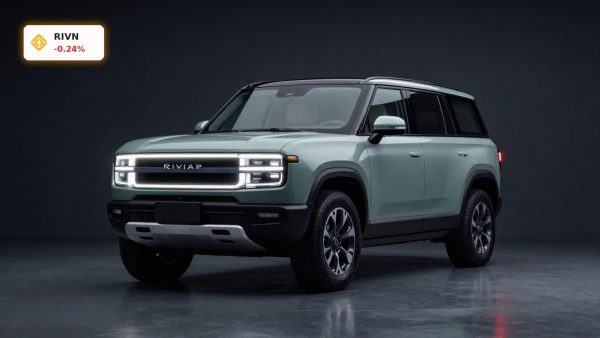
One of Rivian’s most important commercial wins is a $1.25 billion order from Uber Technologies for up to 50,000 Rivian R2 SUVs through 2031. Uber aims to expand a robotaxi and autonomous ride‑hailing business that could tap into a multi‑trillion‑dollar addressable market over time. Because Uber lacks its own mass‑scale vehicle manufacturing, it must rely on partners to supply purpose‑built EVs with deep software integration.
This is where Rivian’s focus on AI and autonomy becomes a differentiator. The company is investing heavily in in‑house software, driver‑assistance capabilities and fleet management tools that can make the Rivian R2 an attractive platform for commercial operators. In Q1, software and services revenue jumped 49% year over year to $473 million at a healthy 34% gross margin, underscoring the potential for higher‑margin recurring revenue alongside hardware sales.
Strategically, Rivian also benefits from a recent $1 billion equity investment by Volkswagen, which gives it an additional capital buffer and a potential technology and manufacturing partner. Some on Wall Street have speculated that deep‑pocketed players in autonomy and mobility, such as Uber or Alphabet’s Waymo, could eventually pursue closer partnerships or even acquisitions to secure EV supply, particularly if Tesla continues to prioritize its own vertical integration.
How does Rivian stack up against other EV and AI plays?
On the EV side, Rivian sits between bleeding‑edge startups like Lucid and mature players such as General Motors and Ford. Lucid is operating at a fraction of Rivian’s scale, while Tesla delivered many times more vehicles but now faces slowing growth in some segments. Rivian’s Q1 revenue of $1.38 billion and improving losses suggest it has passed the earliest, most fragile phase of commercialization, but it is still years away from the stable profitability enjoyed by legacy automakers.
On the AI front, some growth investors increasingly view Rivian as an autonomy and software story, not just a car company. While AI hardware leaders such as NVIDIA and consumer platforms like Apple have dominated AI headlines, Rivian is trying to carve out a role as a key supplier of smart EVs for robotaxi fleets and logistics networks. One prominent growth investor even described Rivian as a top artificial intelligence stock for 2026, suggesting the shares could theoretically rise more than 1,700% by 2032 if the Rivian R2 ramp and software monetization meet aggressive expectations.
Analyst coverage from major Wall Street banks has generally emphasized the same trade‑off: outsized long‑term upside if the Rivian R2 scales smoothly, versus high execution risk and ongoing dilution if cash burn forces new capital raises. While specific price targets vary across firms such as Goldman Sachs, Morgan Stanley, Citigroup and RBC Capital Markets, the debate centers on how quickly Rivian can move from heavy investment mode to self‑funded growth.
Related Coverage
Investors looking for more detail on Rivian’s latest earnings and expansion plans can read Stocknewsroom’s in‑depth analysis, “Rivian Earnings +2.1% Surge as Loss Narrows Sharply”. That piece digs deeper into how the Normal, Illinois plant, the Georgia project and the evolving cost structure may influence the company’s path to profitability over the next few years.
The bottom line is that the Rivian R2 launch, Uber partnership and Q1 beat place Rivian Automotive, Inc. at a pivotal moment for long‑term shareholders. The stock’s pullback to the high‑teens and low‑teens range reflects understandable concern over cash burn, but also creates room for upside if the Rivian R2 delivers on its mass‑market promise. For U.S. investors willing to stomach volatility, the next few quarters of production data, software growth and capital allocation decisions will be critical in determining whether Rivian emerges as a durable EV and AI leader on Wall Street.