
Can Robinhood Crypto Expansion turn a trading app into a global financial platform before rivals catch up?

How Does Robinhood Crypto Expansion Reshape the Brokerage Moat?
Robinhood Markets, Inc. is no longer just a zero-commission app — it’s building the rails for next-generation finance. The July 1 London launch introduced a full-stack crypto strategy: a public Layer-2 blockchain, tokenized U.S. equities (including Apple, Tesla, and NVIDIA), perpetual futures with up to 10x leverage in Europe, and self-custody lending for USDG stablecoins. Unlike Coinbase Global, Inc. — which remains largely exchange-focused — Robinhood is embedding crypto infrastructure directly into its brokerage layer, targeting power users who trade options, futures, and crypto in one interface. This vertical integration strengthens retention: active crypto traders now generate 3.2x more revenue per account than non-crypto users, per internal metrics cited at the London event.
What Do Analysts Say About the Growth Trajectory?
Mizuho upgraded its outlook to Outperform and raised its price target to $130 — a 10.9% upside from current levels — citing ‘accelerated monetization potential’ from the Robinhood Crypto Expansion. BTIG maintained its Buy rating and $125 target, emphasizing that tokenized stock access ‘de-risks international growth’ amid tightening EU MiCA compliance. Deutsche Bank also lifted its target to $113, noting ‘structural margin expansion’ from AI-driven trade routing and DeFi yield capture. The consensus price target now stands at $108.47 — but with 12 of 15 analysts holding Buy or Strong Buy ratings, the Street sees room for multiple re-rating as Q3 adoption metrics roll in.
How Is This Affecting Technicals and Portfolio Allocation?
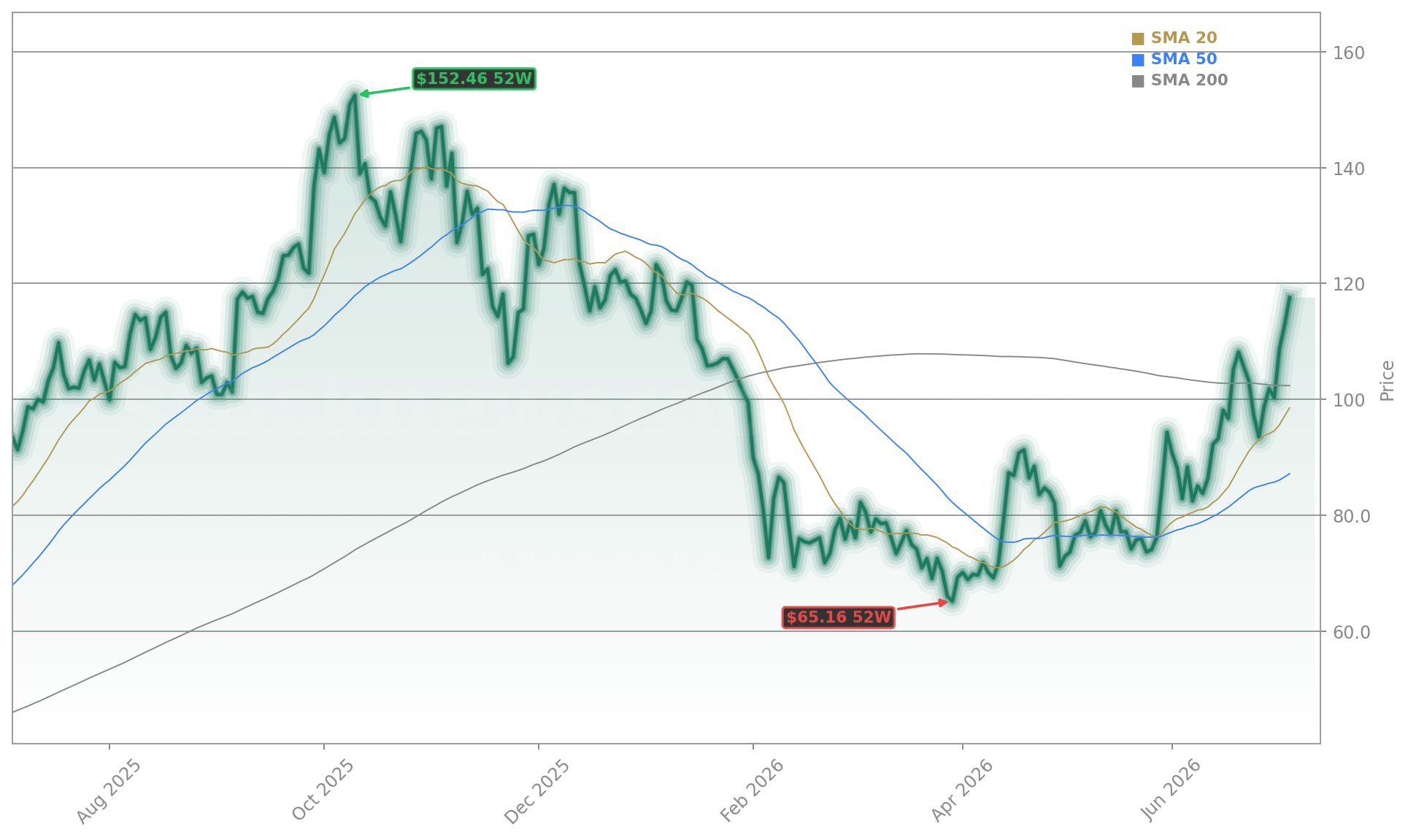
HOOD is trading 14.2% above its 200-day simple moving average ($102.37), a key long-term bullish signal — though the 50-day SMA remains below the 200-day SMA, indicating ongoing trend repair. Momentum is strong: MACD is rising above its signal line, and the stock is up 207.8% since July 2021 — outpacing the S&P 500 (11.3% annualized) and Nasdaq 100 (14.7%) over the same period. For U.S. investors, this isn’t just a crypto play — it’s exposure to a high-growth fintech platform increasingly competing with traditional banks and asset managers for wallet share. With $322 billion in customer assets and 27 million active accounts, Robinhood Markets, Inc. now rivals mid-tier wealth managers in scale.
What’s the Capital Strategy Behind the Expansion?
Robinhood Markets, Inc. recently closed a $2.2 billion private offering of 0.00% convertible senior notes due 2029 — the largest such financing in its history. Approximately $290 million will repurchase Class A common stock, while $123.2 million funds capped call transactions designed to limit dilution until the share price exceeds $237.85. This capital discipline — combined with a $50 million Trump Accounts rollout (a BNY Mellon–Robinhood partnership with 6 million pre-launch sign-ups) — signals confidence in near-term monetization. Unlike peers relying on volatile crypto trading fees, Robinhood is layering in recurring yield, AI-driven execution, and tokenization royalties — a more durable model for S&P 500 inclusion discussions.
What’s Next for U.S. Investors?
This isn’t just about listing tokens — it’s about building the infrastructure that makes tokenized finance seamless for millions of users.— Vlad Tenev, CEO of Robinhood Markets, Inc.
The next catalyst arrives on July 29, 2026, with Q2 2026 earnings. Analysts expect $1.21 billion in revenue (+22% YoY) and $0.41 EPS — modestly down YoY but driven by strategic reinvestment. With a P/E of 54.7, valuation remains premium, but growth metrics justify it: the Benzinga Edge Growth score is 92.18, and Momentum is 82.05. For U.S. portfolios, Robinhood Markets, Inc. offers asymmetric upside — not just as a brokerage, but as a foundational crypto infrastructure play competing with legacy finance rails. The Robinhood Crypto Expansion is no longer hypothetical: it’s live, global, and gaining traction.