
If Robinhood is posting record trading activity, why is management cutting 290 jobs right now?

Why Are Robinhood Layoffs Happening Now?
Robinhood Layoffs are not a reaction to distress — but to discipline. CEO Vlad Tenev confirmed in an internal memo shared on X that the company is “flattening its org structure” to avoid becoming a “heavily-layered organization.” With June month-to-date average daily trading volumes hitting record highs across equities, options, and prediction markets, the firm is acting from strength — not weakness. Yet the timing is telling: the cuts follow April’s Q1 earnings miss, where crypto transaction revenue plunged to $134 million from $221 million quarter-over-quarter. While overall revenue rose 15% year-over-year, driven by prediction markets and subscription services, the underlying strain on transaction-based margins remains acute. Citizens analyst Devin Ryan called the move a “proactive 10% reduction signals discipline and record business positioning for the next phase of growth,” not AI-driven automation — a key distinction versus peers like Block and Coinbase.
How Do Robinhood Layoffs Compare to Fintech Peers?
Robinhood Layoffs place it squarely in the 2026 fintech consolidation wave — but with a notably different rationale. While Coinbase Global (COIN) cut 14% of its staff citing crypto market headwinds and AI-era realignment, and Crypto.com slashed 12% amid a broader industry “crypto winter,” Robinhood emphasized cultural and structural agility over cost containment alone. Its $28 million in total restructuring charges — $20 million in severance and $8 million in share-based compensation — are modest next to Block’s 4,000-job purge. Crucially, Robinhood’s revenue per employee fell to $1.4 million annually — down 8% YoY — even as headcount surged 22% from Q1 2025. That inefficiency metric, rarely highlighted by Wall Street, now anchors investor scrutiny. For comparison, NVIDIA’s revenue per employee sits near $5.2 million; Apple’s exceeds $3.8 million — benchmarks that underscore the scale of Robinhood’s operational lift.
What’s Driving HOOD’s Record Volume — and Can It Last?
Robinhood’s June volume surge isn’t accidental — it’s engineered. Prediction markets, turbocharged by the World Cup, now represent its fastest-growing revenue segment. Bernstein projects $586 million in 2026 prediction market revenue — up from $150 million in 2025. A single anonymous Polymarket trader just pocketed $9 million betting against Spain — an event Robinhood is actively monetizing. Meanwhile, Tesla and Meta options volumes spiked amid AI-driven volatility, and Robinhood’s agentic trading beta — where AI places trades on users’ behalf — signals a deeper product pivot. Yet crypto remains a vulnerability: trading volumes are down nearly 50% YoY, and regulatory uncertainty looms over Robinhood Chain and stock tokens. The firm’s ability to diversify beyond crypto — and convert event-driven volume into sticky revenue — will define its next chapter on Wall Street.
What Do Robinhood Layoffs Mean for the S&P 500 and NASDAQ?
Robinhood’s business has never been stronger. But to achieve the massive scale of our mission, we cannot default to operating as a heavily-layered organization. We must be a lean, hyper-focused team where every single individual is empowered to make a massive impact.— Vlad Tenev, CEO of Robinhood Markets, Inc.
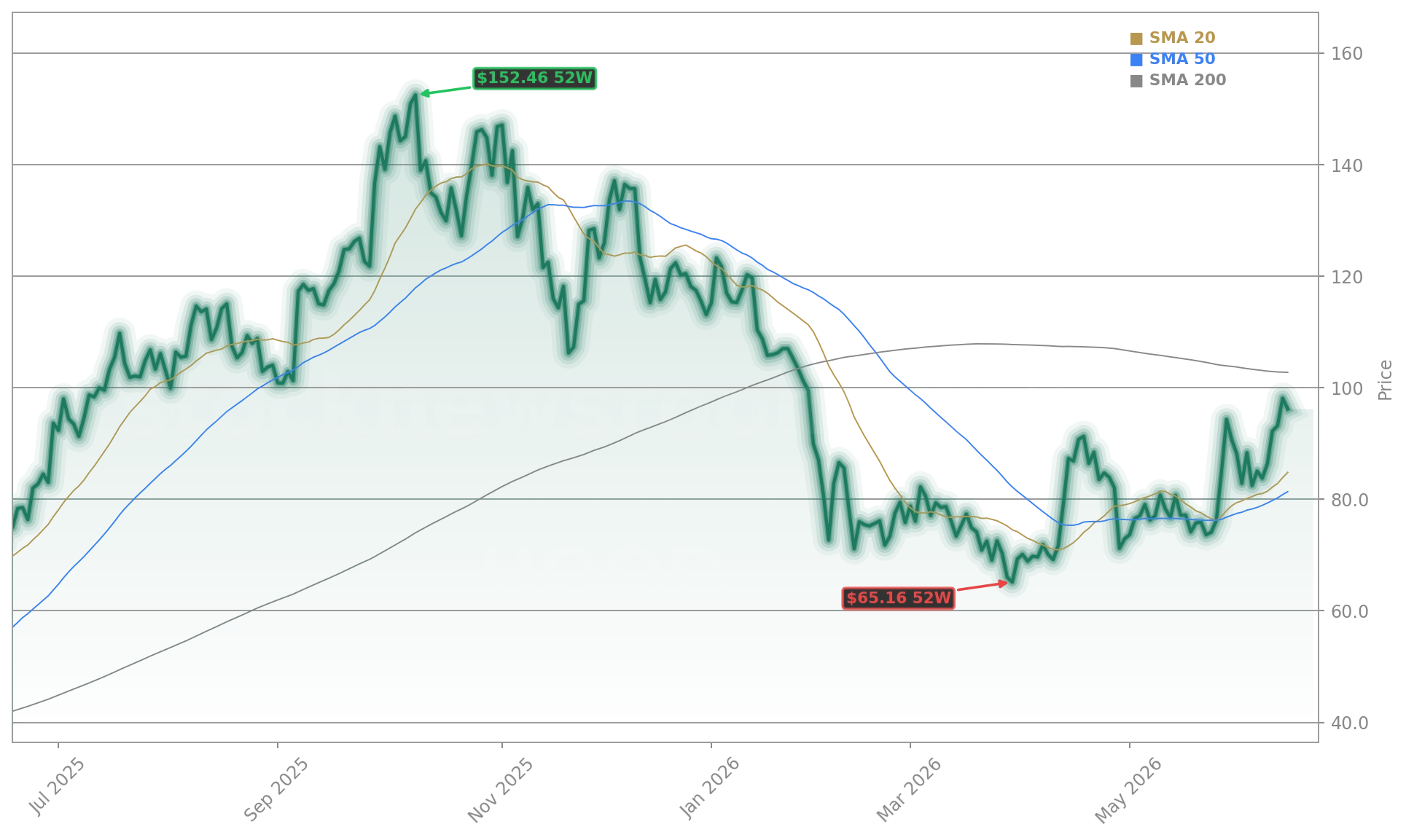
As a key fintech component of the NASDAQ Composite, Robinhood’s restructuring reflects broader pressures on high-multiple growth stocks. Its 13% YTD decline — despite a 50% rebound from March lows — mirrors sector-wide recalibration: fintech employers announced 123,653 cuts in early 2026, a 66% jump from last year. Unlike mega-cap tech firms, Robinhood lacks the cash cushion of Apple or the infrastructure moat of NVIDIA, making margin discipline non-negotiable. With the S&P 500 up 12% YTD and tech stocks trading near record highs, HOOD’s focus on talent density over headcount growth may resonate with institutional investors seeking leaner execution in volatile markets. Still, its 46x P/E ratio demands flawless delivery — and the next quarterly earnings report will test whether Robinhood Layoffs translate into sustained operating leverage.