Can double‑digit growth and a safety overhaul keep Roblox’s rally alive, or are investors underestimating the risks ahead?

Is Wall Street misreading Roblox Corporation?
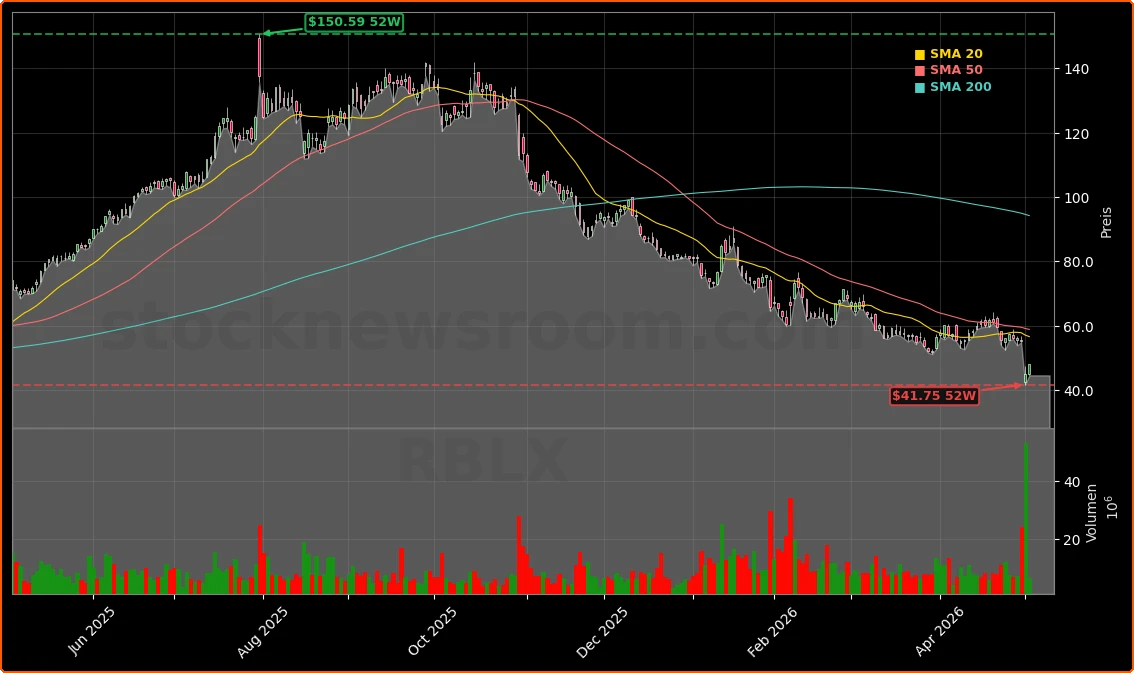
The immediate market reaction to the most recent Roblox Earnings was sharply negative, as guidance overshadowed the headline numbers. Revenue of about $1.4 billion rose 39% year over year, and the per‑share loss of roughly $0.35 beat the consensus expectation of a $0.41 loss, signaling better‑than‑feared cost control. Bookings, a key forward indicator for platform engagement and future revenue, expanded around 43% to approximately $1.7 billion, only slightly below a $1.73 billion outlook. Yet the stock had been punished heavily, at one point down more than 60% from October levels, before rebounding to $48.10 today in NYSE intraday trading.
The core issue is guidance. Management now projects annual top‑line growth of 20% to 25% for 2026, cut from a prior 23% to 29% range. Bookings and cash flow forecasts were similarly revised lower. For a market that had priced Roblox Corporation as a hyper‑growth name alongside high‑multiple software and consumer internet plays, this reset triggered a valuation shake‑out. The current move higher suggests some investors now see the sell‑off as overdone relative to still‑strong double‑digit growth.
How do Roblox Earnings reflect the safety pivot?
The growth reset in Roblox Earnings is tightly linked to a sweeping age‑verification and safety drive across the platform. Anyone logging into the company’s game worlds now faces multiple steps to verify age, a process designed to protect minors and satisfy increasingly strict global content and privacy expectations. Management has acknowledged that these friction points are dampening short‑term user activity and monetization, particularly outside the U.S., where verification adoption is still catching up.
In the United States, around 65% of users are already age‑verified, and the company is treating this system as the foundation for a global standard in trust and safety. That strategy is being tested on several fronts. Families have launched a class‑action lawsuit alleging that Roblox failed to fully protect children from explicit content and misled parents about in‑game purchases. At the same time, multiple law firms have opened securities‑fraud investigations into whether prior statements about safety and age verification were incomplete or misleading, raising headline‑risk for the stock even as the business continues to grow.
Can Roblox Corporation sustain a premium valuation?
Despite the sharp drawdown since last fall, Roblox Corporation has still commanded a premium price‑to‑sales multiple versus many gaming peers, supported by robust historical growth. One recent analysis highlighted a price‑to‑sales ratio in the high single digits, underpinned by roughly 36% revenue growth last year and expectations for more than 30% annualized growth over the next several years, far ahead of an industry forecast near 12%. That gap helps explain why some quantitative and technical strategists remain cautious, arguing that downside risk remains elevated if growth slows further or legal risks escalate.
From a strategic standpoint, Roblox is working to widen its addressable market well beyond its original base of children and early teens. The 18‑ to 34‑year‑old U.S. demographic is growing by around 50% year over year on the platform, and management has publicly targeted capturing more than 10% of the roughly $200 billion global gaming market over time. To support that push, the company is rolling out AI‑assisted creation tools and boosting the payout share for developers who build experiences aimed at users aged 18 and over. Those initiatives are designed to improve content quality, diversify the catalog, and deepen engagement among higher‑spending older users, a strategy that could justify a premium multiple if execution stays on track.
How does Roblox stack up against bigger platforms?
For U.S. investors, Roblox sits at the intersection of gaming, social platforms, and emerging 3D worlds—a space also eyed by giants like Meta and Apple. Unlike traditional publishers such as Electronic Arts or Activision Blizzard, Roblox runs a user‑generated content ecosystem that behaves more like a social network powered by in‑game purchases. That makes its trajectory more comparable to live‑service platforms and, in terms of influence on GPU demand, tangentially relevant to infrastructure players like NVIDIA.
This model offers scale advantages but also amplifies regulatory and legal scrutiny. On Wall Street, sentiment is mixed: some growth‑oriented investors view the current share price as an opportunity to accumulate exposure to a long‑duration platform story, while more risk‑averse portfolios prefer mature mega‑caps such as Apple or even auto‑tech hybrid Tesla for their clearer cash‑flow profiles. In quantitative screens and tactical trading notes, Roblox frequently appears as a high‑volatility candidate, with strategies emphasizing strict risk controls and tight stop levels.
Related Coverage
For a deeper dive into how safety policies and legal headwinds intersect with the latest Roblox Earnings, readers can explore Roblox Earnings -18.3% Plunge: Safety and Outlook Shock. That analysis examines whether the platform remains a hyper‑growth story or whether the combination of age‑verification friction and lawsuits is fundamentally reshaping the long‑term investment thesis.
In sum, the latest Roblox Earnings underline a complex trade‑off: powerful bookings growth and expanding older‑user engagement on one side, and a lowered growth outlook plus rising legal and safety scrutiny on the other. For U.S. investors, the stock at $48.10 offers both notable upside optionality and elevated risk, making position sizing and time horizon critical. The next few quarters will show whether stricter safety standards, AI‑driven creation tools, and demographic expansion can reaccelerate growth enough to re‑rate the shares on Wall Street.