Can Rocket Lab Nasdaq-100 Inclusion turn a space stock rally into lasting institutional demand for RKLB shares?

What Does Rocket Lab Nasdaq-100 Inclusion Mean for Index Funds?
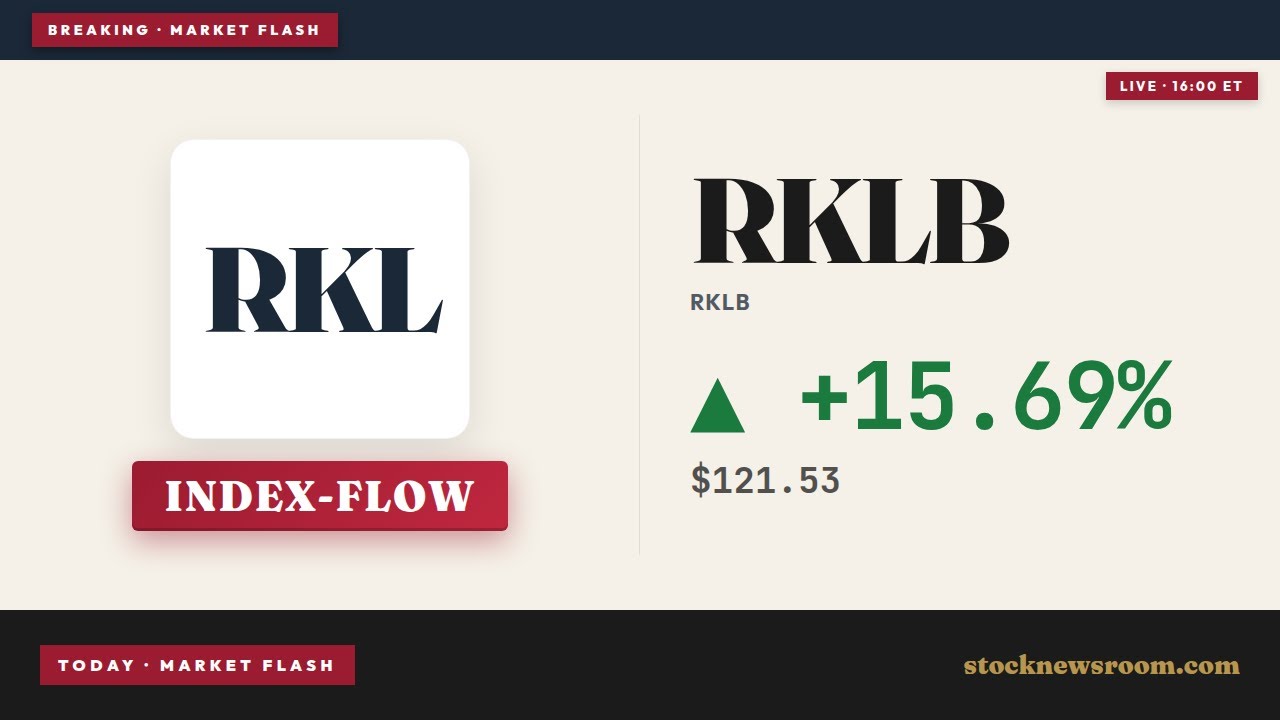
The June 22 rebalance makes Rocket Lab USA, Inc. one of five new additions to the Nasdaq-100, replacing Charter Communications, Cognizant, and three other underperformers. Unlike mid-cap peers, RKLB’s inclusion carries outsized weight: it’s now the largest pure-play space launch company in the index, with exposure concentrated in high-beta, high-growth aerospace infrastructure. That means passive flows from funds like the Invesco QQQ Trust (QQQ) and the iShares Nasdaq-100 ETF (QQQM) will begin buying shares automatically—no analyst call required. According to Nasdaq’s methodology, RKLB’s index weight is estimated at 0.18%, translating to ~$4.1 billion in mandatory ETF inflows over the next 10 trading days.
How Does Rocket Lab Compare to SpaceX and Virgin Galactic?
As SpaceX prepares for its historic Nasdaq debut, Rocket Lab USA, Inc. stands out not as a competitor in scale—but as the only publicly traded, vertically integrated launch and spacecraft provider with 80+ successful missions and a $1.1 billion backlog. Unlike Virgin Galactic (SPCE), which remains suborbital and unprofitable, or AST SpaceMobile (ASTS), which lacks launch autonomy, Rocket Lab controls its entire value chain—from Electron and Neutron rocket manufacturing to satellite design and mission operations. Deutsche Bank recently raised its price target to $120.00, citing ‘credible path to profitability in 2027’ and ‘first-mover advantage in responsive small-launch markets.’ That contrasts sharply with BTIG’s Hold rating, reflecting lingering concerns about Neutron’s 2026 debut timing.
Is RKLB’s Momentum Sustainable Beyond the SpaceX Halo?
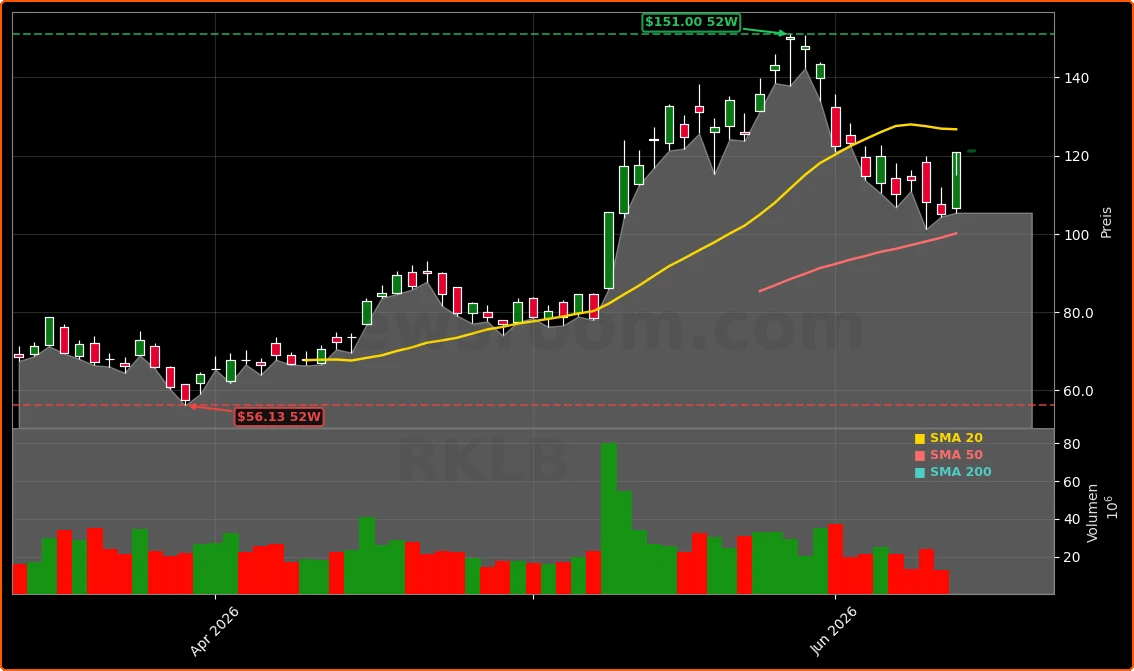
Yes—but only if fundamentals hold. While the recent 7% pre-market pop reflects sector-wide ‘halo trading’ ahead of SpaceX’s IPO, Rocket Lab USA, Inc. delivered Q1 2026 revenue of $200.35 million—63.5% above analyst expectations—and guided Q2 revenue to $225–$240 million. Its 12-month stock gain of 334.77% outpaces the NASDAQ Composite by 192 points, and its Benzinga Edge momentum score of 98.14 ranks in the top 1% of all Nasdaq-listed stocks. Crucially, RKLB trades just 3.1% below its 20-day SMA ($126.42), with $100.00 acting as robust technical support—the same level where institutional buyers stepped in during March’s pullback.
What Institutional Investors Are Saying About RKLB
Rocket Lab is the only NASDAQ-listed company that designs, builds, and launches its own rockets—and builds the satellites that fly on them. That end-to-end control is our moat.— Peter Beck, CEO of Rocket Lab USA, Inc.
Wall Street is aligning behind Rocket Lab USA, Inc. as a structural play—not a speculative bet. KGI Securities initiated coverage with a Neutral rating and $105.00 target on June 11, emphasizing ‘execution discipline on Neutron integration.’ Meanwhile, TD Cowen upgraded RKLB to Buy, citing ‘increasing contract visibility with U.S. Space Force and Anduril.’ CIBC Asset Management and Vanguard have both increased their stakes in Q2, per recent 13F filings. Notably, RKLB’s largest ETF exposure isn’t in space-specific funds—it’s in the SPDR S&P Aerospace & Defense ETF (XAR), where it carries a 5.66% weight, reinforcing its role as a defense-adjacent infrastructure play for conservative growth portfolios.