
Can ServiceNow AI Strategy turn enterprise AI chaos into a new growth engine before Wall Street fully prices it in?

What Is ServiceNow AI Strategy Really Targeting?
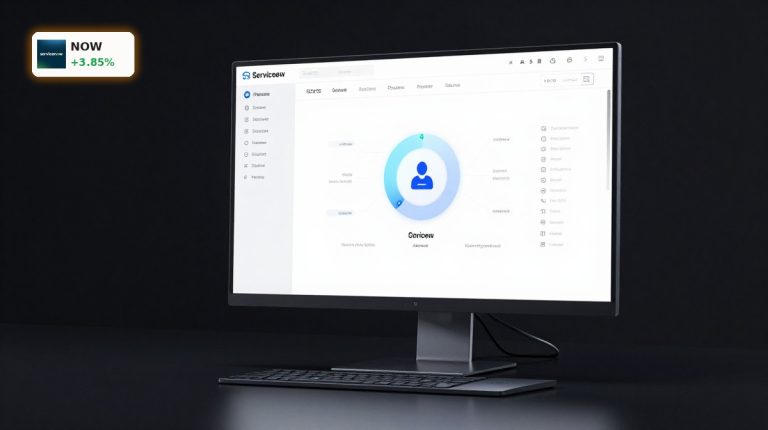
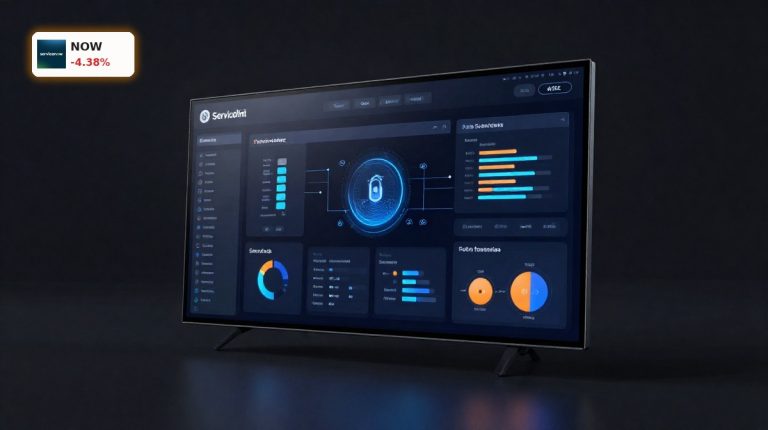
ServiceNow, Inc. is no longer positioning itself merely as an IT workflow automation vendor — it’s declaring itself the central nervous system for enterprise AI governance. Its ServiceNow AI Strategy centers on two interlocking pillars: the AI Control Tower, a real-time observability and security layer for AI agents and models, and a hybrid monetization model that decouples AI feature adoption from traditional per-seat licensing. The AI Control Tower — built on acquisitions of Armis and Veza — identifies every AI agent across hybrid cloud environments, enforces access policies, tracks performance ROI, and surfaces compliance risks. That capability is becoming critical as enterprises grapple with uncontrolled AI sprawl: Gartner estimates over 60% of large firms will deploy at least 100 AI agents by end-2026, up from 12% in 2024.
How Does ServiceNow Compare to AI-First Peers?
Unlike pure-play AI infrastructure firms or application-layer startups, ServiceNow, Inc. leverages deep workflow integration — its platform sits beneath 85% of Fortune 500 IT service desks. That embeddedness creates a structural advantage: while NVIDIA powers AI compute and Apple embeds AI at the device level, ServiceNow governs AI execution across business processes. Morgan Stanley recently upgraded ServiceNow, Inc. to ‘Overweight’, citing ‘unmatched control plane positioning’ and noting that ‘no other SaaS vendor has comparable auditability, permissions depth, or system-of-record authority across HR, IT, and security workflows.’ RBC Capital Markets echoed this, raising its price target to $132, stating the AI Control Tower ‘transforms ServiceNow from a cost center enabler into a strategic AI risk mitigator.’
Is the Hybrid Pricing Model Working?
Yes — and it’s reshaping revenue composition faster than expected. Over 50% of new customer bookings now stem from usage-based AI modules, not legacy seat licenses. That shift is reflected in the company’s workflow data fabric, already adopted by 6,000+ customers, and its RaptorDB Pro analytics engine — enabling real-time transactional + analytical queries on unified datasets. While the Armis acquisition temporarily pressured margins (subtracting 75 bps from operating margin and 200 bps from free cash flow in 2026), management expects full efficiency recovery by Q1 2027. Citigroup analysts highlight that ‘the hybrid model de-risks growth — usage spikes drive upside, not churn.’
What Does the Technical Picture Say?
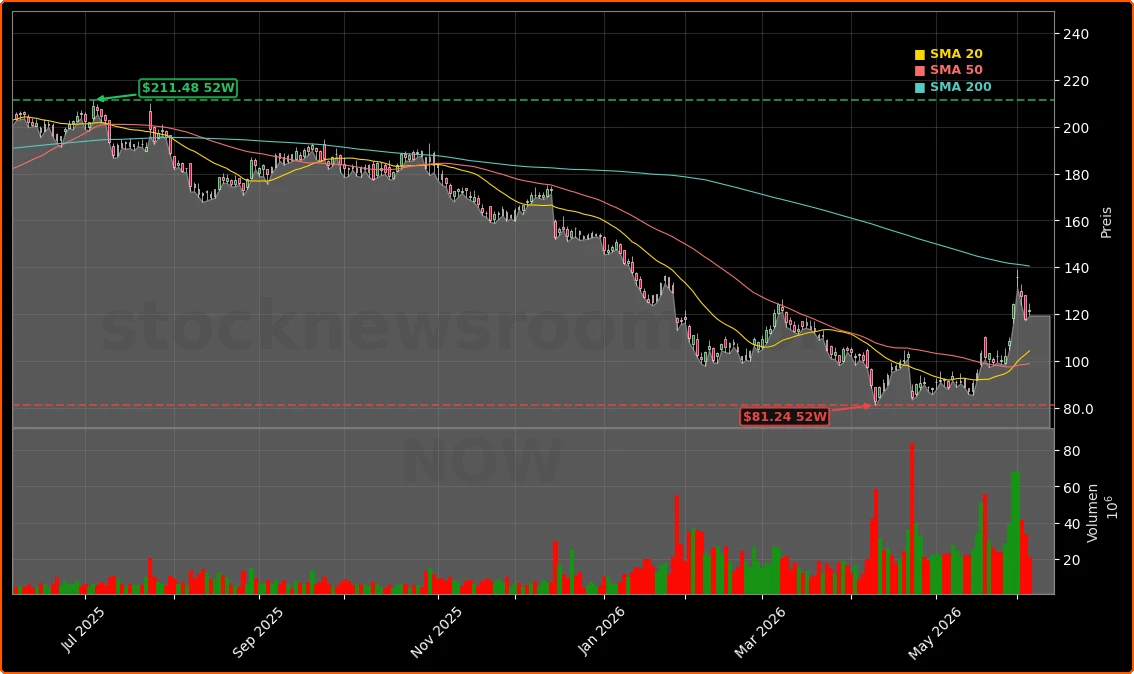
ServiceNow, Inc. shares surged 4.52% to $123.23 in Thursday’s after-hours session — outpacing the iShares Expanded Tech-Software ETF (IGV), which rose 13% over the past month. The stock now trades 19.5% above its 20-day SMA and has cleared key resistance at $126.50 in early June tests. While still 12.8% below its 200-day SMA ($140.80), the MACD histogram has turned decisively positive — signaling strengthening buyer conviction. Benzinga Edge ranks ServiceNow, Inc. ‘Strong’ on growth (88.44) but ‘Weak’ on value (10.75), consistent with its premium valuation and AI-driven growth premium. With the NASDAQ up 11% in Q2 2026 and the S&P 500 gaining 7.3%, ServiceNow, Inc. is outperforming both — a sign Wall Street is pricing in structural resilience, not cyclical recovery.
What’s Next for ServiceNow AI Strategy?
The next inflection point arrives with Q2 2026 earnings, expected July 29, 2026. Investors will scrutinize AI Control Tower adoption metrics — specifically, the number of AI agents governed per customer and expansion into non-IT use cases like supply chain and finance automation. ServiceNow, Inc. has already begun cross-selling AI governance to security operations centers, a natural extension of its Veza integration. The company’s data analytics segment is on pace to cross $1 billion in annualized revenue this quarter — a key catalyst for margin recovery. As Jensen Huang’s ‘best moment in history to be a software company’ thesis gains traction, ServiceNow, Inc. is proving that AI doesn’t replace enterprise software — it demands more of it. The ServiceNow AI Strategy isn’t just about keeping pace. It’s about owning the guardrails.
Related Coverage: For deeper analysis of near-term sentiment pressure, read ServiceNow AI Strategy -5.9%: Analyst Backing Tests Bulls, where Editor-in-Chief Maik Kemper examines whether recent volatility reflects a tactical pause or a structural recalibration. The piece also explores how ServiceNow, Inc. compares to peers on AI monetization velocity and capital efficiency.
No other SaaS vendor has comparable auditability, permissions depth, or system-of-record authority across HR, IT, and security workflows.— Morgan Stanley analysts
ServiceNow, Inc. remains the definitive platform for AI governance in complex enterprises. Its ServiceNow AI Strategy delivers both technical control and commercial flexibility — two essentials in today’s AI adoption curve. For investors, the question isn’t whether AI will disrupt enterprise software, but whether ServiceNow, Inc. can sustain its platform moat while scaling AI consumption. The next quarterly earnings will show whether the hybrid model and Control Tower are driving measurable revenue diversification — and whether Wall Street’s bullishness is justified. For long-term portfolios exposed to AI infrastructure, ServiceNow, Inc. is no longer optional — it’s foundational.