
Can Qualcomm PC Chips stay central to the AI-PC story now that NVIDIA is stepping directly into the same battlefield?

Why did Qualcomm PC Chips sell off?
The market reaction was swift after NVIDIA introduced its RTX Spark Superchip and made clear it wants a bigger role in PCs, directly challenging incumbents such as Qualcomm, Intel, and AMD. For Wall Street, that mattered because Qualcomm PC Chips have become a key part of the company’s AI growth narrative beyond smartphones. Investors had rewarded that shift aggressively in recent weeks, but Monday’s move showed how sensitive the stock remains to any threat in AI-enabled laptops.
The selloff was especially notable because Qualcomm has been positioning Snapdragon-based PCs as a major edge-computing and on-device AI opportunity, helped by its partnership work with Microsoft on app compatibility and AI laptop designs. With NVIDIA now entering the same lane using Arm-based technology and strong GPU integration, the competitive setup suddenly looks tougher.
How is Qualcomm responding?
At Computex, Chief Executive Officer Cristiano Amon argued that 2026 is becoming “the year of agents,” pointing to a sharp rise in AI token demand and the need for efficient computing across devices. That message reinforces Qualcomm’s broader case: AI will not live only in data centers, but also on phones, PCs, and other edge hardware.
Qualcomm has also tried to show investors it is more than a handset supplier. The company has discussed new AI infrastructure ambitions, including its Dragonfly data-center push, and recently benefited from optimism around supplying AI ASICs to ByteDance. Exposure to Apple remains important, but Qualcomm’s strategic story increasingly depends on reducing that concentration and proving its silicon can win in laptops and inference-heavy workloads.
Fundamentally, there are still supports. MarketBeat highlighted strong recent earnings, a higher quarterly dividend of $0.92, and a $20 billion buyback authorization. Institutional investors have also been adding exposure, even as the stock’s rally made valuation less forgiving.
What does NVIDIA mean for Qualcomm?
The new competitive risk is not just another chip launch. It strikes directly at one of the most visible premium themes around Qualcomm: AI PCs. If notebook makers and enterprise buyers see NVIDIA as offering superior graphics, local AI performance, or better system integration, the upside case for Qualcomm PC Chips could face slower adoption than investors had expected.
That helps explain why Qualcomm was among the weakest names in the S&P 500 on Monday, even as NVIDIA, Microsoft, Arm partners, and some ecosystem names gained. Intel and AMD also came under pressure, but Qualcomm’s decline was steeper because the market had more recently priced in a powerful rerating tied to AI devices.
Analyst commentary remains mixed. MarketBeat summarized Wall Street’s broader stance as a “Hold” consensus, with an average target around $181.79. No fresh calls from firms such as Citigroup or RBC Capital Markets were attached to Monday’s move, but investors will likely look for updated views as the AI-PC landscape resets.
Can Qualcomm regain the narrative?
The answer likely depends on execution, not just vision. Qualcomm still has meaningful strengths in power efficiency, Arm-based design, and device-level AI processing. Those advantages may matter as PC makers chase battery life and thinner systems, themes Amon emphasized repeatedly. For budget and midrange AI laptops in particular, Qualcomm may still have room to carve out share even if NVIDIA captures more headlines.
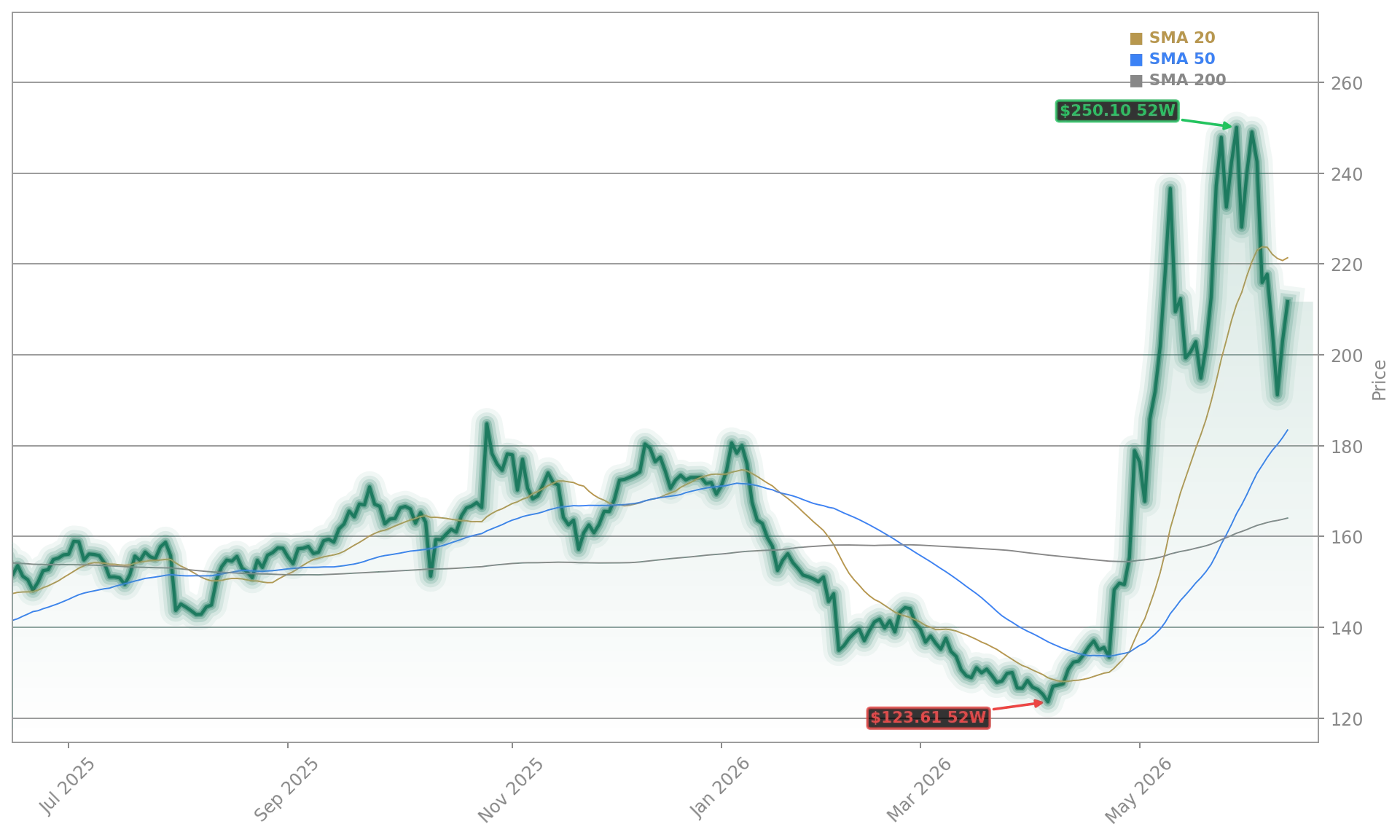
Still, the stock’s drop shows that expectations had become elevated. At $228.99, QCOM remains well above levels seen earlier this year, but Monday’s reversal suggests investors are demanding proof that Qualcomm PC Chips can remain differentiated as rivals intensify their push.
Related Coverage: Earlier volatility already hinted at how quickly sentiment can swing in this name. In Qualcomm China Visit: -11.5% Crash After AI Frenzy, we examined whether China and Vietnam expansion plans could stabilize the stock after an AI-driven rally abruptly reversed. That backdrop makes the latest NVIDIA shock especially relevant, because it shows Qualcomm still needs to convert big AI themes into durable execution.
Qualcomm PC Chips remain a high-stakes growth pillar for Qualcomm Incorporated, but NVIDIA’s arrival just made that path more contested. For investors, the next key test will be whether Qualcomm can defend its AI-PC positioning at upcoming product and investor events. If management proves performance, compatibility, and efficiency advantages, confidence in the Qualcomm PC Chips story can recover.
2026 is the year of agents.— Cristiano Amon
Fazit folgt.