
Can the Qualcomm China Visit and Vietnam expansion steady the stock after an AI-fueled rally suddenly reversed by an 11.5% crash?

How is Qualcomm trading after the selloff?
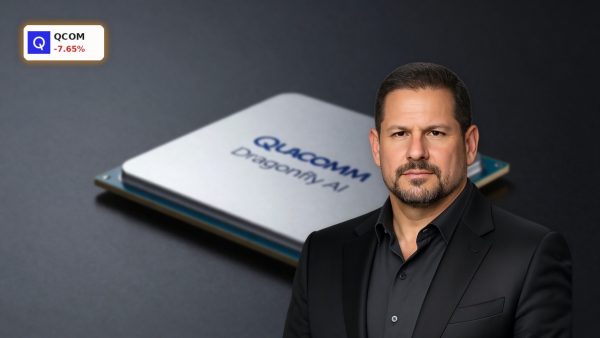
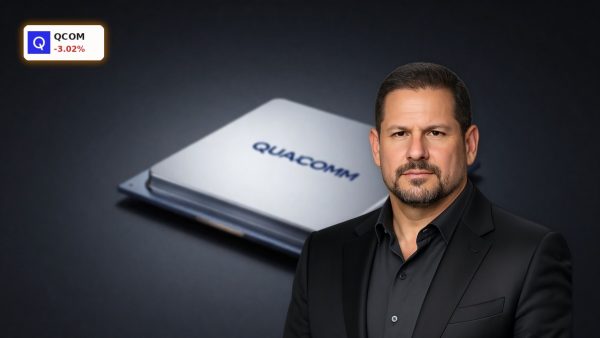
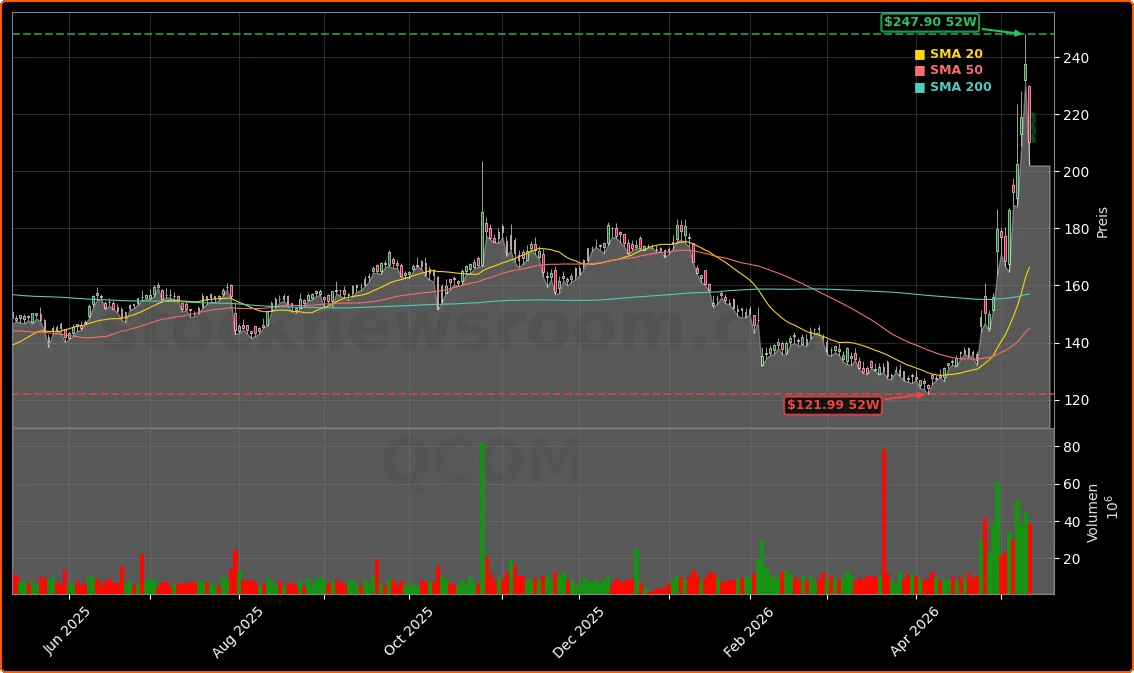
Qualcomm Incorporated closed Tuesday down 11.46% at $208.26, its worst single day since 2020 and one of the weakest performers in the S&P 500 as the Philadelphia Semiconductor Index (SOX) slid sharply. Shares had run from roughly $120 to near $240 in just weeks, powered by an AI frenzy, strong Q2 results and optimism around edge AI and automotive. The sharp drop is widely seen as profit-taking after an overextended technical move rather than a fundamental reset.
In early Wednesday trading, QCOM is quoted around $220.51 in pre-market deals, up about 4.85% from the prior close and above the last traded price of $210.31, signaling that dip buyers are stepping in. The move follows a wave of institutional interest: Madison Asset Management boosted its stake by roughly 86% in Q4, taking its position to more than 200,000 shares, while Valley Wealth Managers also modestly increased holdings. These investors are leaning into Qualcomm’s AI and automotive roadmap despite near-term volatility.
The stock’s run-up and correction mirror action across the chip space. Names like NVIDIA, AMD, Micron and TSMC also saw heavy selling this week after huge AI-related rallies, as Wall Street questioned how much future growth had already been priced in. For now, Qualcomm’s valuation and buyback firepower are becoming key talking points for portfolio managers recalibrating semiconductor exposure.
Why does the Qualcomm China Visit matter?
The Qualcomm China Visit, with CEO Cristiano Amon joining President Trump’s delegation, highlights the strategic importance of China for the U.S. chip designer. China is both a critical end market for smartphones and connected devices and a central node in global electronics manufacturing. Any progress on tech-market access or export rules emerging from the trip could directly influence Qualcomm’s long-term revenue mix and licensing business.
The presence of multiple U.S. tech executives in the delegation underscores how semiconductors sit at the core of U.S.-China negotiations. For Qualcomm, which supplies modem and application processors to a wide range of Chinese OEMs and is expanding into automotive and IoT, maintaining a workable operating environment in China is essential. At the same time, the Qualcomm China Visit coincides with heightened scrutiny over chip-related taxes and regulations in other Asian markets, including Korea, which briefly pressured semiconductor shares in early indications.
Investors will watch closely for any hints that U.S. or Chinese officials might adjust restrictions on advanced chips or design tools. Even incremental clarity could reduce risk premiums embedded in Qualcomm’s multiple and those of peers like Apple and other smartphone ecosystem players. Conversely, a tougher stance could revive concerns about supply chain relocations and demand disruptions.
What is Qualcomm building in Vietnam?
While the Qualcomm China Visit attracts headlines, the company is quietly diversifying its engineering base. At its R&D center in Hanoi, Qualcomm is expanding beyond AI research into full chip design, turning Vietnam into a broader engineering hub. Chief Technology Officer Baaziz Achour highlighted the push as part of a global race for semiconductor talent, with the company ramping up hiring to secure scarce design engineers.
The Vietnam build-out complements Qualcomm’s efforts to spread development and, over time, manufacturing risk across multiple jurisdictions. By growing a sophisticated design footprint in Southeast Asia, the company gains more flexibility if U.S.-China tensions flare again. It also taps into a young, cost-competitive talent pool at a time when demand for AI, 5G and automotive chips far outstrips the supply of qualified engineers in traditional hubs like Silicon Valley and Taiwan.
From an investment perspective, the Vietnam move supports Qualcomm’s narrative as a diversified global platform, less dependent on any single region. That could become increasingly important if investors start favoring chipmakers with resilient, multi-country R&D and supply architectures.
How do AI, autos and competition shape the outlook?
Fundamentally, Qualcomm remains on strong footing. In its latest quarter, the company delivered EPS of $2.65 on $10.6 billion in revenue, beating Wall Street expectations and doubling net income year over year. Management paired those results with a $20 billion stock repurchase authorization and a higher quarterly dividend of $0.92, signaling confidence in future cash flows.
The growth story centers on on-device and edge AI, automotive compute and a push into CPUs and AI accelerators. Partnerships with OpenAI and MediaTek, a custom silicon deal with a major hyperscaler, and design wins in intelligent driving platforms such as WeRide’s WRD 3.0—compatible with both NVIDIA DRIVE and Qualcomm Snapdragon—position the company for a world where AI inference shifts from data centers to devices and vehicles.
Analysts are largely constructive. Tigress Financial Partners reaffirmed its Buy rating and raised its price target from $270 to $280, citing Qualcomm’s evolution into an AI connectivity leader with growing exposure to autos and data center-adjacent workloads. Some research desks, including those comparing Qualcomm to legacy enterprise players like IBM, argue that valuation has become rich after the recent run, but the consensus still leans positive on multi-year earnings power. For U.S. investors comparing the name to mega-cap AI leaders like NVIDIA or platform companies such as Apple, Qualcomm offers a more diversified bet spanning handsets, cars, and edge devices.
Related Coverage
For a deeper dive into how the Qualcomm China Visit fits into the stock’s recent volatility, readers can review our prior analysis in “Qualcomm China Visit: Stock Tanks -5.6% After AI Record Run”, which examines whether the trip could trigger the next leg higher for AI or mark peak optimism.