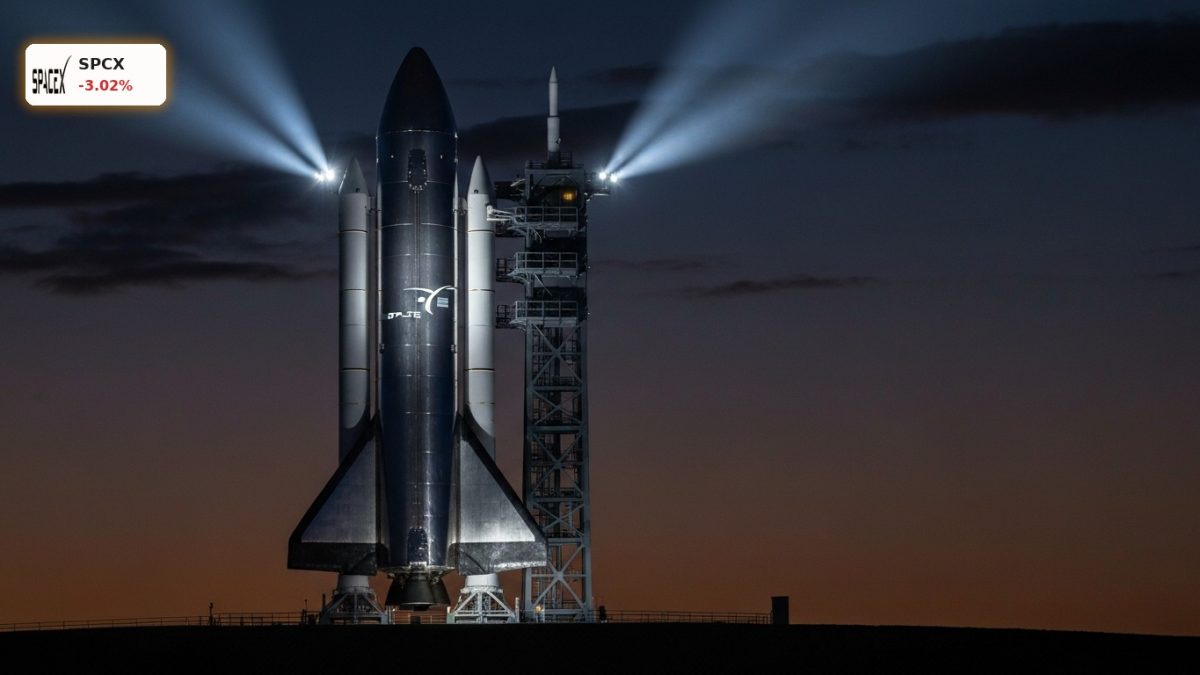

Will the upcoming SpaceX Earnings Report trigger a massive sell-off, or can Elon Musk defy the short sellers once again?

Why Is the SpaceX Earnings Report a Critical Catalyst?
The August 4 release of the **SpaceX Earnings Report** will trigger a highly unusual staggered lock-up expiration on August 6. This event will allow early investors and company insiders to sell up to 20% of their eligible locked-up stock, unleashing up to 911.5 million shares onto the public market. If the stock manages to close 30% above its IPO price for five out of ten trading days leading up to the announcement, an additional 10% could be freed. However, with shares trading far below that threshold, that scenario remains highly unlikely.
This impending supply shock has turned the company into a prime target for short sellers. Bearish positioning has surged to roughly 32% of the public float, representing about 206 million shares and $25 billion in notional bets. Elon Musk recently fired back on the social media platform X, warning that the survival probability of firms maintaining heavy short positions against the company is exceptionally low.
How Are Wall Street Analysts Valuing SpaceX?
The valuation debate surrounding the company has divided some of the most prominent names on Wall Street. Growth-focused investors like Cathie Wood of Ark Invest have viewed the recent pullback as an opportunity, actively buying the dip to expand their existing holdings. Analysts at Macquarie also remain highly bullish, reiterating an “Outperform” rating and noting that the stock’s slide offers a compelling entry point at a discount. Furthermore, Bank of America has maintained an optimistic outlook, setting a price target of $235, which implies nearly a 100% upside from current levels.
Conversely, some analysts remain deeply skeptical of the current valuation. Nicolas Owens at Morningstar has issued a “Sell” rating with a fair value estimate of $62.00, arguing that the current price-to-sales ratio of over 84x is unsustainable. Skeptics point to deteriorating short-term profitability, noting that the company posted a net loss of $4.94 billion in fiscal year 2025, followed by a $4.28 billion net loss in the first quarter of 2026. Despite these losses, bulls point to the company’s massive $82 billion in AI infrastructure capacity agreements with major tech giants like Google and Anthropic as a long-term growth engine.
Will Starship Flight 13 Restore Investor Confidence?
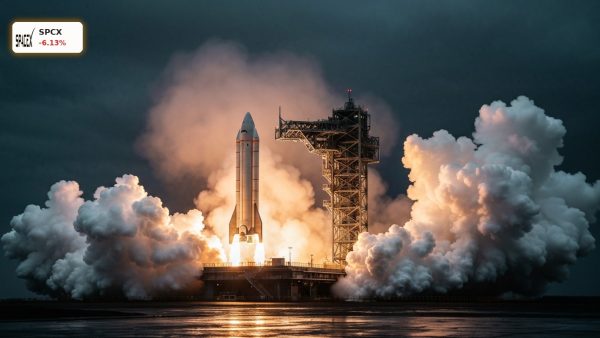
While the upcoming financial figures will dominate headlines, the immediate focus for many traders is the scheduled launch of Starship Flight 13 on Thursday, July 23. This test flight represents the first Starship launch conducted since the company went public, making it a direct catalyst for market sentiment. A previous launch attempt was aborted at the last second due to an engine ignition failure, which added downward pressure on the stock.
A successful flight would bolster confidence in the company’s ability to scale its Starlink broadband service and fulfill its deep-space obligations to NASA’s Artemis program. Additionally, investors are closely watching potential synergies between the aerospace firm and Tesla, particularly regarding the planned “Terafab” chip factory in Texas.
Related Coverage
For more insights on how recent launch delays affect the company’s market valuation, read our analysis on the SpaceX Stock Selloff: -3.1% Plunge After Starship Launch Abort. Additionally, investors looking at broader technology trends can explore how industrial giants are leveraging artificial intelligence in the article 3M Earnings Surge 5.7% as Microsoft AI Partnership Fuels Turnaround.
The survival probability of firms who maintain a significant short position in SpaceX over time is very low.— Elon Musk
The upcoming **SpaceX Earnings Report** will serve as a defining moment for the newly public aerospace pioneer. While short-term volatility remains high due to the impending lock-up expiration and valuation debates, the company’s long-term dominance in orbital launch and AI infrastructure remains unparalleled. For forward-looking investors, the current pullback could represent a generational entry point into the future of the space economy.