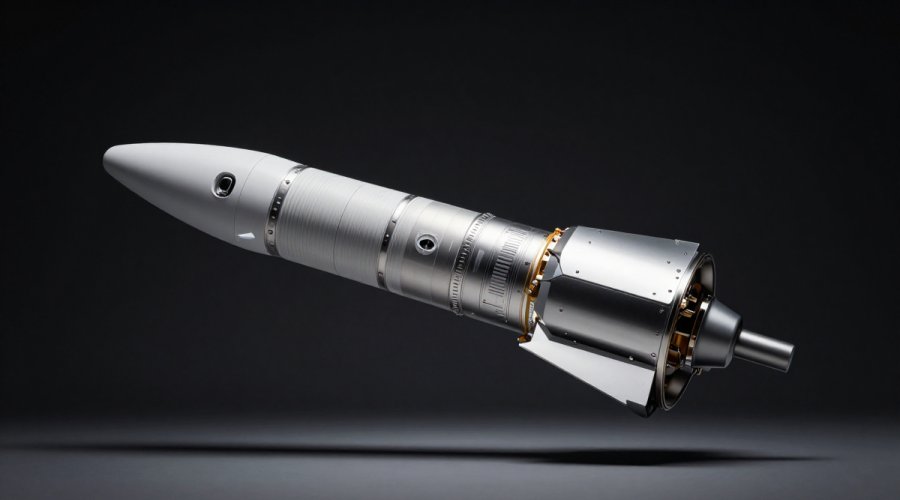

Can the SpaceX IPO rewrite index rules before most investors even realize what just changed?

What Does the SpaceX IPO Mean for Index Funds?
The SpaceX IPO isn’t just another listing—it’s a structural catalyst. At a $1.77 trillion valuation, SpaceX would instantly rank among the top 10 largest U.S. companies by market cap, surpassing Johnson & Johnson and rivaling Meta. That scale triggers automatic eligibility for major indexes. Under the NASDAQ’s new ‘Fast Entry’ rule—effective May 1—SpaceX could enter the Nasdaq-100 within 15 trading days. The S&P Dow Jones Indices has proposed a parallel accelerated inclusion framework, potentially placing SpaceX in the S&P 500 by late July. That means investors in Vanguard’s S&P 500 ETF (VOO) or Invesco’s QQQ could hold SpaceX shares before summer ends—even without placing a single trade.
How Will SpaceX Affect S&P 500 Volatility?
Market-cap-weighted indexes face an immediate tension: SpaceX’s inclusion would give it ~3.5% weight in the S&P 500—comparable to Apple’s current weighting—despite zero reported net income. That defies decades of index governance precedent. Citigroup analysts note this ‘valuation paradox’ could force the S&P to revise its profitability requirements for mega-cap entrants, citing SpaceX’s $14 billion Starlink revenue run rate and projected $20 billion 2026 segment revenue. ‘This IPO isn’t testing a stock—it’s testing the index architecture itself,’ said Citi’s global equity strategy team in a June 3 note. RBC Capital Markets echoes the concern, warning that ‘a single unprofitable name with 3%+ index weight could amplify drawdowns during tech selloffs.’
Who Gets Access—and Who’s Locked Out?
U.S. retail investors will gain unprecedented access via Trade Republic, which confirmed participation in the IPO’s retail allocation window launching June 6. But access isn’t universal: underwriters have been instructed to reject orders from Hong Kong and mainland China-based accounts, citing U.S. export controls on rocket propulsion and satellite technology. That restriction highlights the national-security dimension embedded in the SpaceX IPO—a first for a non-defense contractor. Meanwhile, ARK Invest, which holds SpaceX as its largest position, projects a $2.5 trillion valuation by 2030, driven by Starship reusability, Starlink’s 10 million subscribers, and AI-integrated satellite operations.
What’s Driving the $2 Trillion Valuation?
Starlink alone justifies over half the $1.77 trillion target, per ARK’s analysis: its $14 billion annualized revenue, 500+ terabits/sec throughput, and 2026 $20 billion forecast imply a $1.1 trillion standalone value. Add Starship’s potential to slash launch costs by 90%, NASA and DoD contracts totaling $12 billion through 2028, and emerging AI compute infrastructure ambitions—and the valuation gains coherence. Yet Morgan Stanley cautions that ‘revenue concentration in government contracts and Starlink’s still-nascent profitability create asymmetric risk.’ The firm maintains a ‘Neutral’ rating but raised its long-term price target to $165, assuming 2027 EBITDA breakeven.
What Comes After the SpaceX IPO?
SpaceX isn’t an outlier—it’s the vanguard. Anthropic filed its S-1 on June 3, and OpenAI is expected to follow before Q3. All three are targeting $1–2 trillion valuations. Their collective entry could push tech’s weight in the S&P 500 above 38%, up from 32% today. That concentration, combined with the SpaceX IPO’s index inclusion speed, may trigger a wave of portfolio rebalancing. Goldman Sachs forecasts $120 billion in passive fund inflows into large-cap tech by August—and $45 billion in outflows from mid-caps as managers reallocate for index compliance. The ripple extends to options markets: NASDAQ data shows call volume on hypothetical SpaceX options has surged 300% since May 20.
This IPO isn’t testing a stock—it’s testing the index architecture itself.— Citigroup global equity strategy team
The SpaceX IPO sets a new benchmark for scale, speed, and strategic weight in public markets. For U.S. investors, it’s no longer about whether to own SpaceX—it’s about how much volatility they’re willing to absorb in core index holdings. The next major catalyst arrives June 12—and Wall Street won’t look the same afterward.