
Are Super Micro Earnings strong enough to turn legal worries into an AI margin comeback story for investors?

Why are Super Micro Earnings moving the stock?
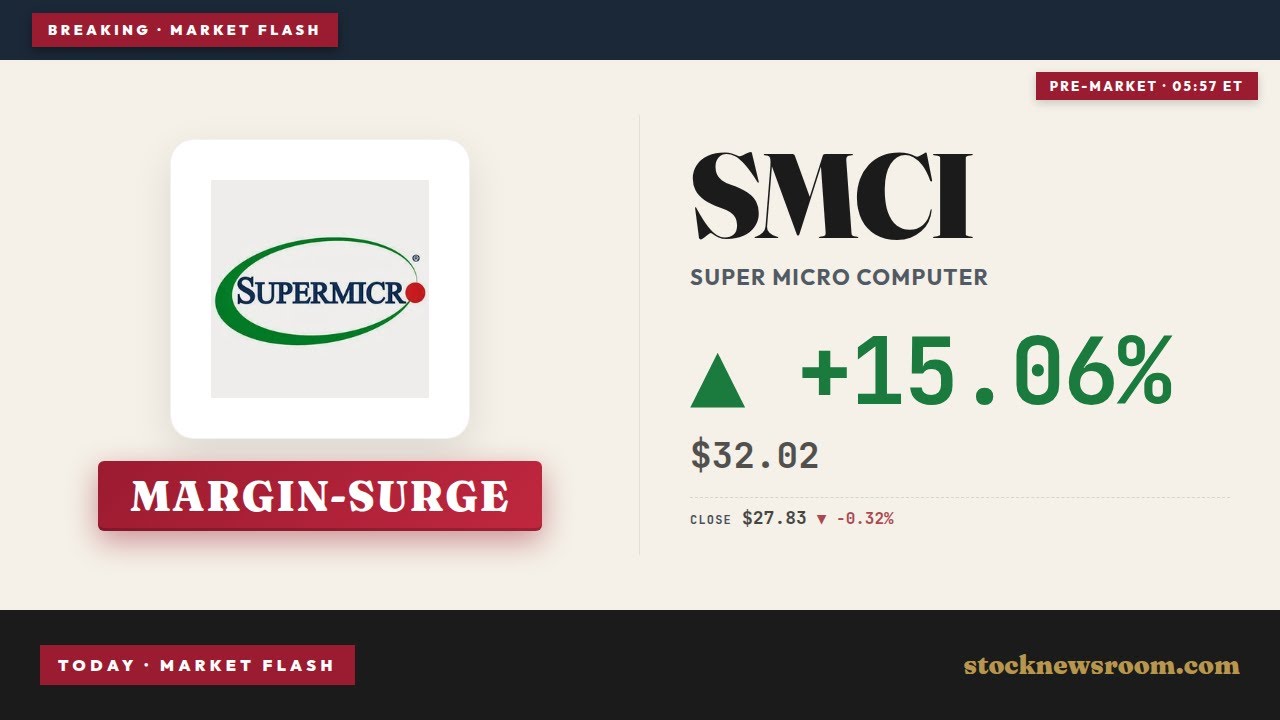
Shares of Super Micro Computer, Inc. traded around $32.50 before the U.S. open on Wednesday, up about 16.8% from the previous close of $27.83, after the company released mixed but better-than-feared quarterly results. The latest Super Micro Earnings showed third-quarter revenue of roughly $10.24 billion, below Wall Street expectations near $12.4 billion, as key customer projects slipped into upcoming quarters.
The headline, however, was profit quality. Adjusted earnings per share came in at about $0.84, well ahead of analyst estimates around $0.62. The company also reported an adjusted operating margin north of 10%, versus expectations closer to 6.8%, signaling that its shift toward higher-value data center solutions is gaining traction even as top-line growth moderates.
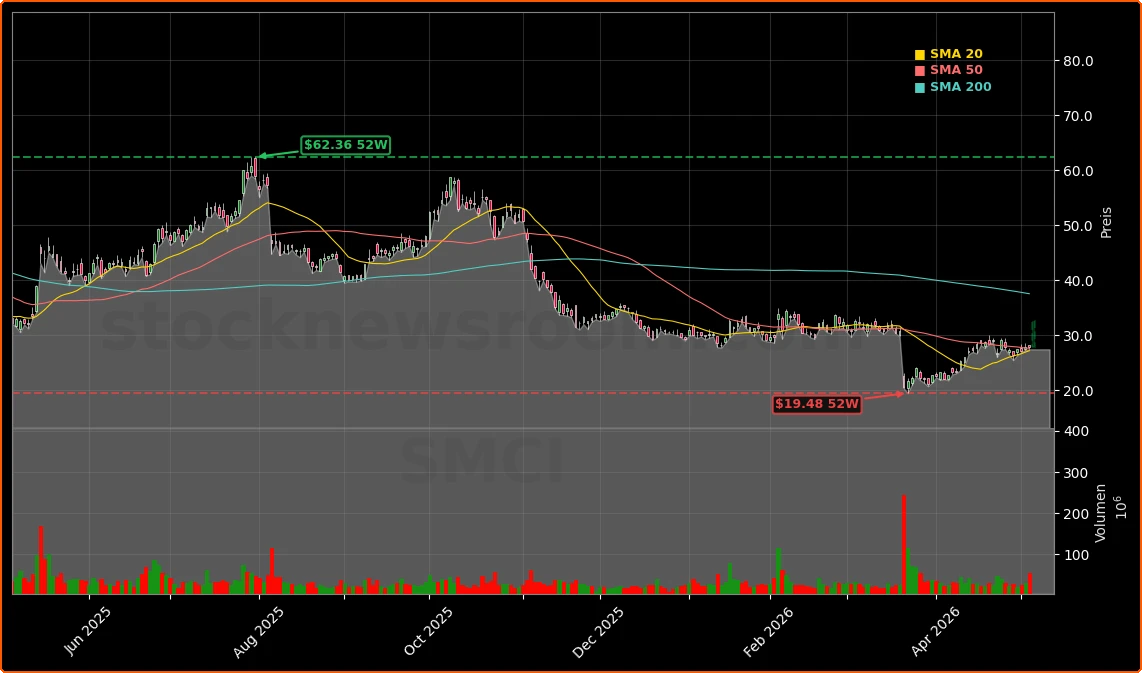
Management attributed the revenue shortfall largely to timing issues and emphasized that delayed customer deployments should boost sales in subsequent quarters. For traders in NASDAQ tech names, the combination of a profit beat, margin upside and a believable catch-up narrative appears enough to justify the sharp pre-market bounce, even though the stock remains well below its 52-week highs.
How strong is the new outlook from Super Micro Computer?
Guidance was another bright spot in the Super Micro Earnings release. For the current quarter, Super Micro is targeting revenue in a range of $11 billion to $12.5 billion and adjusted EPS between $0.65 and $0.79. Both metrics land above the prior consensus, which had drifted lower in recent weeks amid worries around export-control investigations and potential order cancellations.
Management also raised its full-year forecast, signaling confidence that project delays will be recaptured and that demand for AI-optimized servers and data center blocks remains robust. CEO Charles Liang highlighted the growing contribution from integrated and modular data center solutions rather than just traditional standalone servers, arguing that this mix shift should support healthier margins over time.
Strategically, Super Micro is positioning itself as a full-stack infrastructure partner in the AI era, alongside ecosystem leaders like NVIDIA and hyperscale cloud providers. The new Arm-based systems and Open Compute Project designs unveiled recently are meant to broaden its addressable market, especially for customers seeking non-x86 options or tighter integration with next-generation accelerators.
How does Super Micro compare to other AI hardware plays?
The latest Super Micro Earnings arrive in the middle of another volatile week for AI hardware stocks. Advanced Micro Devices (AMD) jumped more than 16% in post-close trading after its own strong update, and chip names such as Intel caught a bid as investors rotated back into the semiconductor and data center complex. Super Micro, as a key supplier of GPU-rich server platforms, is one of the more leveraged ways to play AI infrastructure spending, but it is also more exposed to single-customer and regulatory shocks than diversified chip designers.
For diversified U.S. portfolios, Super Micro sits somewhere between an AI beta trade and a special situation. Its valuation has compressed amid legal headlines even as peers such as Apple and Tesla have been driven more by macro and demand-cycle factors than by compliance questions. Institutional investors like Strs Ohio and Danske Bank have been adding to positions, according to recent filings, but the broader analyst community still leans cautious with an average price target in the mid-$30s and largely “Hold” ratings from major houses such as Morgan Stanley and Goldman Sachs.
The question for investors is whether the improved cash generation and rising margins visible in the Super Micro Earnings are enough to compensate for the governance and legal overhangs that have capped the share price over the past year.
What risks still hang over Super Micro Computer?
Despite Wednesday’s relief rally, legal and regulatory issues remain central to the Super Micro story. A company co-founder has been charged with allegedly routing billions of dollars’ worth of GPU-equipped servers with restricted NVIDIA chips into China via intermediaries in Southeast Asia, triggering internal board-level investigations and multiple securities class actions. Several law firms, including Schall Law Firm, Bernstein Liebhard and Levi & Korsinsky, have invited shareholders who bought during the past two years to seek lead-plaintiff roles in export-control related suits.
Reports of a canceled multibillion-dollar cloud contract, believed by some analysts to involve a major database and cloud provider, continue to fuel concerns that large enterprise customers may reassess their relationships until compliance questions are fully resolved. While CEO Charles Liang has stressed that only the individuals named in the indictment are implicated and that internal controls are being strengthened, investors will want to see clear outcomes from ongoing investigations.
These issues help explain why, even after the post-earnings pop, the stock is still down on a 12‑month basis and trades below key moving averages flagged by technical analysts. For risk-aware U.S. investors, Super Micro is unlikely to be a set-and-forget AI winner; instead, it remains a high-beta, headline-sensitive name whose multiple can expand or compress quickly with each regulatory development.
Related coverage on Super Micro Computer
For a deeper dive into how the AI boom and export-control risks may shape the medium-term outlook, readers can review the analysis in Super Micro Computer Forecast +123%: Rally or Legal Shock Ahead?. That piece explores scenario-based valuation ranges and weighs whether surging demand for AI infrastructure can offset legal uncertainty linked to past China sales.
Our margin recovery and the rapid growth of our modular data center solutions show that our business remains robust.— Charles Liang, CEO of Super Micro Computer, Inc.
Overall, the latest Super Micro Earnings show a company that is executing well on margins and product strategy while still working through significant legal and governance challenges. For U.S. investors focused on AI infrastructure, the stock offers compelling upside leverage to data center demand but also outsized regulatory and headline risk. The next few quarters of Super Micro Earnings and regulatory updates will be crucial in determining whether Wednesday’s bounce marks the start of a sustainable rerating or just another trading opportunity.