
Can Elon Musk’s aggressive pivot to autonomous driving rescue Tesla’s valuation as profit margins continue to collapse?

How Did the Latest Tesla Earnings Impact the Stock?
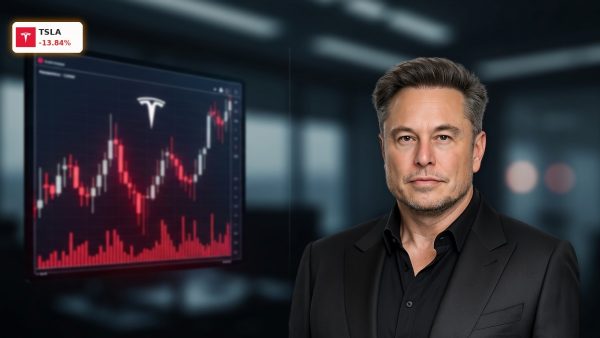
The immediate aftermath of the Tesla Earnings release triggered a sharp sell-off, with the stock tumbling nearly 15% in a single day. This downturn contributed to a broader tech correction on the NASDAQ, wiping out billions in market capitalization across mega-cap technology giants. Currently trading around $305.44, down 1.23% in recent trading, Tesla has erased almost all of its gains over the past 12 months and remains down roughly 30% year-to-date in 2026.
Wall Street analysts have reacted swiftly to these figures. Edison Yu of Deutsche Bank Research recently lowered the firm’s price target for Tesla from $465 to $420, though he maintained a “Buy” rating. The analyst noted that while the long-term thesis remains attractive, key catalysts like the Cybercab robotaxi and the Optimus humanoid robot are progressing slower than initially anticipated, leaving the stock in a temporary phase without major near-term milestones.
Why Are Profit Margins Shrinking So Rapidly?
The core issue for investors analyzing the Tesla Earnings details is the widening gap between robust top-line revenue and deteriorating profit margins. For the second quarter of 2026, Tesla reported a strong revenue figure of $28.24 billion, easily beating analyst expectations of $25.55 billion. However, adjusted earnings per share came in at just $0.33, missing Wall Street consensus estimates of $0.49 to $0.53.
This margin squeeze is driven by two main factors. First, Tesla has aggressively cut prices across its vehicle lineup to combat rising competition from Chinese rivals like BYD and Geely, who are offering feature-rich EVs at lower price points in key global markets. Second, the company is actively retrofitting its Fremont production lines to accommodate its Optimus robotics division while simultaneously ramping up Cybercab production in Texas. These capital-intensive shifts have temporarily pressured operating margins and free cash flow.
Can FSD and Robotics Save the Valuation?
Despite the disappointing financial metrics, CEO Elon Musk’s aggressive pivot toward autonomous driving is showing operational momentum. During the second quarter, Full Self-Driving (FSD) adoption reached a record 15.2% of the global fleet, with FSD subscriptions generating $791.2 million on an annualized basis. More than 55% of new North American deliveries now include an FSD subscription, proving that software is becoming a core high-margin revenue driver.
However, Tesla faces stiff competition in the autonomous space. Alphabet’s Waymo is already completing over 500,000 paid autonomous rides per week, establishing a massive head start. With Tesla trading at an exceptionally high price-to-earnings ratio compared to the broader NASDAQ-100, the stock remains highly vulnerable to market volatility if these AI projects do not commercialize rapidly. For some institutional investors like ARK Invest, however, the recent dip was seen as a prime buying opportunity, leading them to purchase over $50 million in shares during the slide.
Related Coverage
For a deeper dive into how these margin pressures are reshaping the EV giant, read our detailed analysis on the Tesla Earnings Shock: Stock Plunges -13.8% as Profit Margins Shrink, which explores the balance sheet impact of Elon Musk’s strategic pivot. Additionally, this aggressive tech infrastructure spending is not unique to the automotive sector; learn how other tech giants are managing massive capital outlays in Amazon Earnings: Will $200 Billion AI Spend Trigger a Plunge? to see how Wall Street is reacting to AI-driven capital expenditure.
Ultimately, the latest Tesla Earnings highlight a company in transition, sacrificing short-term margins to secure a dominant position in the future of AI and autonomous robotics. While the current stock price correction reflects near-term anxieties, long-term investors may view this dip as an attractive entry point before the next wave of commercialization. The coming quarters will prove whether Tesla can successfully turn its ambitious technological vision into concrete profitability.