Can The Trade Desk’s latest earnings stumble mark a temporary reset, or is Wall Street pricing in a deeper growth problem?

How did markets react to The Trade Desk Earnings?
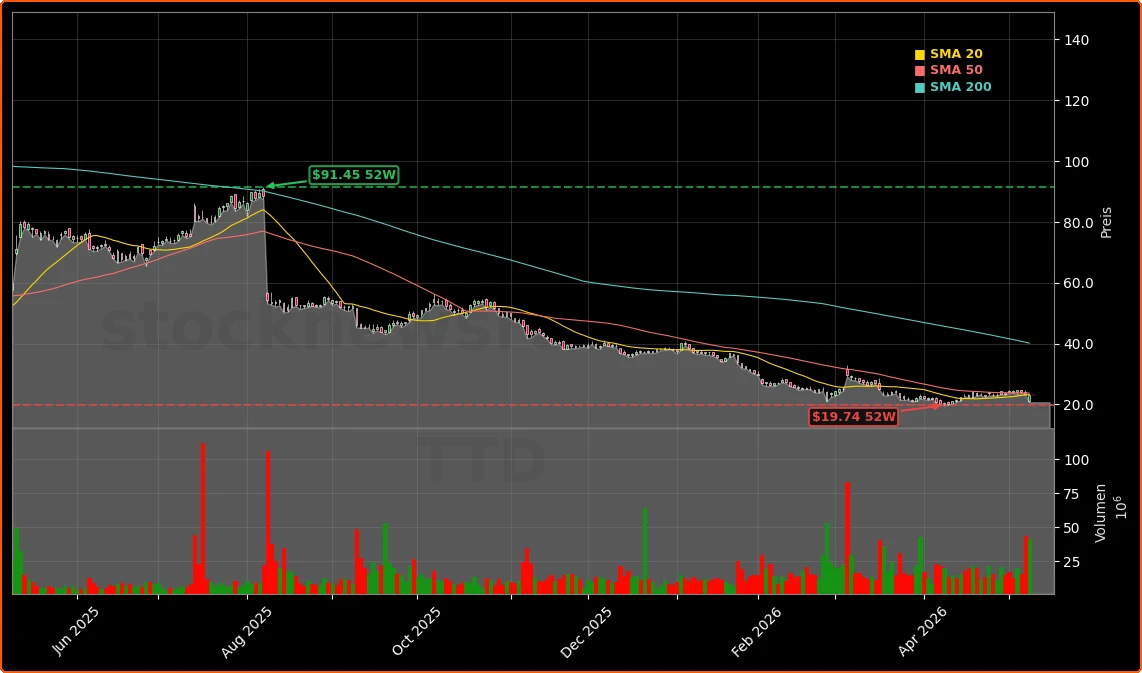
The Trade Desk, Inc. has turned into one of the biggest losers in the ad-tech space in 2026. After its Q1 2026 release, the stock dropped as much as 13% intraday, at one point trading near $20, before stabilizing around the low-$20s. As of Friday’s close, shares changed hands at $23.08, down about 1.75% on the day, with after-hours quotes near $22.99. That leaves the stock down more than 40% year to date and roughly 60% over the last twelve months, a stark contrast to the strength seen in broader NASDAQ growth names like NVIDIA and Apple.
Traders highlighted heavy volume and short-term technical levels such as the $20 support area and the volume-weighted average price (VWAP) near $21.42 during intraday swings. While the post-report bounce off the lows hinted at dip-buying interest, the broader trend remains clearly negative, reflecting mounting skepticism about the company’s growth trajectory.
What’s inside The Trade Desk Earnings report?
The Trade Desk Earnings for Q1 2026 showed that revenue reached roughly $688.9 million, up about 12% year over year. That growth rate marks a sharp deceleration from approximately 25% in Q1 2025, raising questions about how durable the open-internet programmatic story really is as budgets flow toward walled gardens and retail media. Non-GAAP diluted EPS landed at $0.28–$0.29, down from $0.33 in the prior-year quarter and below Wall Street expectations around $0.32.
Profitability also slipped. Adjusted EBITDA margin compressed from roughly 34% a year ago to about 30%, as the company continued to invest heavily in platform operations, sales and marketing, and technology development, including AI-driven tools such as Koa Agents. Management stressed that higher operating costs reflect a long-term growth strategy, not short-term optimization.
On the guidance front, The Trade Desk projected at least $750 million in Q2 2026 revenue, implying growth of only about 8% year over year and falling short of consensus estimates near $772 million. The company also guided Q2 adjusted EBITDA to about $260 million, down from $270 million in the year-ago period, signaling further near-term margin pressure.
Why are analysts cutting ratings on The Trade Desk?
The muted reaction to The Trade Desk Earnings was exacerbated by a coordinated downgrade wave from major Wall Street firms. KeyBanc Capital Markets cut its rating from Overweight to Sector Weight, arguing that structural headwinds—from the Middle East conflict to friction with large ad agencies and shifts in industry structure—are weighing on growth and could drive further valuation multiple compression.
Oppenheimer downgraded The Trade Desk from Outperform to Perform, explicitly stating it sees no clear catalyst for the shares until revenue reaccelerates. The bank highlighted uncertainty around the timing and monetization impact of AI-based and agent-integrated ad-buying solutions. William Blair followed with a downgrade from Outperform to Market Perform, emphasizing feedback from digital ad buyers who reported that The Trade Desk has been losing market share, a trend the firm fears could persist.
Guggenheim Securities took a slightly more constructive stance, maintaining a Buy rating but cutting its price target from $28 to $25 after trimming growth forecasts to reflect the softer Q2 outlook. Taken together, these calls move the narrative from a purely macro-driven slowdown to a potentially structural reset in The Trade Desk’s competitive position versus giants like Tesla-style disruptors in other sectors and entrenched ad platforms at Amazon, Meta and Alphabet.
What risks and opportunities do investors face now?
Beyond The Trade Desk Earnings themselves, investors are closely watching several risk factors. One is the company’s complex relationship with Publicis, the French-based advertising conglomerate that has contributed several billion dollars of revenue over the last decade. CEO Jeff Green has tried to downplay tensions, expressing optimism about the “next chapter” of the partnership, but the market remains wary of any deterioration in that agency channel.
Another concern is the broader shift in digital advertising. Retail media networks and walled gardens are capturing a growing share of budgets that once flowed through independent demand-side platforms like The Trade Desk. KeyBanc and William Blair both suggested that these dynamics might represent lasting competitive displacement rather than a temporary macro headwind. That possibility is particularly important for US investors who have paid a premium valuation multiple for TTD based on expectations of durable, 20%+ growth.
There are still positives. Management highlights customer retention above 95%, continued expansion in connected TV inventory and new products such as Koa Agents and the OpenPath initiative. The company also unveiled a retail-media partnership with Dollar General, suggesting ongoing opportunity to plug into the rapid growth of commerce-driven ad formats. For investors willing to look past near-term volatility, these levers could support a recovery if execution improves and macro conditions stabilize.
Related Coverage: what else to read on The Trade Desk?
For a deeper strategic dive into whether the current slowdown marks a temporary stumble or a more fundamental reset, investors can revisit the analysis in The Trade Desk Analysis: Growth Boom or Serious Warning?. That piece examines the company’s Kokai platform rollout, investor trust in management’s long-term roadmap and the balance of risks around changing ad-tech market structure. Together with the latest The Trade Desk Earnings discussion here, it provides a fuller picture for shareholders weighing their next move.
Despite headwinds in the macro environment, we remain confident in our ability to lead and innovate within the programmatic ecosystem.— Jeff Green, CEO of The Trade Desk
In summary, The Trade Desk Earnings underline a clear deceleration in growth, rising cost pressure and a more cautious Wall Street stance, all of which have driven a sharp reset in the share price. For US and global investors, the stock is shifting from a high-confidence growth story to a show-me narrative where revenue reacceleration and margin stabilization will be critical. The next few quarters will reveal whether product innovation and strong client relationships can restore confidence and justify a renewed premium on this former ad-tech high-flyer.