Can TSMC keep turning the AI spending boom into an even bigger lead over every other foundry?

Why is TSMC AI Demand driving shares?
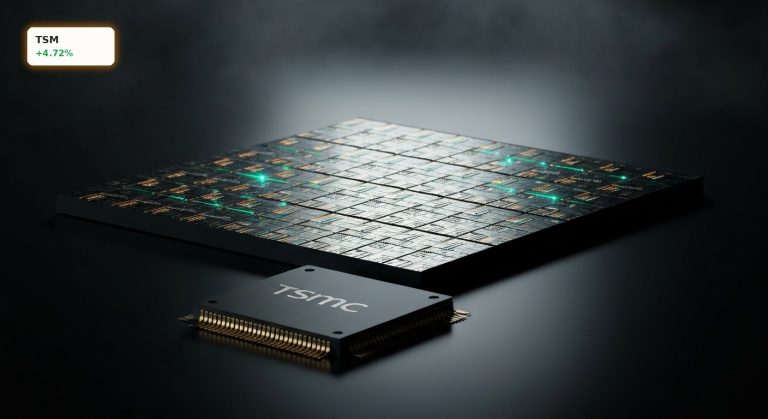
TSMC’s latest setup is less about a one-day move and more about where AI spending is flowing. The company sits at the center of the semiconductor supply chain, manufacturing chips designed by customers such as NVIDIA, Apple, Broadcom, Qualcomm, and Intel. As AI workloads scale, customers need more leading-edge wafers and more advanced packaging to connect multiple compute dies on a single platform. That combination has made TSMC AI Demand one of the clearest themes in global semiconductors.
The revenue mix shows how fast that shift has happened. In Q1 2026, high-performance computing represented 61% of sales, up from 43% in Q1 2023 and 30% in Q1 2020. Smartphones fell to 26% from 49% over that same period, underscoring how decisively AI and data center silicon have reshaped the business.
How is TSMC extending its lead?
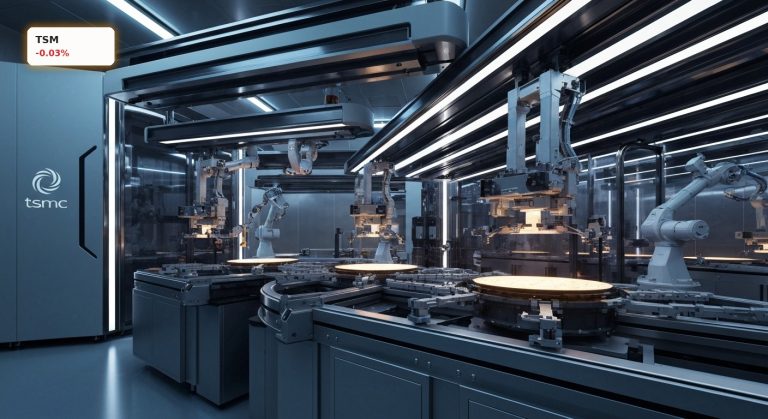
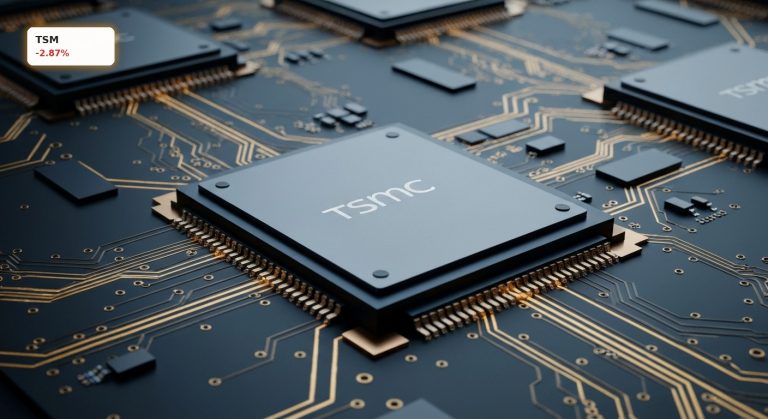
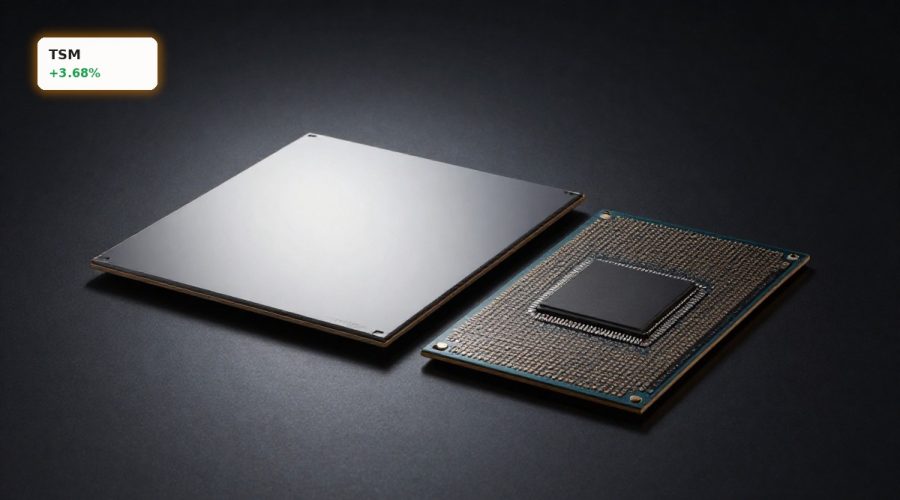
Technology leadership is not just about smaller nodes anymore. TSMC is investing heavily in chiplet-based packaging on substrates, a critical step for keeping performance gains coming even as traditional scaling gets harder. That matters because AI systems increasingly rely on combining multiple GPUs or compute elements in one package. Advanced packaging has become a strategic bottleneck, and TSMC is one of the few companies with the manufacturing depth to scale it.
The latest quarterly numbers reinforce that advantage. TSMC generated $35.9 billion in Q1 revenue with a net profit margin of 50.5%, while earnings reached NT$22.08 per share, or about $0.70. Just three years earlier, quarterly revenue was $19.6 billion and earnings were $0.29 per share. Even more striking, 61% of first-quarter revenue came from 3-nanometer and 5-nanometer chips, highlighting the concentration of demand in premium process technologies.
That positioning also explains why investors increasingly see TSMC as the picks-and-shovels winner of AI. Unlike any one chip designer, it benefits across multiple platforms and architectures.
What do NVIDIA and Apple mean for TSMC?
Customer concentration remains a strength, not a weakness, as long as the end markets keep expanding. NVIDIA is moving closer to TSMC strategically, and expectations are building that it could surpass Apple as TSMC’s largest customer this year. For U.S. investors, that is a key signal: the biggest AI winner on Wall Street still depends on TSMC’s manufacturing capacity.
At the same time, custom silicon efforts from Amazon, Alphabet, and Microsoft support the same foundry trend. Even when hyperscalers diversify away from merchant GPUs, they still need advanced manufacturing. That broadens the runway for TSMC AI Demand beyond any single chip cycle. There are risks, however. Analysts tracking memory and AI infrastructure have warned that spending could look frothy if hyperscalers slow investment later this year. If cloud players trim budgets, sentiment across the semiconductor complex could cool quickly.
Can TSMC keep outrunning rivals?
TSMC’s moat still looks formidable. Estimates cited by market observers put its share of chip manufacturing revenue near 70%, while Intel’s foundry ambitions remain early and still lack the same customer depth. Equipment suppliers like KLA can benefit indirectly when TSMC and peers expand capacity, but the direct value capture from wafer production and packaging remains concentrated with the foundry leader.
No fresh analyst call from Citigroup, RBC Capital Markets, Goldman Sachs, or Morgan Stanley was provided in the available material today, but their future stance will matter because valuation is becoming part of the debate as AI-linked semiconductor stocks rerate higher.
Related Coverage: Investors watching the latest move may also want to read TSMC AI Demand -2.7%: AI Boom or Early Warning Sign?. That earlier piece examined whether a pullback in the stock reflected overheating sentiment or simply a pause within the broader AI uptrend, making it a useful comparison point for today’s rebound.
TSMC AI Demand remains one of the market’s most important semiconductor themes because it ties together leading-edge manufacturing, advanced packaging, and AI infrastructure spending. For investors, the next key test is whether capacity growth and customer orders keep pace with elevated expectations. If they do, TSMC can remain a core AI beneficiary for global and U.S. portfolios alike.
Fazit folgt.