Can collapsing Hormuz traffic turn today’s WTI pullback into tomorrow’s bigger energy shock for global markets?

What Does WTI Hormuz Escalation Mean for U.S. Energy Stocks?
Exxon Mobil and Chevron are benefiting from structural resilience — not just higher prices. Exxon Mobil expects $145 billion in cumulative surplus cash between 2026 and 2030 at $65 oil, while Chevron forecasts more than 10% annual free cash flow growth through 2030 assuming $70 oil — powered by the Hess merger, cost discipline, and accelerated Clearwater production in Alberta. That’s why West Texas Intermediate crude oil volatility hasn’t derailed their share buyback and dividend plans. Meanwhile, smaller Canadian producers like Tamarack Valley Energy are surging as the Clearwater formation delivers rapid output gains without billion-dollar oil sands timelines. Bloomberg reports output there has jumped from 30,000 to over 230,000 barrels per day since 2017 — a development that’s reshaping North American supply responsiveness to the WTI Hormuz Escalation.
Why Is Strait of Hormuz Traffic Collapsing Again?
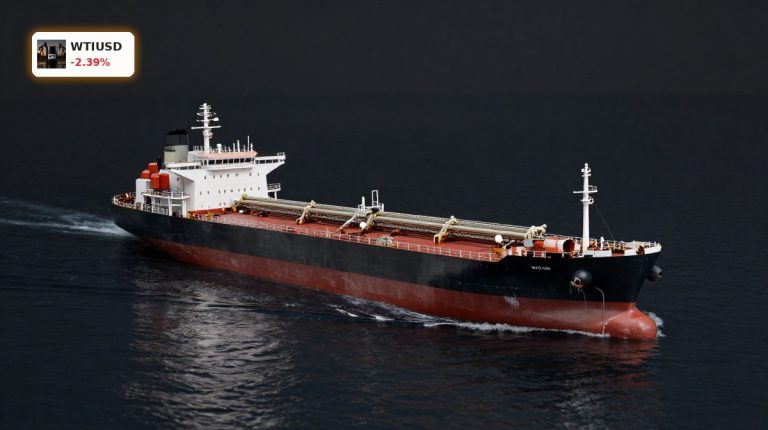
Tanker transits through the Strait of Hormuz plunged to just 14 vessels on Wednesday — down from a three-week average of 34 and far below the pre-war norm of 130 per day, according to Kpler data. The Islamic Revolutionary Guard Corps Navy now claims full control of routing and security, demanding vessels use its northern corridor — while U.S.-backed southern routes remain largely idle. Windward Maritime confirms the partial normalization that began after the June 17 U.S.-Iran memorandum has effectively collapsed. ‘The chokepoint is back in full conflict mode,’ said a Windward analyst. This isn’t just about volume — it’s about insurance, transponder blackouts, and geopolitical friction that raises the cost of every barrel long before it hits a refinery.
How Are Global LNG Producers Reacting?
QatarEnergy has paused its rapid ramp-up at Ras Laffan LNG — the world’s largest facility — after its Al Rekayyat tanker was disabled in a Hormuz attack. The facility, damaged by earlier missile strikes, had been operating at reduced capacity in anticipation of safe transit. Now, 11 empty LNG vessels sit idle offshore, and force majeure notices have been extended to early September for European customers like Edison SpA. With Qatar supplying ~20% of global LNG last year, the delay threatens winter stockpiling across Europe — where inventories are already dangerously low — and pushes Asian spot LNG prices more than 80% above pre-war levels. Goldman Sachs analysts warn that full normalization hinges on three conditions: continued negotiations, reinstated Iranian oil sanctions waivers, and credible security assurances for shippers — none of which appear imminent.
What’s the Fed’s View on WTI Hormuz Escalation?
New York Fed President John Williams acknowledged Thursday that markets expect oil prices to decline over the next 6–12 months — a view he called ‘reasonable.’ But he stressed inflation remains ‘much too high,’ and the Fed will act if energy-driven price pressures prove stickier than forecast. The WTI Hormuz Escalation has already re-ignited inflation fears: rising fuel costs are tightening margins for airlines and cruise operators like Norwegian, Carnival, and Royal Caribbean, even as WTI retreats from its June 3 peak of $99.76. Meanwhile, the U.S. Energy Information Administration reports distillate inventories are 13.4% below the 5-year seasonal average — underscoring how tightly balanced refined product markets remain. Citigroup recently raised its 12-month WTI price target to $78, citing ‘persistent geopolitical risk premiums,’ while RBC Capital Markets upgraded Chevron to ‘Outperform,’ citing its superior exposure to near-term cash flow upside amid volatility.
Is This a Buying Opportunity for Energy ETFs?
The collapse of the ceasefire framework, the reimposition of Iranian oil sanctions, and the scale of U.S. kinetic action inside Iran represent the most significant escalation of the conflict since its opening phase.— Windward Maritime
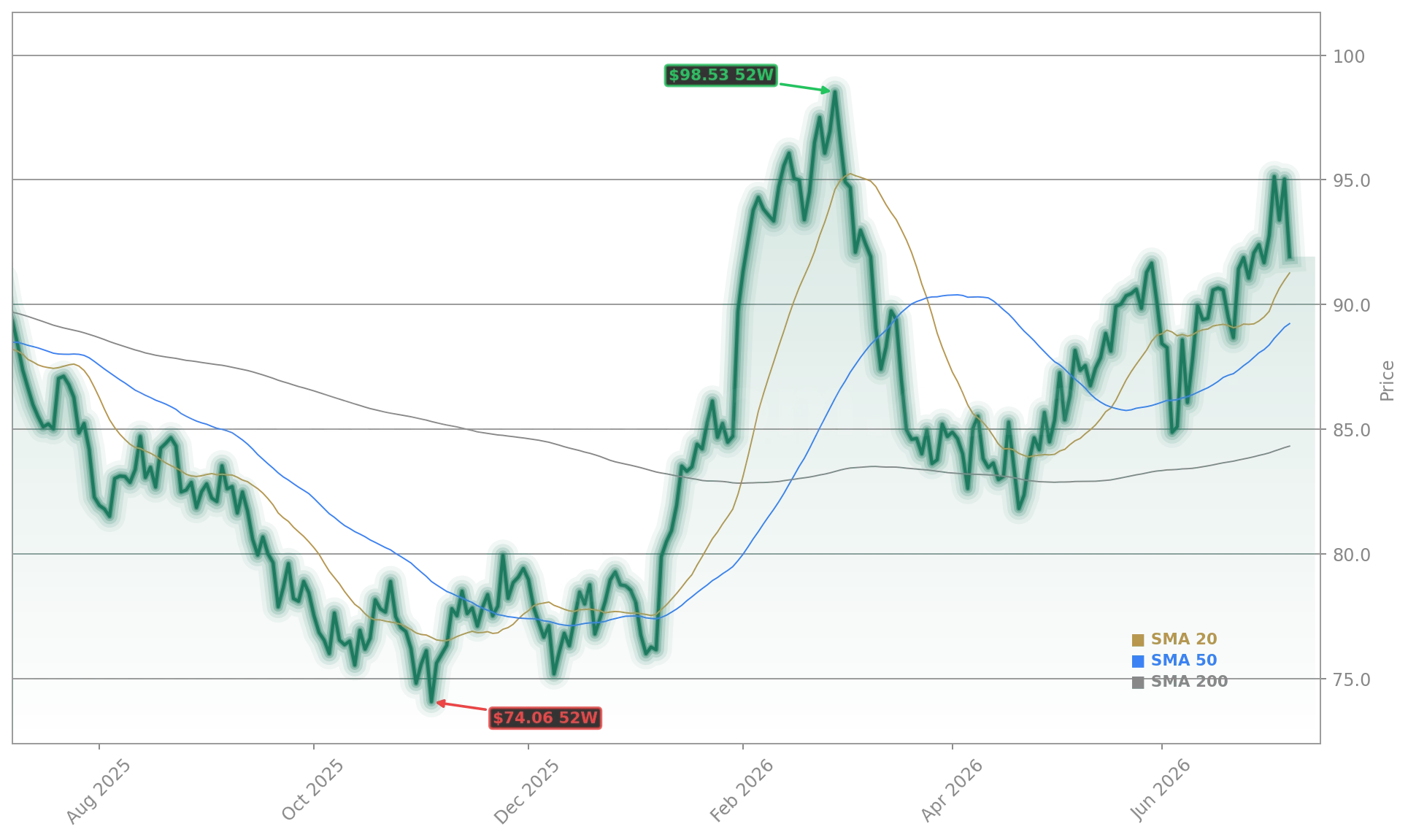
The Energy Select Sector SPDR Fund (XLE) gained 1.8% Wednesday on WTI’s 6% pop — outperforming the S&P 500 and NASDAQ. But the rally remains fragile: U.S. crude dropped 0.92% to $72.84 Thursday after President Trump signaled openness to negotiations — even as U.S. Central Command struck 90 Iranian targets and Iran retaliated with missiles hitting Jordan and Kuwait. Traders are now pricing in a ‘new normal’ of intermittent conflict, per Lipow Oil Associates — not full closure, but recurring spikes. Options data shows over 125,000 open contracts at $80 and $85 WTI strike prices, meaning any sustained break above $75 could trigger explosive momentum. For long-term investors, the WTI Hormuz Escalation reinforces the value of integrated majors — and the fragility of global energy logistics.