Does Alibaba’s $600 million DOJ deal remove a major risk, or is Wall Street underestimating the long tail of U.S. scrutiny?

What Does the Alibaba DOJ Settlement Mean for Wall Street?
The $600 million Alibaba DOJ Settlement — comprising $200 million in forfeitures and $125 million in criminal penalties from Alibaba Group Holding Limited, plus $275 million from its U.S. payment partner AUS Merchant Services — signals a hardening U.S. regulatory stance on platform liability for third-party seller misconduct. Unlike past enforcement actions targeting isolated violations, this case centers on systemic failures between 2016 and 2024: approximately 80,000 transactions involving illegal pharmaceuticals, counterfeit drug manufacturing equipment, and DEA-listed chemicals, with a gross merchandise value of $200 million. Crucially, the DOJ cited internal employee concerns about inadequate safeguards and the use of Alibaba’s private-messaging system to coordinate prohibited sales — raising red flags for U.S. investors assessing operational rigor and compliance infrastructure.
How Does This Compare to U.S. Tech Peers’ Regulatory Exposure?
While U.S. platforms like Amazon and eBay have faced civil enforcement over counterfeit goods, the criminal penalties levied in the Alibaba DOJ Settlement are unprecedented in scale and scope for a foreign-listed tech firm. Amazon (AMZN) paid $25 million in 2023 to settle FTC allegations over counterfeit listings; eBay settled for $10 million in 2022. By contrast, Alibaba’s $125 million criminal penalty — plus $200 million forfeiture — reflects a DOJ determination of willful negligence. Analysts at Citigroup note that this sets a new benchmark for liability expectations across global e-commerce, particularly for firms operating U.S. payment rails without full AML program integration. RBC Capital Markets downgraded Alibaba to ‘Underperform’ on July 1, citing ‘materially elevated governance risk’ and ‘uncertain path to full U.S. platform reintegration.’
What’s Next for Alibaba’s U.S. Business and Cloud Strategy?
Despite the settlement, Jefferies reaffirmed Alibaba as its top pick in the Chinese internet sector on June 12 — not for its e-commerce platform, but for AliCloud’s full-stack AI infrastructure and Model-as-a-Service (MaaS) revenue growth. That divergence underscores a critical market split: U.S. investors are increasingly valuing Alibaba’s AI and cloud assets independently from its legacy marketplace, even as regulatory overhang persists. The DOJ’s public acknowledgment that Alibaba has ‘documented steps to improve screening and compliance’ may help restore some credibility — but with U.S. lawmakers advancing bipartisan legislation to restrict foreign platform access to domestic payments networks, the settlement may only delay deeper structural constraints. Notably, the company’s 618 shopping festival performance this year was muted, consistent with broader platform-wide marketing corrections across Chinese internet firms.
How Is the Market Pricing the Alibaba DOJ Settlement?
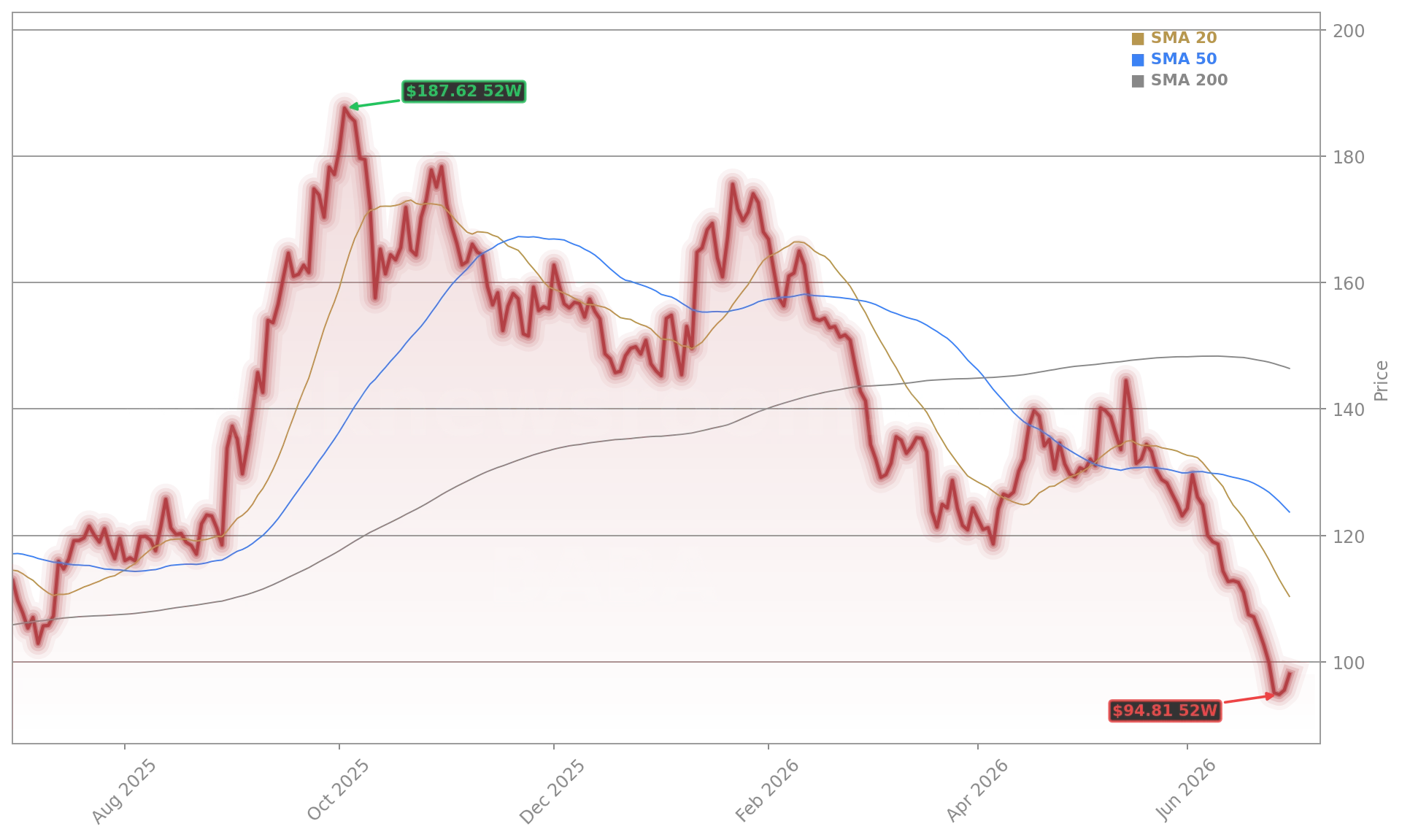
Alibaba Group Holding Limited rose 2.34% to $98.23 in after-hours trading following the announcement — a reaction suggesting investors view the $600 million resolution as a de-risking event rather than a catalyst for sustained upside. The stock remains 22% below its 52-week high of $126.12, reflecting persistent concerns over U.S.-China tech decoupling and regulatory uncertainty. For context, NVIDIA shares have surged 142% over the same period, buoyed by AI infrastructure demand — highlighting how sharply investor focus has pivoted from cross-border commerce to sovereign AI stacks. Goldman Sachs maintains a $115 price target on Alibaba, citing ‘strong AliCloud fundamentals,’ but adds that ‘U.S. regulatory headwinds remain the dominant near-term overhang.’ The settlement does not resolve pending SEC disclosures related to internal controls, nor does it preclude future civil litigation from U.S. consumers or pharmacies.
Related Coverage
Alibaba and AUS have documented steps taken to improve their screening and compliance and provided a commitment to ongoing cooperation with U.S. law enforcement in the future. As a result, another channel for illegal pharmaceuticals and associated equipment is now closed.— Assistant Attorney General Tysen Duva
Investors assessing long-term Alibaba exposure should consider how the Alibaba DOJ Settlement intersects with broader trust challenges: the recent Alibaba AI Allegations: BABA Drops 3% on New Warning highlights growing scrutiny of the company’s AI ethics framework, particularly as U.S. policymakers weigh export restrictions on dual-use models. Meanwhile, competitive dynamics are shifting rapidly — PDD China Expansion +8.3% Rally Despite Analyst Cuts shows how rival PDD is gaining U.S. traction through aggressive logistics investment and lighter regulatory footprints, underscoring Alibaba’s narrowing strategic moat in global e-commerce.