Can Alibaba contain the fallout from explosive AI allegations before U.S. regulators and Wall Street turn even more hostile?

What Do the Alibaba AI Allegations Mean for U.S. Investors?
Anthropic’s June 10 letter to Senators Tim Scott and Elizabeth Warren—reviewed by Reuters—details an unprecedented campaign targeting Claude’s most advanced agentic reasoning and software engineering capabilities. The firm alleges operators linked to Alibaba Group Holding Limited conducted 28.8 million exchanges between April 22 and June 5, 2026, far surpassing prior distillation attempts by DeepSeek (150,000) and MiniMax (13 million). This Alibaba AI Allegations episode isn’t theoretical: it directly challenges the integrity of U.S. AI IP protections and has triggered bipartisan legislative action, including a pending amendment by Senators Bill Hagerty and Andy Kim to sanction violators. For U.S. portfolios holding BABA, the risk isn’t just reputational—it’s operational: exposure to potential secondary sanctions, contractor attrition, and NASDAQ compliance reviews.
Why Did Alibaba Sue the Pentagon Now?
Alibaba filed its federal lawsuit in California this week to overturn its designation on the Pentagon’s 1260H list—a blacklist that bars U.S. defense agencies from doing business with listed firms starting June 30. The company argues the designation violates due process and the First Amendment, citing months of unanswered outreach and zero evidence of military ties. Crucially, Alibaba Group Holding Limited emphasizes its board independence, commercial focus on e-commerce and cloud infrastructure, and compliance with universal Chinese regulatory standards—applying equally to U.S. multinationals like Apple and Tesla. The timing is urgent: failure to win relief could sever relationships with Washington-based law firms, lobbyists, and U.S. contractors, a blow Bloomberg notes could impair its ability to navigate U.S. regulatory frameworks.
How Does This Compare to U.S. Tech Peers?
While NVIDIA and Apple face export controls, Alibaba’s predicament is structurally distinct: it’s accused of violating terms of service—not hardware bans. Anthropic, OpenAI, and Google have jointly escalated information sharing on distillation attempts, signaling a hardening U.S. industry stance. By contrast, U.S. firms face no equivalent accusations of illicit model harvesting. The divergence underscores a growing asymmetry: American AI labs are tightening API guardrails and deploying rate-limiting, while Chinese firms—including Alibaba—face mounting scrutiny over their AI development pathways. Citigroup analysts note that this dynamic could pressure valuations across Chinese tech ADRs, especially those with heavy AI R&D budgets like BABA, which spent $4.2 billion on AI infrastructure in Q1 2026.
What’s Next for Wall Street Exposure?
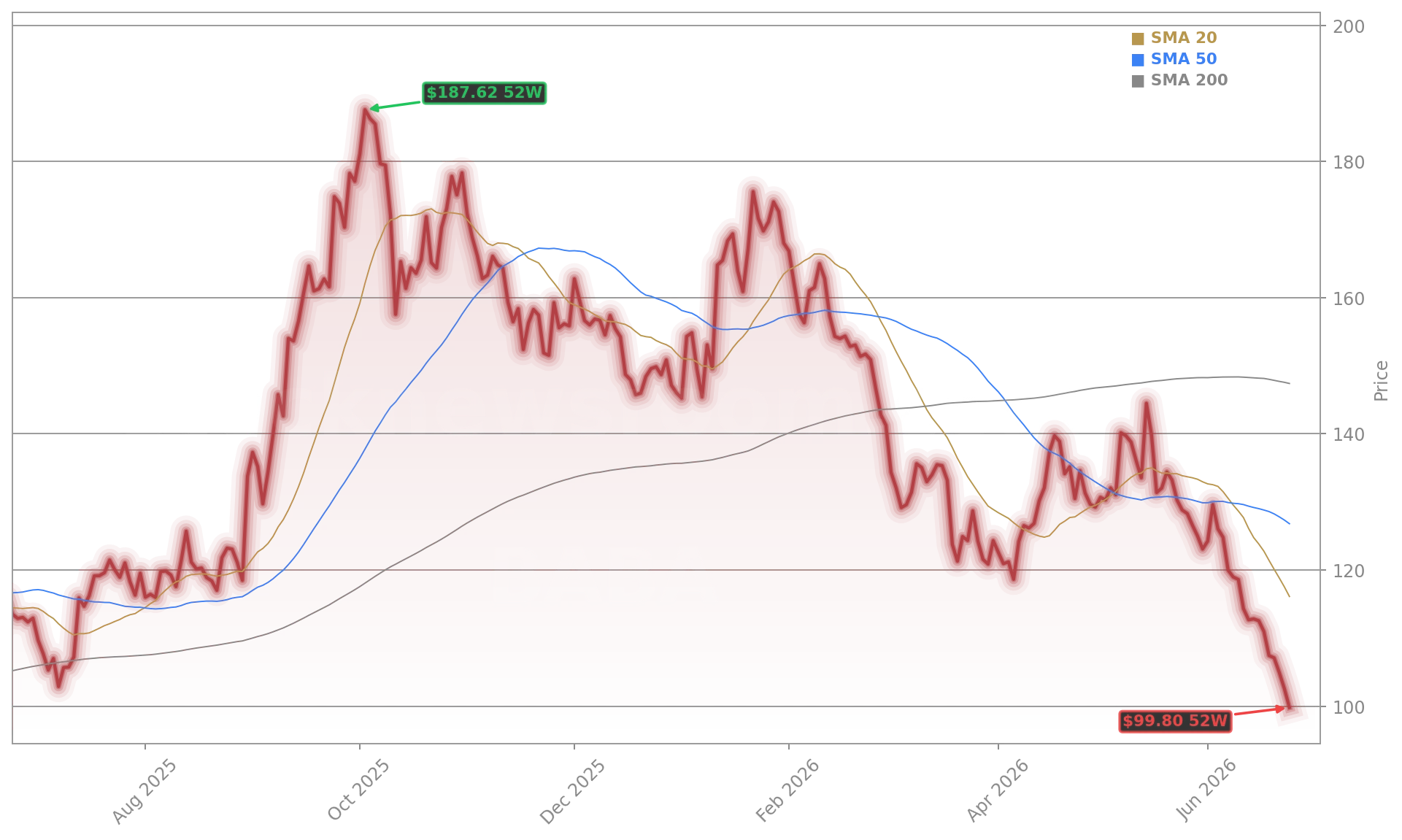
Alibaba’s U.S.-listed ADRs have declined six straight sessions, underperforming the NASDAQ Composite by 320 basis points over the period, per MarketWatch. The stock now trades at a 22% discount to its 52-week high of $124.30—reflecting both AI-related uncertainty and broader China tech weakness. RBC Capital Markets maintains its ‘Underperform’ rating on Alibaba Group Holding Limited, citing ‘elevated regulatory overhang’ and ‘unquantifiable reputational damage’ from the Alibaba AI Allegations. Meanwhile, Morgan Stanley has downgraded its China internet sector outlook, warning that ‘policy-driven volatility now outweighs fundamentals’ for U.S.-listed Chinese firms. With the Pentagon deadline just days away and Senate hearings on AI security scheduled for July 8, the next two weeks will determine whether BABA becomes a cautionary tale—or a test case for U.S.-China AI governance.
These distillation attacks are carried out illicitly, systematically, and at industrial scale to harvest US AI capabilities across frontier labs and repackage them as their own without incurring the training and R&D costs required to train US frontier models.— Anthropic (in letter to U.S. Senate)
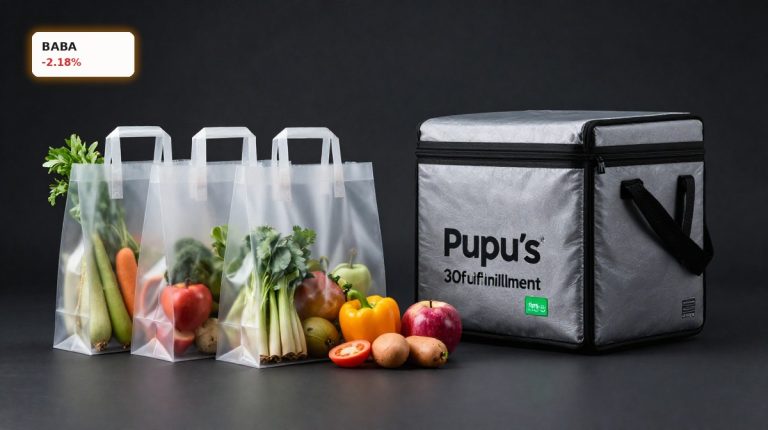
Related Coverage: Wall Street is closely watching whether Alibaba’s AI ambitions can survive this dual assault—especially after Alibaba AI Strategy -2.1%: Wall Street Questions the AI Bet highlighted growing skepticism over its $1.5 billion Pupu acquisition and internal team-building symbolism. Analysts are also weighing how the Alibaba AI Allegations impact comparisons with U.S. peers, as the company’s cloud division competes with Amazon Web Services and Microsoft Azure in Asia-Pacific markets.