Can Alibaba’s reported $1.5 billion Pupu move strengthen its moat, or will regulators and Wall Street turn this acquisition into a new headache?

Why Is Alibaba Targeting Pupu?
Alibaba Group Holding Limited aims to close a $1.5 billion Alibaba Acquisition of Pupu — a Shanghai-based instant grocery delivery platform with 30-minute fulfillment capabilities across 20+ Tier 1 and Tier 2 Chinese cities. Unlike traditional e-commerce, Pupu operates a dense network of micro-fulfillment centers, enabling real-time inventory syncing and AI-driven demand forecasting. This fits directly into Alibaba’s broader Token Foundry AI initiative, launched earlier this year to unify its cloud, logistics, and consumer data platforms. For U.S. investors, the acquisition isn’t just about market share — it’s about securing high-frequency, high-margin consumer behavior data that fuels next-gen recommendation engines and ad targeting, areas where Meta and Apple are aggressively investing globally.
How Does This Affect the U.S. Portfolio?
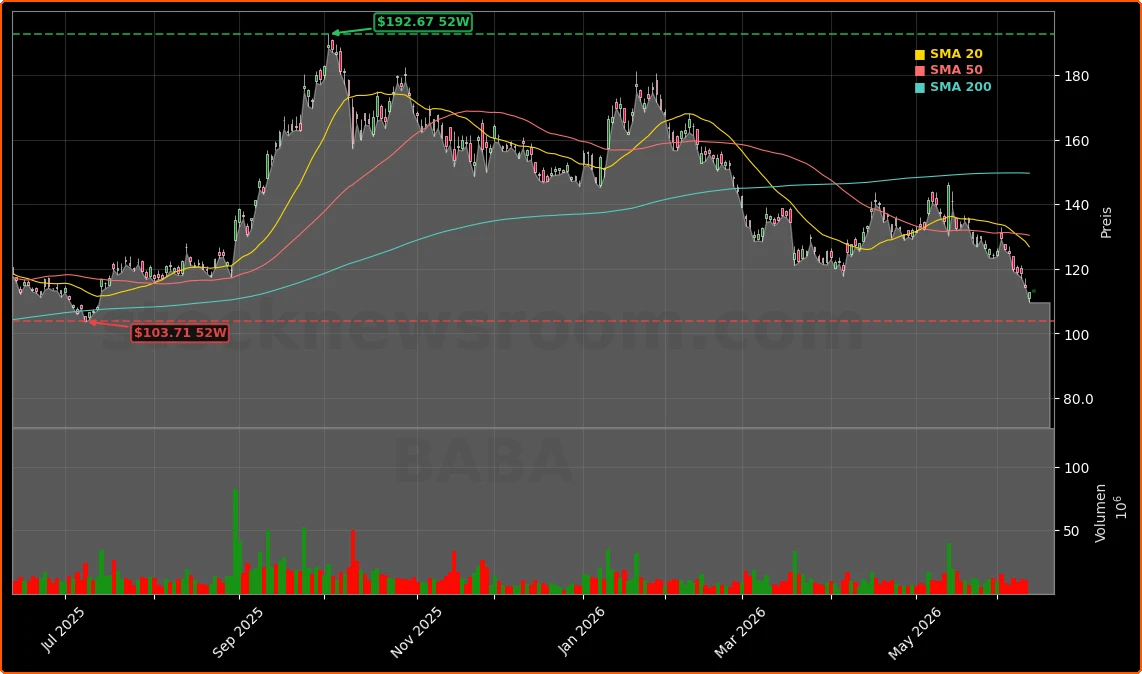
While Alibaba’s ADRs trade on the NYSE, the Pupu deal underscores a structural shift: China’s e-commerce battle is no longer about GMV growth, but about infrastructure control — warehousing, last-mile routing, and real-time consumer intent. That puts Alibaba in direct competition with Meituan, whose food-delivery dominance has pressured Alibaba’s Ele.me unit for years. In contrast, U.S. investors benchmark Alibaba against peers like NVIDIA, not just JD.com or PDD — because its AI infrastructure spend now rivals semiconductor players in scale and strategic weight. Citigroup recently reiterated its ‘Buy’ rating on Alibaba with a $188.76 price target, citing ‘cloud and AI monetization inflection’ — a view shared by RBC Capital Markets, which upgraded the stock to ‘Outperform’ last month.
What’s the Regulatory Backdrop?
The Alibaba Acquisition arrives amid intensified scrutiny. Chinese regulators summoned Alibaba, JD.com, and Pinduoduo over alleged false advertising during the June ‘618’ shopping festival — triggering a six-day losing streak on the NYSE. Separately, the U.S. Department of Defense added Alibaba Group Holding Limited to its Chinese Military Companies (CMC) list, banning Pentagon contracts — a designation the company strongly denies and plans to legally challenge. Despite that, institutional investors remain divided: Brandes Investment Partners cut its stake by 2.7% in Q4, while ARK Investment Management and Eurizon Capital initiated new positions. The company’s $1.05 annual dividend — payable July 13 — adds yield appeal amid volatility.
Alibaba Acquisition: What’s Next for Wall Street?
Wall Street’s near-term focus remains on execution risk: Can Alibaba integrate Pupu without triggering antitrust pushback from Beijing? And will the deal accelerate its cloud revenue — currently just 8% of total sales — toward Morgan Stanley’s forecast of 15% by 2027? Analysts note that Pupu’s logistics AI models could be ported to Alibaba Cloud’s international clients, especially in Southeast Asia and the Middle East — creating a rare export path for China’s AI infrastructure. Meanwhile, the NASDAQ Composite’s 2.3% drop this week highlights how geopolitical risk continues to weigh on Chinese ADRs. Yet the rebound in after-hours trading suggests investors see the Pupu move as a proactive, not reactive, play — one that strengthens Alibaba’s moat against both domestic rivals and global tech giants.
Related Coverage: Can Alibaba Regulation derail the AI story, or is the market overreacting to another Beijing warning shot? Alibaba Regulation Sparks Selloff as BABA Jumps 5% Late. Meanwhile, XPeng’s Q2 delivery target of 106,000 units reflects how Chinese tech firms are leveraging AI in physical applications — a trend that mirrors Alibaba’s push into intelligent logistics — XPeng Earnings Q2 Outlook Targets 106K Deliveries After Q1 Miss.
This acquisition positions Alibaba at the center of China’s next-generation retail infrastructure — where AI, logistics, and consumer data converge.— RBC Capital Markets analyst
Alibaba Group Holding Limited remains a pivotal barometer for U.S. investors navigating China’s dual-track economy — where AI ambition meets regulatory reality. The Alibaba Acquisition of Pupu isn’t just about groceries; it’s a signal that Alibaba is doubling down on infrastructure-led AI monetization. For portfolios exposed to global tech innovation, this move validates Alibaba’s long-term strategic pivot — even as short-term volatility persists. The next quarterly earnings report will reveal whether integration progress and cloud growth justify the current valuation gap versus the S&P 500’s tech sector.