
Can Apple Siri AI turn ecosystem strength into real revenue growth, or is Wall Street right to demand harder proof?

Why did Apple Siri AI disappoint Wall Street?
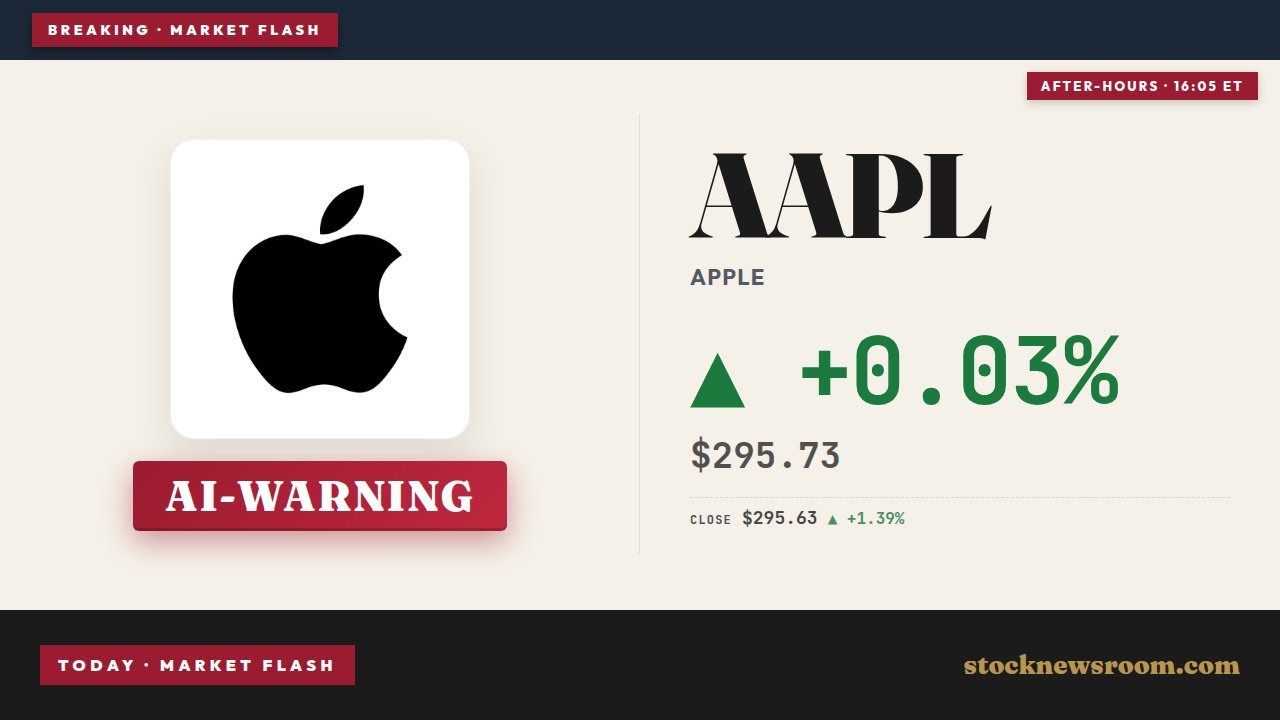
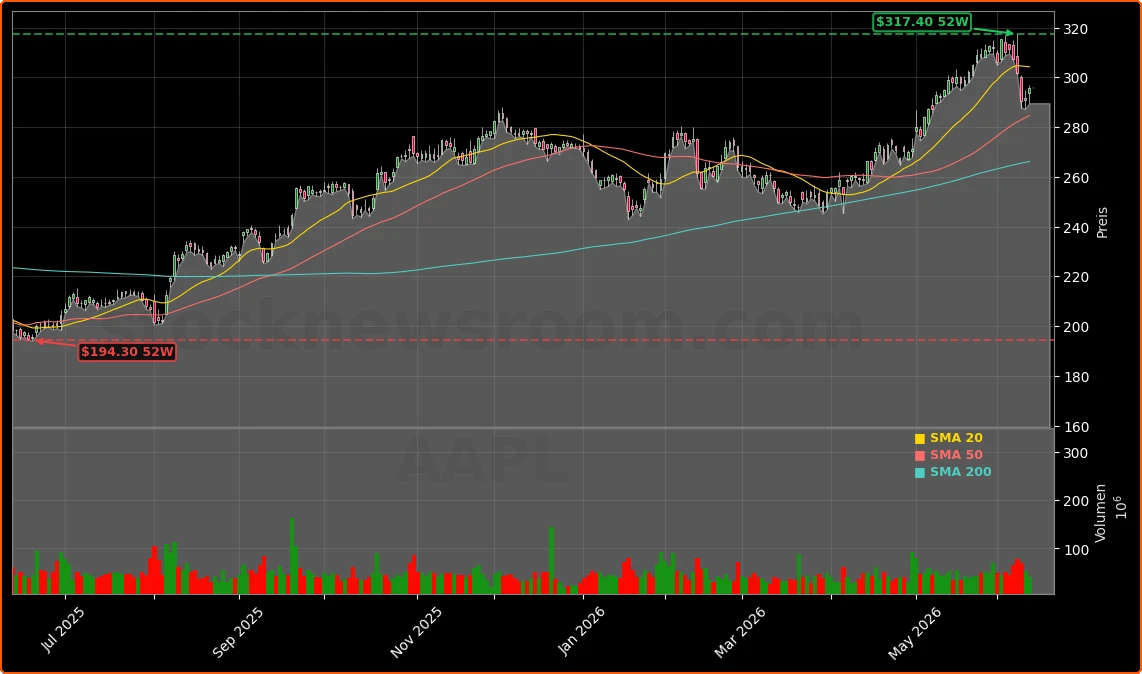
Apple’s WWDC keynote featured Siri AI over 100 times — yet the stock retreated sharply, closing Thursday at $295.63 after a 4% weekly decline. Analysts at Evercore ISI raised Apple’s price target to $365 and maintained an Outperform rating, citing strong Services momentum and early on-device AI adoption in North America and Europe. But Citigroup warned that the lack of a clear monetization path — and the absence of EU and China availability — limits near-term upside. Unlike OpenAI’s ChatGPT or Anthropic’s Claude, Apple Siri AI offers no subscription tier: it’s bundled, free, and deeply embedded. That’s a strategic strength for user retention — but a headwind for near-term revenue catalysts. With $180 billion in cash and 2.5 billion active devices, Apple’s scale is unmatched — yet Wall Street wants proof that Apple Siri AI moves the needle on Services margins or hardware upgrade cycles.
How does Apple Siri AI compare to rivals?
Apple Siri AI doesn’t aim to outperform ChatGPT in raw reasoning — it aims to outperform it in utility. Where OpenAI and Google rely on cloud-based inference, Apple Siri AI processes much of the workload locally, leveraging Apple’s A18 and M4 chips. That enables real-time access to personal data — emails, photos, calendar events — without uploading sensitive content. But it also means performance hinges on device capability: older iPhones won’t support full Apple Siri AI features. By contrast, Microsoft’s Copilot+ on Windows and Google’s Gemini Live on Android prioritize cross-platform cloud integration. That’s why Alphabet (GOOGL) stands to gain: Apple pays Google an estimated $1 billion annually to license Gemini as its foundation model. Meanwhile, Tesla and Meta are advancing AI for autonomous driving and social recommendation — but none offer Apple’s seamless cross-device handoff between iPhone, iPad, and Mac. That ecosystem lock-in remains Apple’s moat — and its biggest advantage over pure-play AI firms.
What’s the impact on the S&P 500 and NASDAQ?
Apple accounts for over 6% of the S&P 500 and nearly 15% of the Fidelity MSCI Information Technology ETF (FTEC). Its underperformance this week contributed to the NASDAQ’s 5% pullback — the index’s worst six-day stretch since early 2025. With Nvidia, Apple, and Microsoft collectively representing more than 40% of FTEC and IYW, any AI narrative fatigue ripples across the entire tech sector. The recent retail-driven sell-off — driven by capital reallocation ahead of the $75 billion SpaceX IPO — hit Apple and chip stocks hardest. BNP Paribas noted that retail investors liquidated $6.5 billion in Micron positions alone to fund SpaceX allocations. That liquidity squeeze amplified pressure on Apple Siri AI’s market reception — turning a product announcement into a macro liquidity test. As the ‘Magnificent Seven’ face growing passive fund rebalancing risk — with over 60% of ETF outflows likely hitting Apple, Nvidia, and Microsoft — Apple Siri AI’s rollout timing couldn’t be more delicate.
Is Apple Siri AI a catalyst for future upgrades?
The sum total of what they’ve announced is a replacement for the free tier of ChatGPT.— Nilay Patel, The Verge
Not immediately — but potentially, yes. Evercore ISI highlights Apple’s foldable iPhone and deeper Apple Intelligence integration later this year as ‘redemption opportunities’. RiverPark Large Growth Fund notes that early adoption of on-device AI features exceeded internal expectations, especially on Pro models. Crucially, Apple Siri AI isn’t a standalone app — it’s the operating system’s central nervous system, surfacing actions across Safari, Passwords, and Messages. That architectural shift could drive multi-year device upgrades, particularly as Apple rolls out AI-powered health insights, real-time translation, and proactive scheduling. RBC Capital Markets sees Apple’s Services segment as the real growth lever — with Apple Siri AI accelerating attach rates for iCloud+, Apple Music, and Apple TV+. Yet Goldman Sachs cautions that monetization remains unproven: no AI firm has yet demonstrated scalable, high-margin consumer AI revenue. Apple Siri AI changes the game — but not overnight.