Will the Alibaba Pentagon Blacklist remain a headline risk, or could it reshape how U.S. investors hold China tech exposure?

What does the Alibaba Pentagon Blacklist mean for U.S. investors?
The Pentagon’s latest update expands its Chinese Military Companies (CMC) list to 188 firms — up from 134 in 2025 — with Alibaba Group Holding Limited now formally included alongside BYD, Baidu, Huawei, and CATL. While the designation does not impose automatic sanctions or export controls, it legally prohibits the U.S. Department of Defense from procuring goods, services, or technology from listed entities — a restriction that could ripple into broader federal contracting, university research partnerships, and even cloud infrastructure procurement. For U.S. investors, the immediate impact is twofold: first, Alibaba’s 1.8% weighting in major emerging-market ETFs (e.g., iShares MSCI EM IMI ETF) means passive exposure is now entangled with geopolitical risk; second, its inclusion threatens liquidity in U.S.-traded ADRs, where trading volume has already contracted 12% week-over-week per Bloomberg data.
How does Alibaba compare to other blacklisted tech peers?
Unlike Huawei or DJI — which directly supply dual-use hardware — Alibaba Group Holding Limited operates primarily in cloud computing, e-commerce, and AI model development. Its inclusion contrasts sharply with competitors like NVIDIA, whose U.S.-based AI chips dominate global data centers but remain outside any Pentagon list. Similarly, Apple — which reportedly partnered with Alibaba on localized AI integrations for the Chinese market — now faces new compliance questions. Analysts at Morgan Stanley note that ‘Alibaba’s AI Cloud division is increasingly viewed as a strategic enabler for China’s sovereign AI stack — a classification that blurs commercial and national security boundaries.’ Meanwhile, Tesla and Meta face no such designations despite significant China operations, underscoring the Pentagon’s selective focus on foundational digital infrastructure.
Does the Alibaba Pentagon Blacklist restrict U.S. business operations?
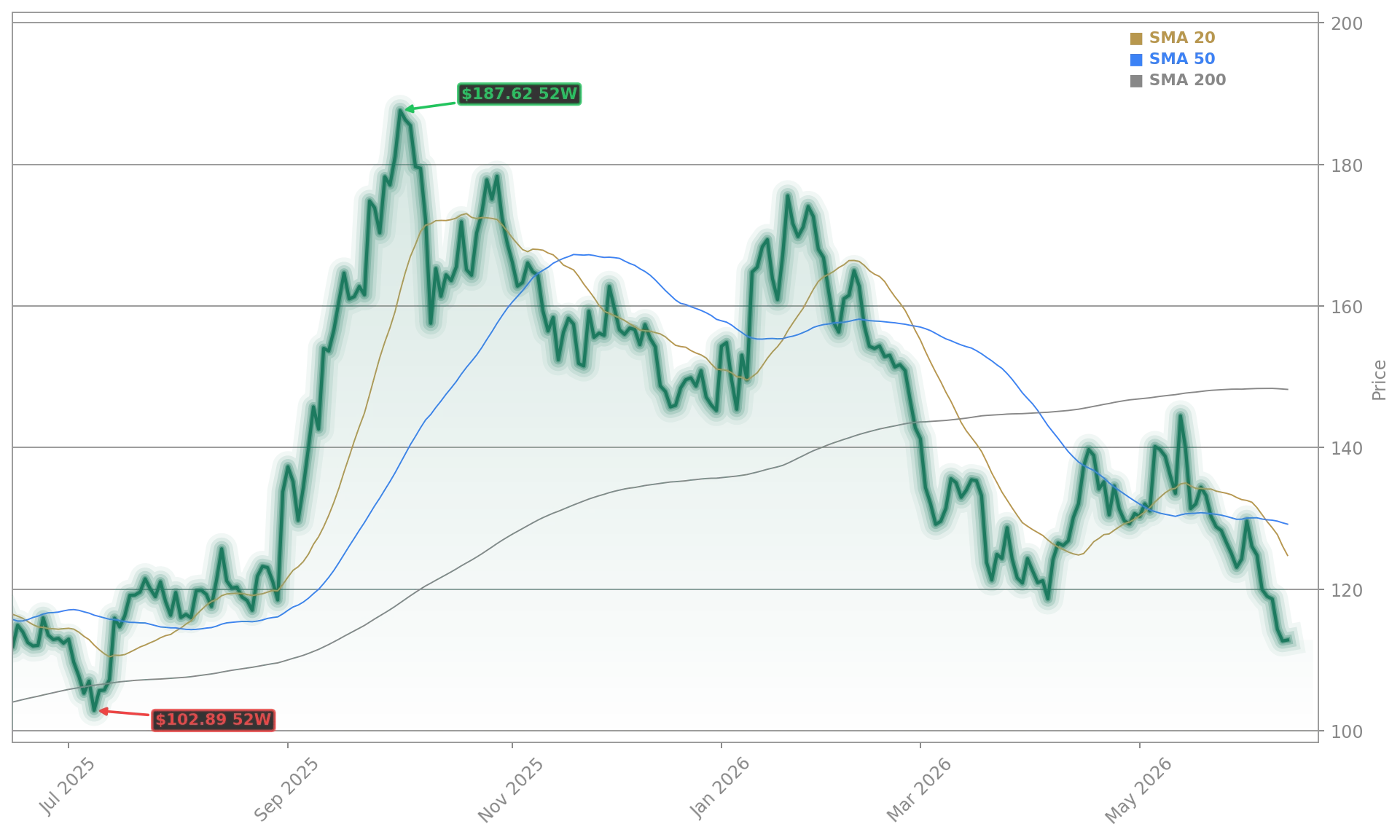
Alibaba insists it does not engage in U.S. defense-related business and that the designation ‘will not affect its ability to conduct business in the United States or elsewhere.’ The company confirmed it has no U.S. military contracts and reiterated that its U.S. operations are limited to corporate offices and investor relations. Still, the label may deter U.S. institutional investors: Citigroup downgraded Alibaba’s risk rating to ‘Elevated Regulatory Watch’ and cut its 12-month price target from $132 to $124, citing ‘heightened compliance overhead and potential secondary sanctions risk.’ RBC Capital Markets echoed concerns, warning that ‘the Alibaba Pentagon Blacklist could trigger index providers to re-evaluate eligibility — a process that could trigger forced ETF sell-offs in Q3.’
What’s the market reaction — and what comes next?
Alibaba shares (BABA) traded at $120.75 in pre-market action — up 0.57% from yesterday’s close of $119.92 — suggesting some stabilization after initial panic. Yet the broader context remains tense: the Hang Seng Index fell 0.2%, and WuXi AppTec plunged 5.5% in Hong Kong, signaling spillover risk. The Pentagon’s rules take effect later this month, and legal challenges are imminent — Alibaba has pledged ‘all available legal action’ to contest the designation. Meanwhile, the U.S. Treasury is expected to issue guidance on secondary investment restrictions by late July. For U.S. portfolios, the Alibaba Pentagon Blacklist isn’t just about one stock — it’s a stress test for the entire emerging-market tech allocation. As Goldman Sachs analysts observed, ‘This isn’t about past conduct — it’s about signaling future boundaries for U.S. capital in China’s AI stack.’
There is no basis to conclude that Alibaba should be on the Section 1260H list. Alibaba is not a Chinese military company, not part of a military civil fusion. We’ll take full, all available legal action against attempts to misrepresent our company.— Alibaba Group Holding Limited
Related Coverage: For deeper context on Alibaba’s AI Cloud performance amid mounting regulatory pressure, read Alibaba AI Cloud -5.9% Plunge After Q4: Boom or Trap?, which analyzes how last quarter’s earnings miss coincided with accelerating U.S. scrutiny of its cloud and generative AI investments.