Can Alibaba Cloud France turn European AI sovereignty into a real growth engine for Alibaba’s global cloud ambitions?

Why does Alibaba Cloud France matter to Wall Street?
Alibaba Cloud France isn’t merely another data center — it’s the third pillar of Alibaba’s European sovereign cloud strategy, following hubs in Germany and the UK. Now fully operational, the Paris region offers elastic compute, secure containerization, AI-optimized networking, and compliance-aligned databases — all built to meet GDPR, NIS2, and EU Cyber Resilience Act standards. For U.S. portfolio managers, this signals accelerated competition in the $820 billion global cloud infrastructure market, where Amazon Web Services (AWS) and Microsoft Azure still dominate — but where Alibaba’s Qwen LLM and AgentRun platform could carve out enterprise niches in retail, sports tech, and media. Notably, Alibaba Cloud France arrives just as Citigroup upgraded Alibaba to ‘Neutral’ with a $115 price target, citing ‘infrastructure monetization inflection’ and ‘Qwen-driven enterprise adoption.’
How does Alibaba Cloud France compare to U.S. cloud rivals?
Unlike AWS or Google Cloud, Alibaba Cloud France embeds agentic AI natively — launching AgentRun, STAROps, and AI Security Guardrails 2.0 in H2 2026. These tools offer hardware-level sandboxing and closed-loop threat response — capabilities increasingly demanded by EU financial and telecom firms wary of U.S. cloud overreach. While Apple and Microsoft focus on LLM integration in productivity suites, Alibaba targets operational AI agents for logistics, fan engagement (via its UEFA partnership), and broadcast media — areas where U.S. cloud providers remain underpenetrated. RBC Capital Markets notes that ‘Alibaba Cloud France closes a critical sovereignty gap — making it a viable alternative for EU-regulated verticals where AWS and Azure face growing political scrutiny.’
What’s the impact on Alibaba Group Holding Limited’s stock?
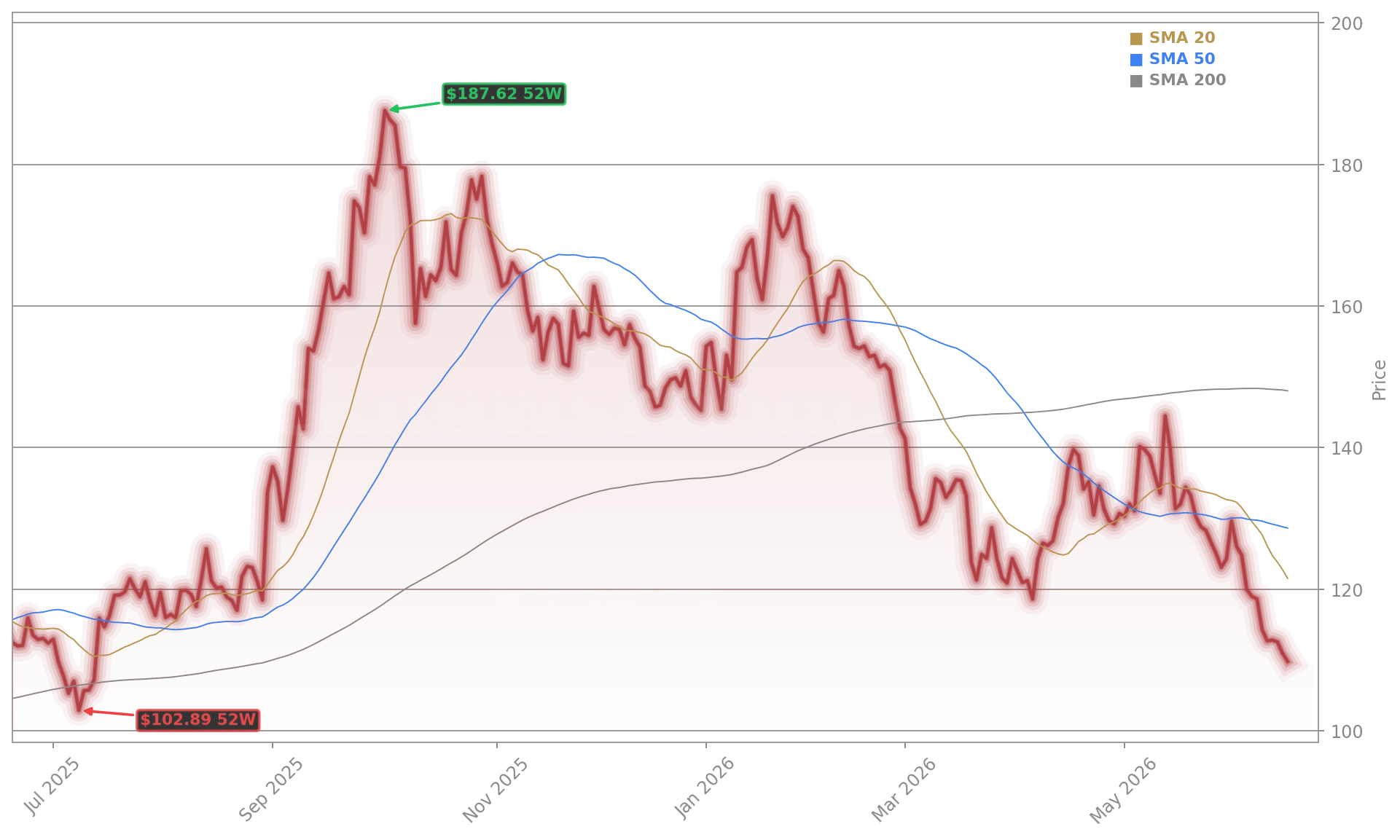
Despite the strategic momentum, Alibaba Group Holding Limited (BABA) trades at $109.79 — down 1.06% on the day and 12% below its 52-week high of $124.80. The stock’s underperformance reflects broader investor caution on Chinese tech — especially amid softening domestic consumption and regulatory overhangs. Yet the Alibaba Cloud France launch adds tangible upside: cloud revenue now accounts for 11% of Alibaba’s total — up from 7% in Q1 2025 — and Morgan Stanley forecasts cloud EBITDA margins to expand to 18% by FY2027, driven by regional infrastructure leverage and Qwen API monetization. The timing is critical: with U.S. cloud stocks trading near all-time highs and S&P 500 tech valuations stretched, Alibaba Cloud France offers a rare leveraged play on AI infrastructure growth outside the NASDAQ 100.
Alibaba Cloud France: Is this a catalyst for broader AI adoption in Europe?
Absolutely — and it’s already delivering. During Paris 2024, Alibaba Cloud France’s predecessor infrastructure powered OBS Cloud 3.0, enabling real-time broadcast signal distribution for 200+ broadcasters — the first time in Olympic history. Now, with UEFA’s 2027 commercial rollout, Alibaba Cloud France will deploy Qwen LLMs for multilingual fan engagement, content summarization, and rights management — directly competing with Meta’s AI ad tools and Amazon’s sports streaming stack. For U.S. investors, this isn’t about market share in France — it’s about validating Alibaba’s AI+Cloud flywheel: sovereign infrastructure enables regulated AI use cases, which drives API consumption, which funds further R&D. Goldman Sachs highlights that ‘Alibaba Cloud France de-risks EU expansion — and could attract U.S. multinationals seeking GDPR-compliant AI testbeds.’
What’s next for Alibaba Cloud France and global AI infrastructure?
The expansion of our cloud infrastructure into France reinforces our ongoing commitment to empowering European businesses with sovereign, secure, and intelligent solutions.— Dr. Feifei Li, Chief Technology Officer and President of International Business of Alibaba Cloud
Alibaba Cloud France will serve as the launchpad for Qwen-powered agentic AI services across EMEA in Q3 2026 — with ACS Agent Sandbox and Agentic SOC already in beta with five European financial institutions. Longer term, analysts expect Alibaba to pursue joint ventures with EU telcos (e.g., Deutsche Telekom) to accelerate edge AI deployment. Crucially, this expansion coincides with softening U.S. cloud growth: AWS revenue growth slowed to 13% YoY in Q1 2026, while Alibaba Cloud posted 24% YoY growth — the highest among top five global cloud providers. For U.S. investors, Alibaba Cloud France is no longer a curiosity — it’s a structural shift in the global AI infrastructure landscape.