How does the Amazon Globalstar Acquisition reshape Amazon Leo?
Under the agreement, Amazon will acquire Globalstar’s existing satellite operations, ground infrastructure and valuable mobile satellite services spectrum licenses, giving Amazon Leo an immediate boost in scale and capabilities. Globalstar shareholders can elect to receive either $90 per share in cash or 0.3210 shares of Amazon stock, with total consideration valued at roughly $11.6 billion and aggregate cash capped at 40% of the deal. The transaction is expected to close in 2027, subject to regulatory approvals and certain satellite deployment milestones.
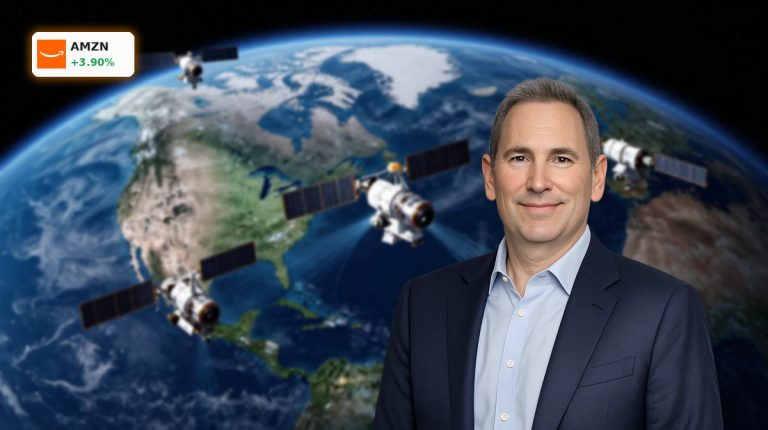
Strategically, the Amazon Globalstar Acquisition lets Amazon bolt a mature, low Earth orbit (LEO) network and globally harmonized spectrum onto its still‑nascent Leo constellation, which currently operates only a few hundred satellites versus more than 10,000 for Starlink. Globalstar’s existing fleet and its next-generation satellites will operate alongside Amazon’s broadband system, enabling direct‑to‑device (D2D) services that extend coverage far beyond terrestrial cellular networks.
Amazon plans to begin deploying its own next‑gen D2D satellites in 2028, creating a unified network that can serve consumer, enterprise and government customers with fixed broadband, mobile connectivity and Internet‑of‑Things applications. Management has already flagged that Leo is part of a roughly $200 billion 2026 capex plan spanning AI, custom chips, robotics, data centers and satellite infrastructure—an aggressive push some high‑conviction investors like Bill Ackman see as laying the rails for multi‑decade growth.
What does the Globalstar deal mean for Amazon vs. Starlink?
For now, SpaceX’s Starlink remains the clear leader by scale and revenue, with thousands of satellites in orbit and more than 12 million customers worldwide. Starlink has also locked in airline partners and mobile collaborations, helping it build brand and distribution. Amazon Leo, by contrast, is still pre‑commercial, targeting a mid‑2026 broadband launch and a 2028 start for D2D services.
However, the Amazon Globalstar Acquisition significantly narrows the strategic gap. By taking control of Globalstar’s spectrum and operational know‑how, Amazon no longer has to build the entire D2D stack from scratch. This shortcut is critical as the satellite‑to‑smartphone race accelerates and spectrum assets become scarcer and more expensive—SpaceX itself has committed more than $20 billion to secure wireless resources.
Importantly for US‑focused portfolios, Leo will not sit in isolation. Amazon plans to tightly integrate satellite connectivity with Amazon Web Services, allowing enterprises and governments to move data seamlessly into AWS for storage, analytics and AI workloads. That strengthens AWS’s moat against cloud rivals like Microsoft Azure and gives Amazon another differentiator as hyperscalers race to dominate AI infrastructure alongside players such as NVIDIA.
How does Apple fit into the Amazon Globalstar Acquisition?
A major twist to the Amazon Globalstar Acquisition is Apple’s entrenched role in Globalstar’s business. Apple previously took a 20% stake in Globalstar and uses its network to power satellite features on iPhone 14 and later, as well as Apple Watch Ultra 3, including Emergency SOS, Find My, messaging and roadside assistance in areas with no cellular coverage.
As part of today’s announcements, Amazon and Apple signed a new agreement for Amazon Leo to power satellite services for current and future iPhone and Apple Watch models. Amazon will continue to support Apple devices on existing and upcoming Globalstar satellites and collaborate on future services once Leo’s expanded constellation is online. For investors, this means the deal is not a zero‑sum move against Apple; instead, it deepens the strategic ties between two of the world’s most powerful consumer and infrastructure platforms.
That Apple endorsement matters. It validates Leo’s technical roadmap and gives Amazon an anchor customer with massive global device scale from day one, in turn supporting the economics of further satellite launches and ground infrastructure. It also cements Amazon as a backbone provider in critical safety and emergency communication use cases, which can be politically and regulatorily advantageous as LEO constellations face more scrutiny.
How is Wall Street reading the Amazon Globalstar Acquisition?
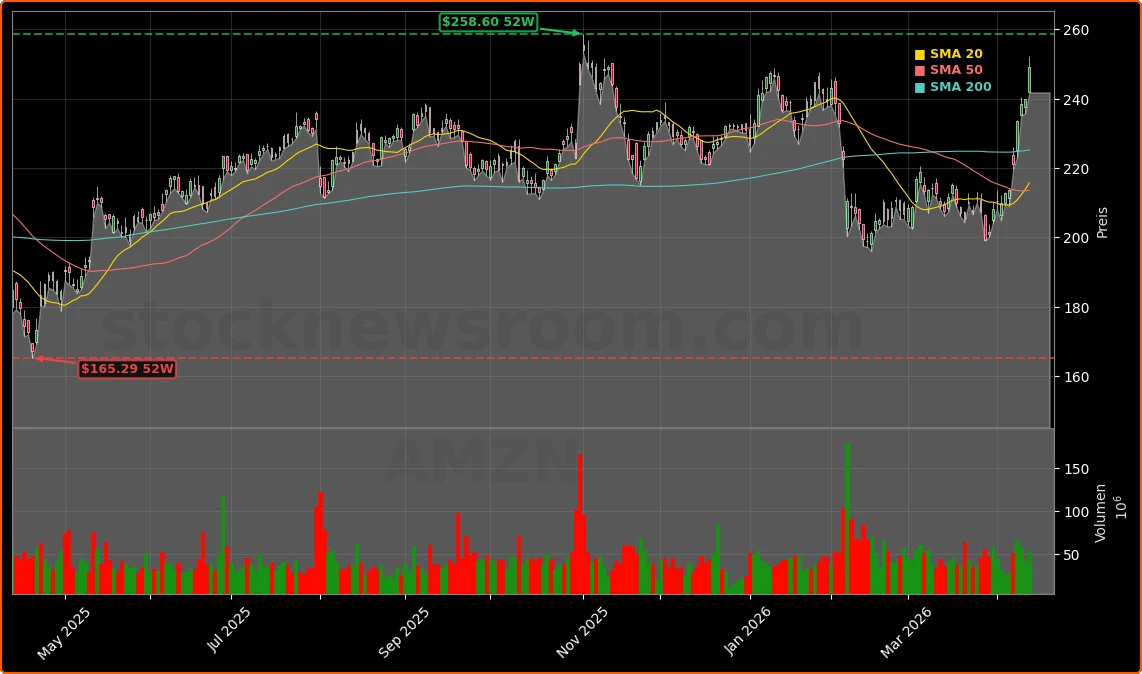
Amazon shares traded around $249.25 on Tuesday afternoon, up about 3.9% on the day and roughly 1% below their 52‑week and all‑time closing high near $254. The move extends a strong run that has seen the stock climb more than 40% over the past year, outperforming both the S&P 500 and the NASDAQ Composite.
Analysts largely remain constructive. Goldman Sachs analyst Eric Sheridan recently trimmed his Amazon price target slightly from $280 to $275 but kept a Buy rating, highlighting AWS growth, logistics cost pressures, advertising momentum and Leo’s commercialization timeline as key swing factors for upcoming earnings. Across Wall Street, consensus still sits in Strong Buy territory with targets stretching as high as $360, while Citron Research publicly argued this week that applying Amazon’s five‑year average P/E multiple would justify a $300 share price.
Fundamentally, Amazon continues to post double‑digit revenue growth, robust EBITDA and industry‑leading gross profit relative to other broadline retailers. At roughly 30–33x earnings—below its five‑ and 10‑year averages—bulls contend the market is not fully pricing in optionality from AI infrastructure, custom chips, and now global satellite connectivity. Bears counter that massive capex and intense competition from Starlink, Tesla‑adjacent ecosystems, and other satellite hopefuls could keep returns subdued for years.
What should investors watch next?
In the near term, investors will track regulatory reviews of the Amazon Globalstar Acquisition, progress on Globalstar’s next‑gen satellite milestones, and more details on Leo’s commercial launch schedule. On the financial side, upcoming Amazon earnings in roughly nine days will be critical for updated capex guidance, AWS AI revenue disclosures, and any commentary on how quickly Leo and D2D services can scale to material revenue.
Medium term, the key questions are whether Amazon can secure more airline, telecom and government contracts; how successfully Leo traffic can be monetized via AWS; and how aggressively SpaceX responds on pricing and product. For diversified U.S. portfolios, the acquisition shifts Amazon further from a pure e‑commerce and cloud play toward a vertically integrated infrastructure and connectivity platform, with higher long‑term upside but also higher execution risk.
Related Coverage: For a deeper dive into how Amazon is positioning AWS at the center of the AI boom, including its high‑profile partnership with OpenAI, see this analysis of Amazon’s $50 billion AI partnership bet on the cloud. If you are tracking broader risk appetite and trading activity in U.S. fintech and brokerage stocks alongside Amazon, you may also want to read this outlook on Robinhood’s forecast and its crypto‑driven rally potential, which helps frame how quickly sentiment can shift across high‑beta growth names.
By combining Globalstar’s proven expertise and strong foundation with Amazon’s customer obsession and innovation, customers can expect faster, more reliable service in more places.— Panos Panay, Senior Vice President of Devices & Services, Amazon
In sum, the Amazon Globalstar Acquisition marks a decisive escalation in Amazon’s race against Starlink and a major expansion of its infrastructure ambitions beyond cloud and e‑commerce. For long‑term investors, the deal strengthens the strategic case for Amazon as a global connectivity and AI backbone, even if the payoff will take years to flow through the income statement. The next few quarters of execution on Leo, AWS and the Apple partnership will show whether this $11.6 billion bet truly earns its place in growth‑oriented U.S. portfolios.