
Can Applied Materials Singapore Expansion turn AMAT into the market’s next must-own AI infrastructure stock?

What Does the Applied Materials Singapore Expansion Mean for Wall Street?
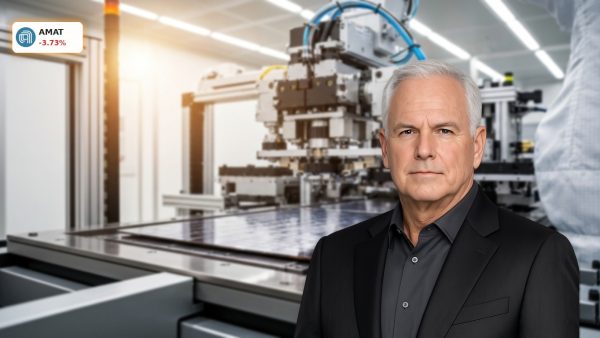
The Applied Materials Singapore Expansion isn’t just another factory — it’s a strategic pivot toward AI infrastructure resilience. Unlike delayed or speculative capital projects, this campus is already at volume production, deploying autonomous mobile robots, AI-powered predictive maintenance, and AR/VR operator training. Its green infrastructure — including solar panels, low-carbon concrete, and zero-water-waste closed-loop reclamation — earned Singapore’s highest sustainability rating. For U.S. investors, this signals operational discipline and ESG-aligned execution at a time when capital allocation scrutiny has never been higher. With the NASDAQ down 2.1% this week but Applied Materials, Inc. rising 5.85% on June 9 alone, the stock is behaving less like a cyclical semiconductor play and more like a structural AI enabler — a distinction that’s resonating with portfolio managers seeking exposure to the AI stack beyond NVIDIA and Tesla.
How Does This Compare to Competitors’ Global Footprints?
While ASML (ASML) and Lam Research (LRCX) lean heavily on European and U.S. manufacturing, Applied Materials, Inc. is deliberately decentralizing capacity — Singapore joins existing hubs in the U.S., Israel, and South Korea to serve foundries from TSMC to Intel. Cantor Fitzgerald recently raised its price target on Applied Materials, Inc. to $650 from $575, citing the firm’s ‘early innings’ position in a durable, multi-year upcycle with bookings visibility now extending into 2028. UBS followed with a $570 target and ‘Buy’ rating. In contrast, Lam Research’s Singapore expansion remains in planning, and ASML’s EUV tool production remains concentrated in the Netherlands. Citigroup analyst Atif Malik explicitly named Applied Materials, Inc. a top pick among semiconductor capital equipment makers — ahead of peers — citing its leadership in foundry and logic wafer equipment, where over 70% of new wafer-start investments in 2026–2027 are landing.
Why Is This Expansion So Timely for the S&P 500?
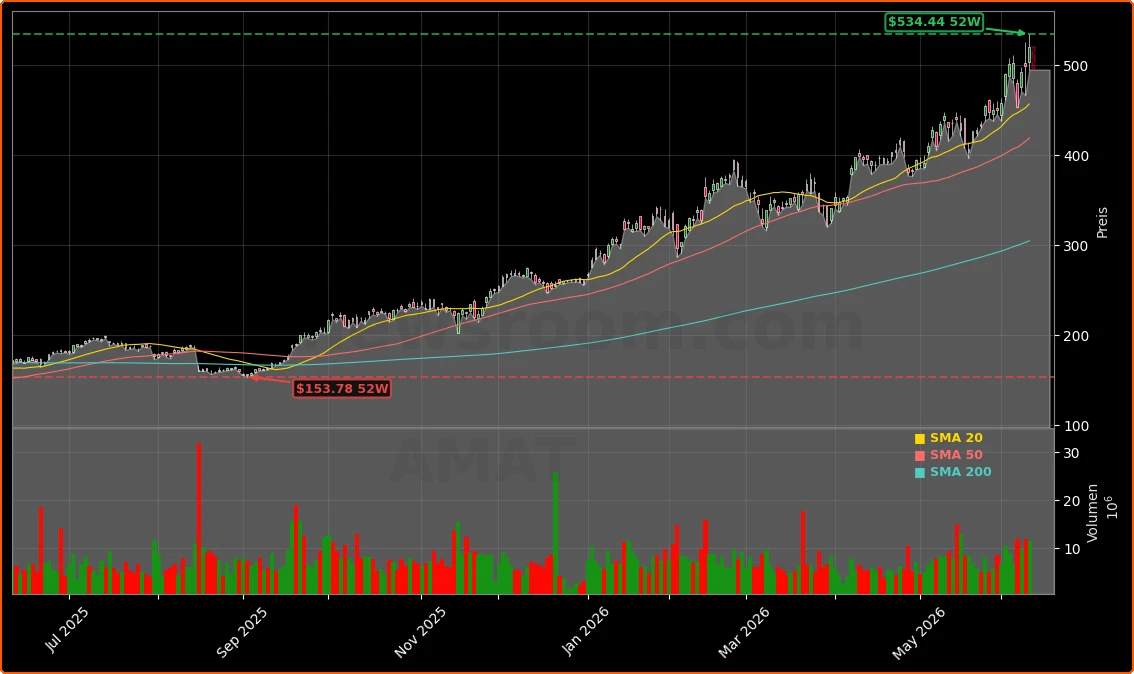
The S&P 500’s 13% Q2 gain pales next to the Philadelphia Semiconductor Index’s 61% surge — and Applied Materials, Inc. sits at the epicenter of that outperformance. Its Q2 2026 results, released June 9, beat expectations on AI-infrastructure revenue, prompting a 5.85% intraday jump. The Singapore expansion directly addresses the bottleneck: chipmakers can’t ramp AI chips without tools — and Applied Materials, Inc. supplies ~25% of the industry’s deposition, etch, and inspection systems. With AI chip demand projected to grow 30%+ annually through 2027, this Applied Materials Singapore Expansion ensures supply chain agility amid geopolitical uncertainty — a critical factor for U.S. institutional investors holding Applied Materials, Inc. as a hedge against regional manufacturing risk. Notably, the company also declared a $0.53 quarterly dividend — its ninth consecutive annual increase and part of a $13.2 billion buyback authorization — reinforcing its cash flow strength.
What’s Next for U.S. Investors Holding AMAT?
Our chip business will grow more than 30% this year and by a similar amount in the coming years, thanks to the strong demand for AI computing power.— Gary Dickerson, President and CEO of Applied Materials, Inc.
With nearly 1,000 new Singapore-based jobs slated and cleanroom capacity now fully online, the Applied Materials Singapore Expansion delivers immediate ROI — not future promise. That execution credibility has helped Applied Materials, Inc. outperform peers like Supermicro in volatility-adjusted returns. Analysts now see 13% upward EPS revision for 2027 — outpacing the sector average of 11%. For U.S. portfolios, this means Applied Materials, Inc. offers leveraged, low-beta exposure to AI infrastructure build-out — a rare combination in today’s market. Its 46.21 P/E reflects growth expectations, but with free cash flow returning ~90% to shareholders over the past decade, the valuation appears anchored in tangible output. As Trefis notes, Applied Materials, Inc. amplifies market moves — but in a rising AI cycle, that’s a feature, not a flaw.