
Can Meta cut 8,000 jobs and still convince Wall Street that its massive AI bet will actually pay off?

Why do Meta Layoffs matter now?
Meta Platforms, Inc. traded intraday at $604.88, up 0.38% from the previous close of $602.67, as investors weighed the latest Meta Layoffs against the company’s widening artificial-intelligence ambitions. Employees in Singapore were among the first to receive notices, with U.S. and European staff also being informed as their workdays began. The cuts affect around 10% of Meta’s workforce and mark the biggest broad restructuring since Mark Zuckerberg’s earlier “Year of Efficiency.”
For Wall Street, the immediate issue is not just cost reduction. It is whether a leaner organization can offset investor unease about Meta’s extraordinary AI spending plans. The company has already committed more than $100 billion to AI and is planning a giant U.S. data-center project in Louisiana that could eventually carry a price tag near $200 billion. That puts Meta alongside NVIDIA, Apple, and Tesla in the broader race to define the next phase of Big Tech growth.
Can Meta execute a flatter structure?
In an internal memo, head of people Janelle Gale said smaller teams and a flatter structure should help Meta move faster. Engineering and product groups are expected to take the heaviest hit, while more than 7,000 employees are being shifted into AI-focused roles. That means the current shake-up is not only a layoff story; it is also a major labor reallocation toward automation tools, applied AI engineering, and analytics.
The strategic logic is straightforward: remove layers, speed up decision-making, and concentrate talent where Meta sees the strongest payoff. But the operational risk is also clear. Product development can slow temporarily when experienced engineers leave, and morale may weaken further after employee criticism of internal data-collection efforts tied to AI training. More than 1,000 workers have reportedly opposed that initiative, adding governance and culture questions to the cost-cutting narrative.
How does Meta compare with rivals?
Meta is hardly alone. Big Tech peers including NVIDIA customers such as Apple and other hyperscalers are pouring money into AI infrastructure, with the group expected to spend hundreds of billions of dollars this year. That spending wave has also lifted adjacent names, from semiconductor manufacturers to utilities supplying new data centers.
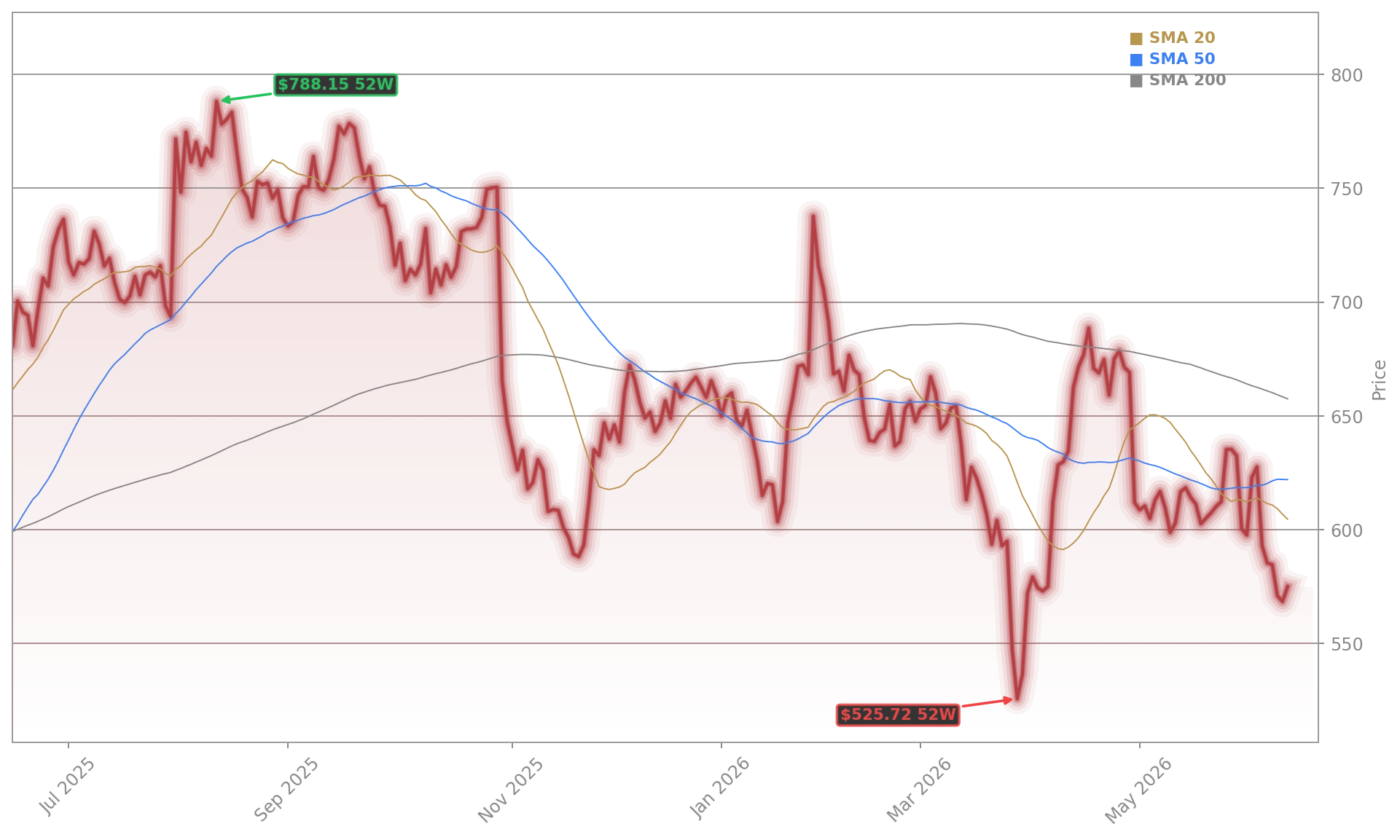
Still, Meta’s balancing act looks sharper than many rivals because it is restructuring staff while simultaneously expanding capex at an aggressive pace. The stock is well below the January peak near $738, so today’s price action does not support any claim of fresh highs. Instead, investors appear to be taking a wait-and-see approach: they like the discipline behind the Meta Layoffs, but they still want proof that AI monetization in ads, agents, and devices will justify the bill.
What should Wall Street watch next?
The next catalyst is execution. Investors will monitor whether Meta delivers faster product releases, stronger ad performance, and credible returns on AI infrastructure. They will also watch for any additional job cuts later this year, something management has left on the table. Recent analyst commentary remains broadly constructive on the stock despite volatility. Mizuho reiterated a bullish view this month and set an $835 target, arguing that buying weakness could pay off over the next 12 to 18 months.
Related Coverage: Investors looking for the bigger strategic backdrop should also read Meta AI Strategy Record Capex: Boom or Big Warning for Investors?. That analysis explores the same central tension now highlighted by the Meta Layoffs: whether record spending on AI infrastructure becomes a launchpad for the next growth cycle or a drag on margins if adoption takes longer than expected.
We believe this will make us more productive and make the work more rewarding.— Janelle Gale
The Meta Layoffs underline a sharper transformation story at Meta: cut costs, redeploy talent, and spend heavily where management sees AI-driven growth. For investors, the stock now hinges less on the headline job cuts and more on whether a leaner Meta can turn massive AI capex into durable earnings power. If execution improves over the next few quarters, today’s painful reset could strengthen the long-term bull case.