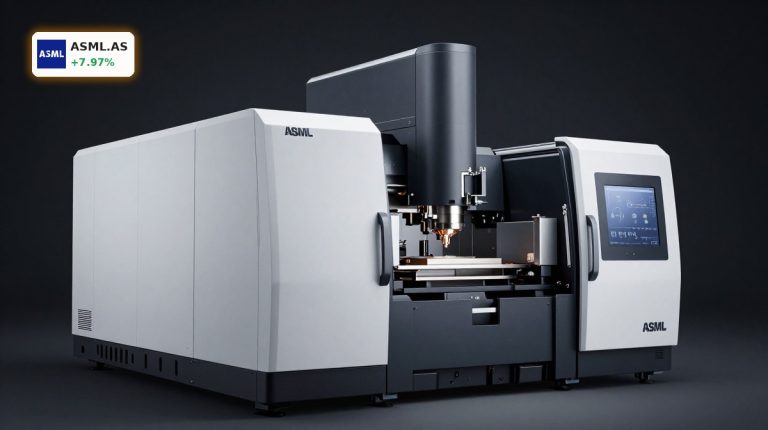
Is ASML High-NA EUV becoming the one tool every AI chipmaker now needs to stay in the race?

Why Is ASML High-NA EUV the New Benchmark for AI Chipmaking?
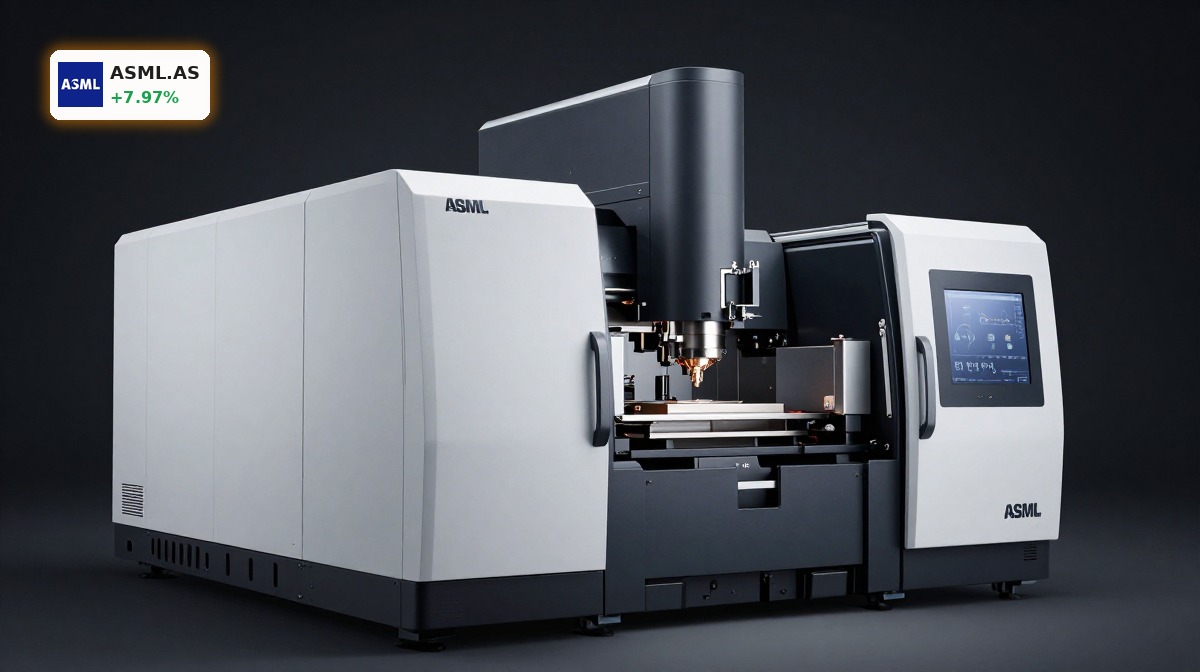
ASML Holding N.V. isn’t just selling machines—it’s enabling physics-defying advances. IBM’s recent 0.7-nanometer Nanostack architecture, delivering 50% more performance or 70% less power, was built exclusively on ASML’s High-NA EUV systems. That validation isn’t academic: it signals to TSMC, Intel, and Samsung that High-NA EUV adoption is accelerating, not delaying. Unlike legacy lithography, High-NA EUV allows sub-1.4nm node patterning—essential for next-gen AI accelerators and high-bandwidth memory stacks. With a $45 billion backlog and zero competition in EUV, ASML holds pricing power no rival—including Applied Materials or Lam Research—can match.
How Are Analysts Reacting to ASML’s Q1 Beat and Raised Guidance?
ASML Holding N.V. reported Q1 2026 revenue of €8.8 billion—solidly above consensus—and raised full-year 2026 sales guidance to €36–€40 billion, up from prior €34–€38 billion. JPMorgan responded by hiking its price target to $2,200 from $1,813, citing higher-than-expected EUV system output—now projected at more than 90 units in 2026. Bernstein followed on June 15, lifting its target to $1,971 and reaffirming an Outperform rating. Barclays raised its target to €2,000, while Bank of America lifted its target to $2,345 and maintained a Buy rating. Citigroup and RBC Capital Markets have also upgraded sentiment, emphasizing ASML’s ‘monopoly flywheel’—where installed base growth drives recurring service revenue of $2.93 billion in Q1 alone.
What Does the $724 Billion Market Cap Mean for U.S. Portfolios?
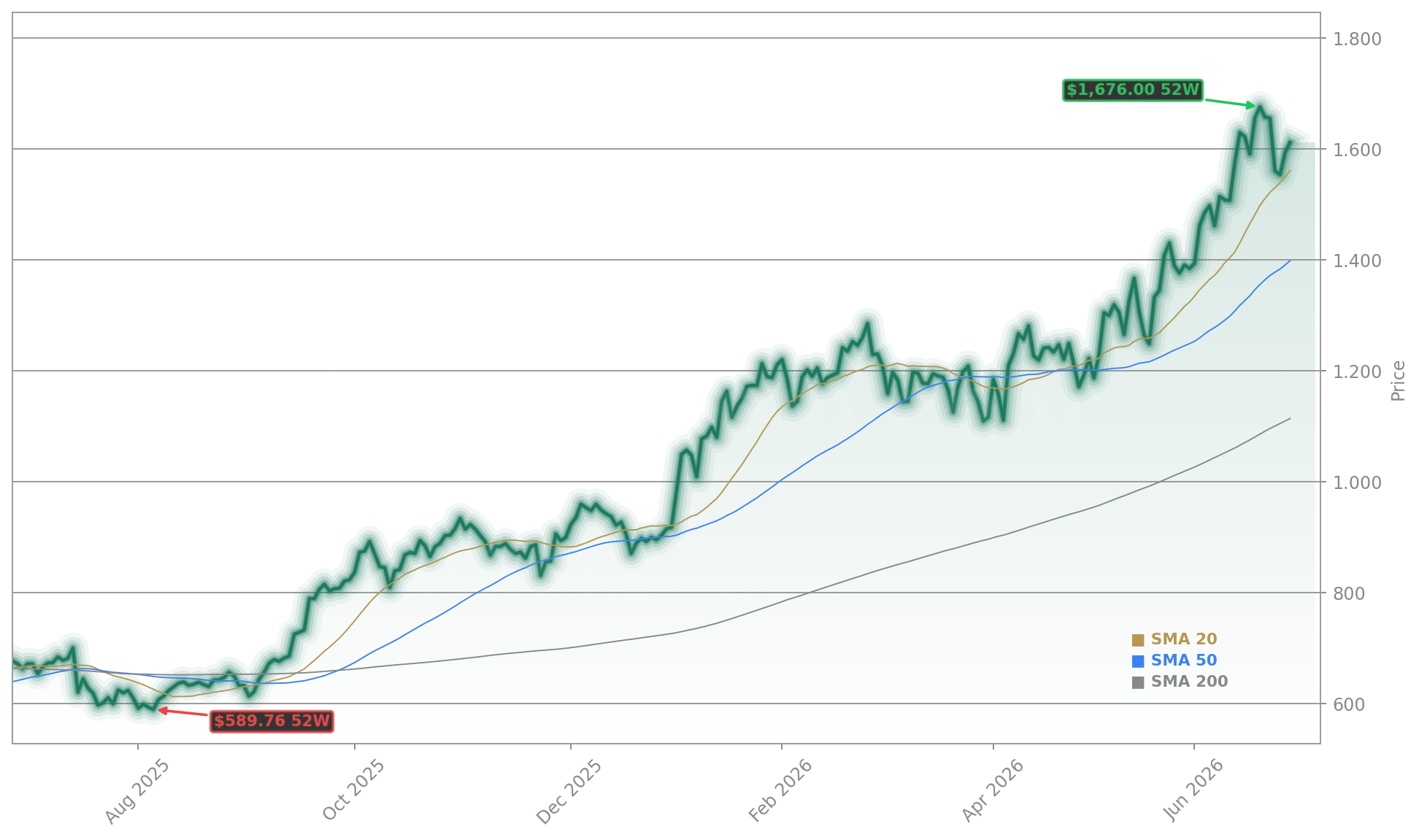
ASML Holding N.V. became the first European company to cross $700 billion in market value on June 9—now trading at $724.1 billion. For U.S. investors, that places ASML in the same league as NVIDIA and Apple in terms of AI infrastructure weight. Its 51% year-to-date gain dwarfs the S&P 500’s 12% rise and even outpaces the Philadelphia Semiconductor Index’s 6% monthly gain. Yet valuation concerns persist: GuruFocus rates ASML 71.6% overvalued, with a GF Value™ of $1,097.65 versus its $1,883.11 trading price. Still, the $12 billion share buyback and €44–€60 billion 2030 revenue targets suggest management is confident in long-term execution—not just hype.
How Does ASML’s Global Expansion Reinforce Its Moat?
Beyond IBM labs and TSMC fabs, ASML is embedding itself in new geographies. Its partnership with Tata Electronics to supply High-NA EUV tools for India’s first major semiconductor fab in Gujarat—part of an $11 billion project—signals strategic diversification beyond U.S. and Asian chipmakers. Meanwhile, export controls to China remain a risk, cited by Fiduciary Alliance LLC in its 35.4% stake reduction. Yet demand from U.S. and EU foundries continues to surge: ASML’s order book reflects multi-year visibility, with Q2 2026 revenue estimates at $10.28 billion and EPS at $7.98. The July 15 earnings report will test whether the High-NA EUV narrative translates into sustained margin expansion and order intake acceleration.
Related Coverage: ASML’s AI-driven lithography monopoly is gaining new momentum—read how the company’s AI strategy and EUV demand are fueling a 3.9% surge in ASML AI Strategy +3.9% as EUV Demand Fuels New Surge. Meanwhile, the broader AI infrastructure race is intensifying: NVIDIA AI Partnership: $20B CPU Push and Robotics Upside explores how chip alliances are reshaping government and robotics markets—where ASML’s tools remain the foundational enablers.
Demand for chips is outpacing supply.— Christophe Fouquet, CEO of ASML Holding N.V.
ASML High-NA EUV is now the linchpin of global AI chip scaling—and investor confidence is surging accordingly. For U.S. portfolios exposed to AI infrastructure, ASML remains the most direct, irreplaceable play on next-generation semiconductors. The July 15 Q2 earnings report will offer the clearest signal yet on order momentum and High-NA EUV ramp velocity. For long-term investors, the combination of monopoly positioning, AI tailwinds, and disciplined capital return makes ASML a core holding—not just a cyclical trade.