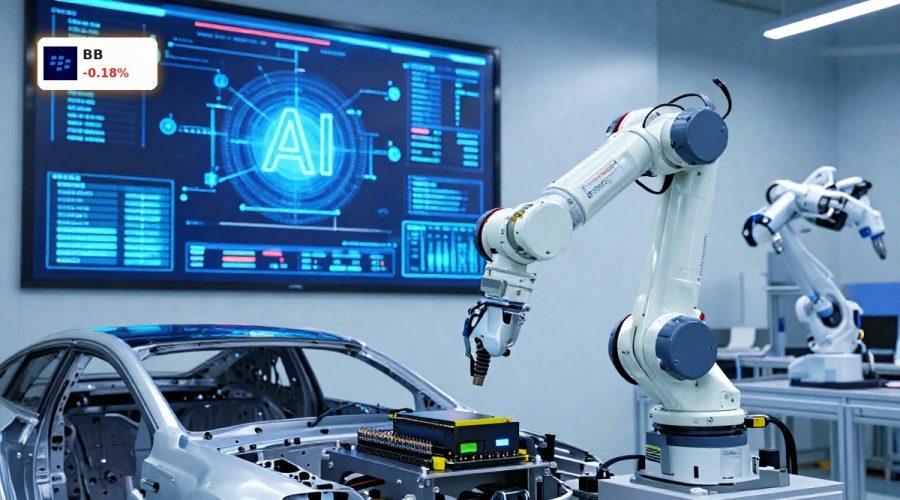

Can the expanded BlackBerry Nvidia Partnership turn QNX into a quiet AI winner while fresh security concerns cloud the upside?

How is the BlackBerry Nvidia Partnership moving the stock?
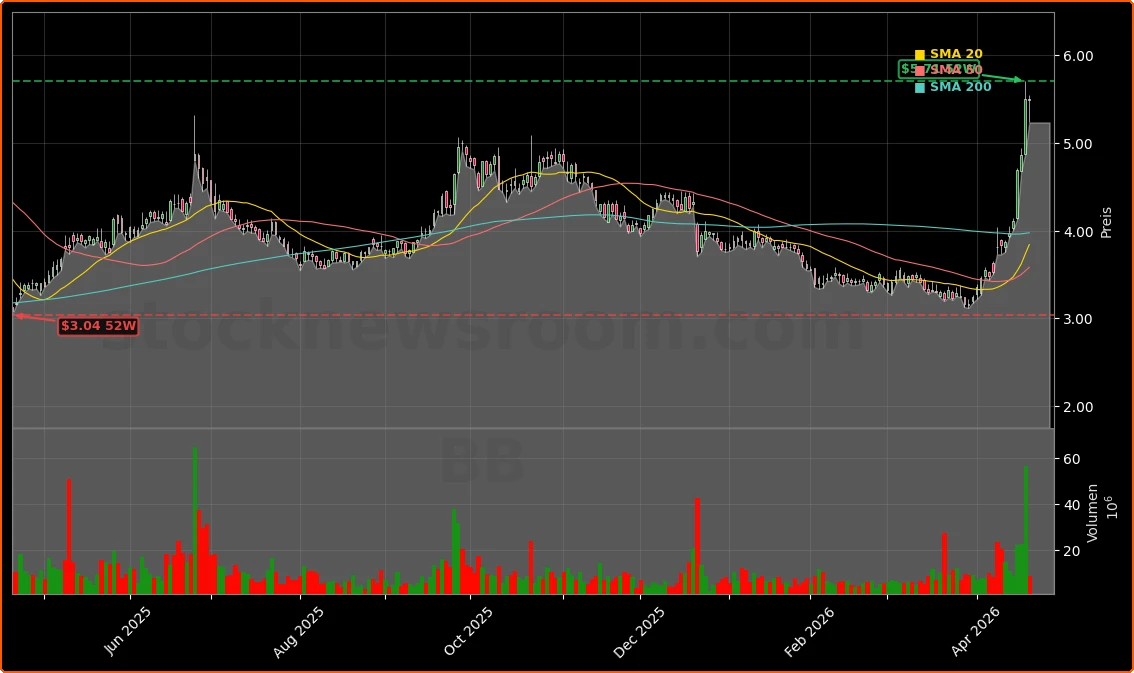
BlackBerry (BB) shares are consolidating near a fresh 52‑week high after a sharp move driven by the expanded BlackBerry Nvidia Partnership. In Monday’s U.S. session, the stock jumped more than 12% on the NYSE and recently traded around $5.49, roughly flat on the day but up significantly from its 52‑week low. With a new 52‑week high just above $5.50, BlackBerry has delivered a strong one‑year return and outperformed many legacy software peers, even if it still sits far below its meme‑stock era spikes.
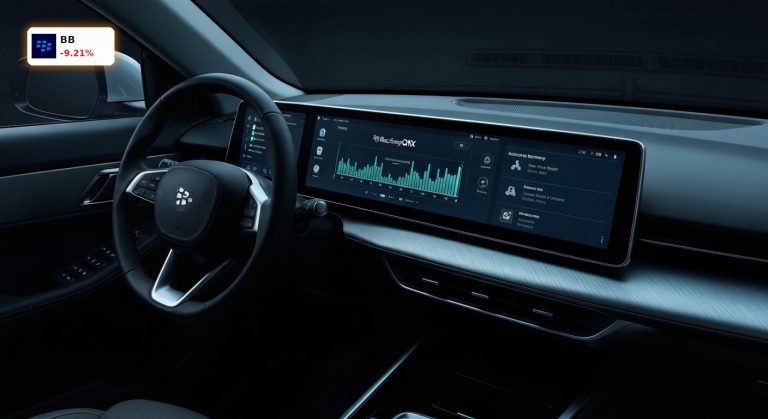
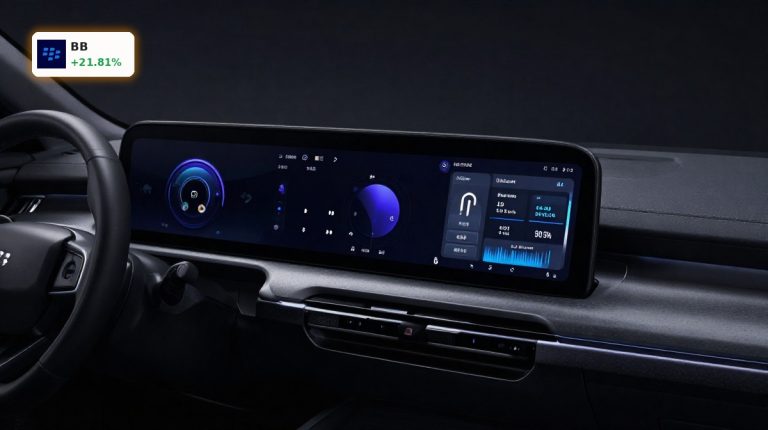
The market’s renewed interest is centered on QNX, BlackBerry’s real‑time operating system for safety‑critical environments. Investors are increasingly viewing QNX as a leveraged play on the physical side of AI — robots, industrial automation, medical devices, and autonomous vehicles — in contrast to cloud‑centric AI plays that dominate the NASDAQ 100. That narrative has moved BlackBerry back onto the radar of growth‑oriented U.S. portfolios that typically focus on names like NVIDIA and Tesla.
What exactly changed in the BlackBerry Nvidia Partnership?
The BlackBerry Nvidia Partnership began in automotive, where QNX has long powered digital cockpits and ADAS stacks. The latest step significantly broadens the scope: QNX OS for Safety 8.0 is now being integrated into Nvidia’s IGX Thor industrial AI platform and its Halos Safety Stack. This move positions BlackBerry as a core software layer for AI‑enabled systems that must meet stringent safety and regulatory standards beyond passenger cars.
For Nvidia (NVDA), the tie‑up strengthens its push into edge AI for factories, hospitals, and logistics – segments where deterministic behavior and certification are as important as raw compute. For BlackBerry, the deal creates a potential royalty and licensing stream wherever IGX Thor is deployed, from surgical robots to smart manufacturing cells. While no concrete revenue guidance has been disclosed for this specific partnership, the company has highlighted double‑digit growth in its IoT/QNX division and an expanding backlog built around these kinds of long‑cycle design wins.
On Wall Street, several research desks have highlighted QNX as the primary value driver for the stock. Rating upgrades such as the recent move to “Buy” from Wall Street Zen underscore how sentiment has shifted from a legacy handset story to a specialized infrastructure play in safety‑critical AI. However, the valuation remains demanding versus current profitability, a point frequently raised by value‑oriented analysts at firms like Goldman Sachs and Morgan Stanley when they compare BB’s multiples with broader S&P 500 software names.
How does this position BlackBerry against U.S. tech peers?
For U.S. investors accustomed to mega‑cap AI champions, the BlackBerry Nvidia Partnership offers a different angle. Unlike Apple or Microsoft, which monetize AI largely through consumer devices and cloud platforms, BlackBerry is competing in niche, regulated environments where certification is a key moat. Its QNX platform is already embedded in tens of millions of vehicles and an increasing number of medical and industrial systems.
In automotive, QNX faces competition from in‑house operating systems at companies like Tesla and from open‑source stacks, but its safety certifications remain a differentiator for traditional OEMs. In industrial AI, QNX must contend with real‑time Linux distributions and proprietary solutions from major automation vendors. By aligning tightly with Nvidia’s silicon and software ecosystem, BlackBerry gains access to a broad developer base and distribution channel it could not build alone, though it also ties a chunk of its growth to Nvidia’s execution in non‑datacenter markets.
From a portfolio‑construction standpoint, BB behaves more like a small‑cap, high‑beta derivative of edge AI rather than a core NASDAQ holding. Its recent rally has pushed performance ahead of many smaller software names, but its earnings base is still modest and volatile compared with S&P 500 technology constituents.
What does the new secure communications study reveal?
While the market is focused on the BlackBerry Nvidia Partnership, the company’s Secure Communications division released a report that underscores why its security messaging still matters. In a survey of 700 security decision‑makers across government agencies and critical infrastructure operators in the U.S., U.K., Canada, and Singapore, 83% admitted that WhatsApp is used inside their organizations for sensitive conversations. At the same time, 88% rated their overall communications security as strong.
The disconnect is worrying: 52% of respondents incorrectly believed that end‑to‑end encryption also hides metadata such as IP addresses and location data, and 41% assumed that messages remain secure even if a device is compromised. That assumption is false — once an endpoint is breached, encrypted apps can effectively become clear‑text for an attacker. These gaps create ideal conditions for nation‑state adversaries and sophisticated groups to exploit high‑value targets in defense, healthcare, and energy.
For BlackBerry, which sells hardened messaging and secure mobility solutions into governments and large enterprises, the report functions both as a warning and as a demand signal. It highlights a sizable addressable market for trusted, policy‑compliant communications tools at a time when geopolitical tensions and cyberattacks on critical infrastructure are rising.
Financially, Secure Communications is smaller than QNX but is showing year‑over‑year growth and improving margins. Management has also reinforced its commitment to the segment, including compensation packages for senior leaders aligned with long‑term performance in secure communications and cybersecurity services.
Put together, the expanded BlackBerry Nvidia Partnership and the new security study point in the same strategic direction: BlackBerry is doubling down on being the software infrastructure provider where safety and security are non‑negotiable, from operating rooms and factory floors to cabinet rooms and military command centers. For investors, the next quarters will need to confirm that this narrative translates into sustained revenue growth, better profitability, and further validation from major partners and analysts.