Can the radical Cloudflare AI Strategy justify a 20% workforce cut while the stock tanks over 21% in a single session?

Why is Cloudflare sinking after a beat?
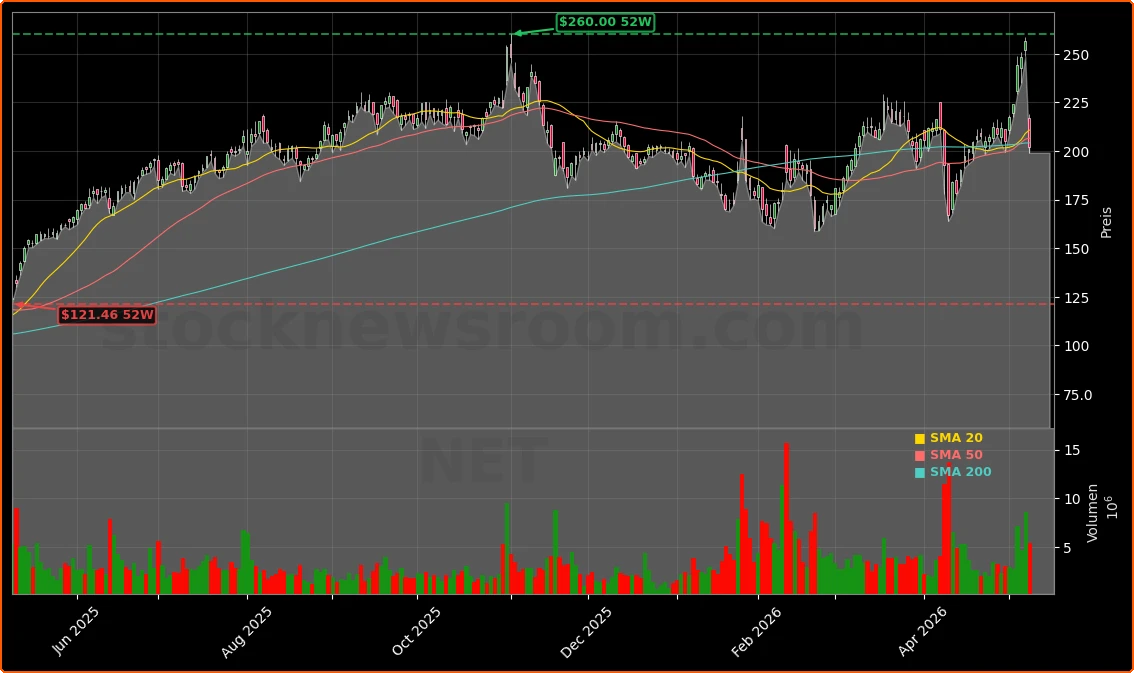
Despite headline beats, the market reaction is sharply negative. Shares of Cloudflare, Inc. are down about 21% on Friday from a previous close of $208.50, putting the name under heavy pressure on the NYSE and making it one of the weakest large‑cap tech stocks today. The selloff follows Thursday’s Q1 2026 report and an after‑market conference call where management laid out a dramatic restructuring anchored in the Cloudflare AI Strategy.
For Q1, Cloudflare posted revenue of roughly $640 million, up 34% year over year and ahead of Wall Street expectations near $622 million. Adjusted earnings came in at $0.25 per share, topping consensus of $0.23. On a GAAP basis, the company still reported a net loss of about $22.9 million, or $0.07 per share, but that was a substantial improvement from a loss of $38.5 million, or $0.11 per share, a year earlier. Those numbers would normally support the rich valuation the stock has built up after roughly doubling over the past year.
Yet traders are focused less on the recent beat and more on how the new operating model, including significant one‑time restructuring costs and execution risk, may affect growth and margins over the next several quarters.
What is changing under the Cloudflare AI Strategy?
The core of the announcement is a shift to an AI‑first operating model. Management plans to eliminate more than 1,100 roles worldwide—about 20% of the workforce—and replace many routine, internal‑facing and support functions with autonomous AI agents built on Cloudflare’s own edge network. The company expects restructuring charges of roughly $140–$150 million in Q2 tied to severance, facilities and related costs.
CEO Matthew Prince emphasized that the move is not a pure cost‑cutting exercise but a strategic decision to rebuild Cloudflare’s internal processes and customer‑facing workflows around automation and AI. Internally, the company has already seen AI usage surge: AI tools were reportedly used over 600% more last quarter, and about 97% of engineers now rely on AI‑powered code assistants. The Cloudflare AI Strategy aims to extend that productivity shift across sales, support and operations, with the goal of running the platform more efficiently while shipping products faster.
For AI‑focused investors who have watched NVIDIA and other enablers soar, the key question is whether Cloudflare can parlay its global edge network and security stack into a defensible AI distribution layer for enterprises. The current restructuring effectively bets the culture and organization on that thesis.
How does guidance look after the overhaul?
Alongside the restructuring, Cloudflare issued what many on Wall Street view as solid but not spectacular guidance. For Q2 2026, management forecasts revenue between $664 million and $665 million and adjusted EPS of $0.27. That revenue midpoint is roughly in line with consensus expectations, nudging slightly below some more optimistic models, while the earnings outlook matches analyst forecasts.
For the full year 2026, Cloudflare now targets revenue in the range of $2.805–$2.813 billion and adjusted EPS of $1.19–$1.20. Those numbers imply continued mid‑30% growth and steady margin expansion once restructuring noise fades. However, after such a powerful run‑up in the stock, investors were primed for either a more aggressive top‑line outlook or a clearer, near‑term monetization story around the Cloudflare AI Strategy.
The current drop also comes against a backdrop of notable insider selling in recent weeks. Multiple directors and executives, including President Michelle Zatlyn and CFO Thomas Seifert, have sold shares under pre‑arranged Rule 10b5‑1 plans at prices mostly between the high $190s and mid‑$230s. While these transactions are framed as routine, some traders see them as another reason to lock in profits after a strong rally.
How do analysts and peers frame the move?
Before this report, sentiment on Cloudflare among Wall Street firms was broadly constructive. Citigroup recently reiterated a Buy rating with a $265 price target, citing Cloudflare’s role as a core internet infrastructure provider benefiting from long‑term AI and security trends. The Globe and Mail also highlighted the stock as one of the more favored US tech names in analyst surveys, with an overall Moderate Buy consensus.
Today’s reaction shows how fragile high‑multiple stories can be when expectations are stretched. Cloudflare’s model differs from hyperscalers and AI chip giants such as NVIDIA, but investors will inevitably compare execution and monetization of AI services across the sector. The company also competes at the edge with CDNs and platform players, and it increasingly rubs shoulders with security specialists that are layering AI into their offerings.
For US investors who already own high‑growth disruptors like Tesla or Apple, Cloudflare now sits firmly in the “show‑me” bucket: the narrative is compelling, but the market wants proof that AI‑driven efficiencies and new products can offset the human capital being cut.
Related Coverage
For a closer look at how this quarter’s numbers initially hit the tape and how traders reacted in extended trading, see Cloudflare Earnings: -19% After-Hours Crash Shocks Investors. That analysis dives deeper into the first reaction to the earnings beat, the stock’s nearly 19% drop after the close, and what the early commentary implied for the Cloudflare AI Strategy narrative.
In the end, the Cloudflare AI Strategy couples strong current fundamentals with a high‑stakes organizational gamble, which explains the violent repricing of the stock. For growth‑oriented investors, the story remains intact but carries higher execution risk as the company automates away a fifth of its workforce. The next few quarters will reveal whether this AI‑first pivot can translate into durable revenue growth and margin gains—and whether the current selloff becomes an entry point or a warning sign.