Can the latest Coca-Cola Earnings beat and guidance hike finally turn this defensive dividend icon into a market-beating growth story again?

How did Coca-Cola Earnings surprise Wall Street?
The Coca-Cola Company kicked off Tuesday’s session on the NYSE with a decisive earnings beat. First‑quarter 2026 net revenue climbed roughly 12% year over year to about $12.5 billion, easily topping analyst estimates around $12.24 billion. On an organic basis, revenue rose 10%, ahead of the roughly 7% investors had penciled in, driven by an 8‑percentage‑point contribution from higher concentrate and unit volumes and 2 points from price/mix.
Reported earnings per share increased 18% to $0.91, while comparable EPS came in at $0.86, up 18% from a year earlier and comfortably above the $0.81 consensus. Operating income advanced about 19%, and the operating margin expanded to roughly 35% from just under 33% a year ago, showing that the company is managing input costs and mix effectively even as it leans more on volume growth.
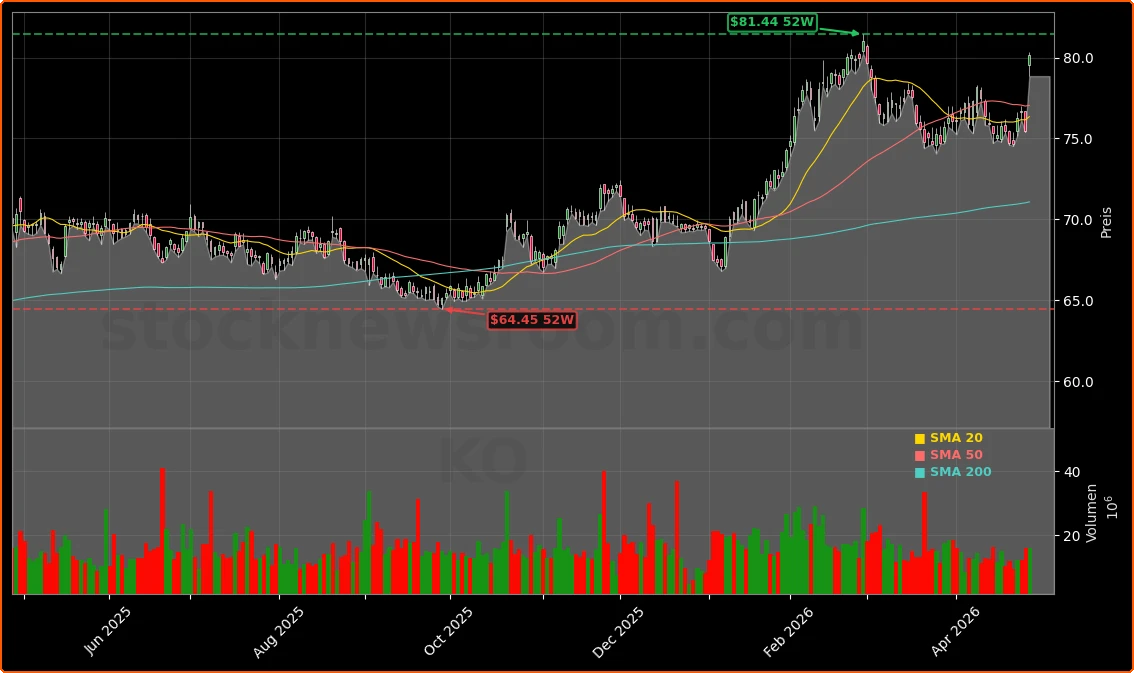
Investors rewarded the beat: by mid‑afternoon trading, the stock was up about 6.3% at $80.18, making it one of the top gainers in the Dow Jones Industrial Average and outpacing the broader S&P 500 on the day. While the gain is notable, Coca-Cola still trails the index over the past 12 months, leaving room for catch‑up if execution remains strong.
What is driving growth at Coca-Cola?
The latest Coca-Cola Earnings show that growth is coming from genuine demand, not just price hikes. Global unit case volume increased 3%, with particularly strong contributions from China, the United States and India. In North America, volume rose 4%, led by core Trademark Coca‑Cola and categories such as water, sports drinks, coffee and tea. Asia Pacific saw 5% unit case growth across all beverage categories, even though currency‑neutral operating income in the region was pressured by higher input costs and stepped‑up marketing investment.
Product mix continues to shift toward higher‑value and health‑conscious offerings. Coca‑Cola Zero Sugar posted a robust 13% volume increase globally, while water grew 5% and tea 8%. Smaller package sizes and mini‑cans, which carry attractive price points per transaction and higher margins per ounce, are gaining traction, particularly among cost‑sensitive households and consumers watching their sugar intake or using GLP‑1 weight‑loss drugs. Management highlighted that the portfolio strategy—spanning classic sodas, premium dairy like Fairlife, ready‑to‑drink tea and enhanced waters like Smartwater—is helping offset softness in traditional full‑sugar categories.
Regionally, Europe, Middle East and Africa and Latin America each delivered positive unit case growth of 2% and 1%, respectively, despite geopolitical disruptions and uneven consumer confidence. The company also continues to win both volume and value share across key markets and has now gained share in 20 consecutive quarters, underscoring the strength of its brands and distribution network.
How has guidance changed after these Coca-Cola Earnings?
On the back of the Q1 beat, management nudged its full‑year outlook higher. Coca-Cola now expects comparable EPS to rise 8% to 9% from a 2025 base of $3.00, up from a prior range of 7% to 8%. The company maintained its forecast for 4% to 5% organic revenue growth in 2026, reflecting confidence that volume momentum can continue even as pricing contributions moderate.
The improved EPS guidance is driven in part by an expected lower effective tax rate of about 19.9% and modest currency tailwinds, which are seen adding 1% to 2% to reported revenue and roughly 3% to EPS this year. At the same time, Coca-Cola reminded investors that the planned divestiture of Coca‑Cola Beverages Africa in the second half of 2026 will reduce reported sales growth by roughly four percentage points, a portfolio and accounting effect rather than a signal of weaker demand.
New CEO Henrique Braun, who took over from James Quincey at the end of March and previously ran the company’s day‑to‑day operations, stressed that the strategy remains focused on consumer insight, innovation, close customer relationships and integrated execution with bottling partners. Free cash flow of about $1.8 billion in Q1 gives the company continued flexibility to invest in capacity—such as new Fairlife facilities in North America—and to support its long record of dividend growth that appeals to long‑term income investors like Warren Buffett.
How do peers and analysts view Coca-Cola now?
The strong Coca-Cola Earnings come as rivals grapple with slower volumes and shifting consumer behavior. PepsiCo’s beverage division recently reported a year‑on‑year volume decline in North America as shoppers pushed back against earlier price increases, while Keurig Dr Pepper managed double‑digit revenue growth in U.S. refreshment beverages by leaning into brands like 7Up and Snapple. Against that backdrop, Coca-Cola’s ability to grow volumes and raise prices modestly stands out.
On Wall Street, sentiment toward Coca-Cola remains constructive for defensive portfolios. Barclays reiterated its Buy rating on the stock and kept a price target of $83, suggesting additional upside from current levels even after Tuesday’s rally. UBS is also positive, with a $90 target price that implies confidence in longer‑term earnings compounding once the Africa divestiture is absorbed. Market commentators such as Jim Cramer have highlighted Coca‑Cola’s steady execution and relative insulation from GLP‑1 pressures compared with snack‑heavy peers, reinforcing its appeal alongside mega‑cap growth names like Apple, NVIDIA and Tesla in diversified portfolios.
Related Coverage: What about Coca-Cola’s dividend?
Investors focused on income and stability may want to look beyond quarterly Coca-Cola Earnings headlines to the company’s exceptional dividend track record. A recent deep dive, “Coca-Cola Dividend Record: 64th Straight Raise in a Tough Market”, explores how the beverage giant’s decades‑long streak of annual dividend increases can still anchor conservative portfolios even as growth stocks dominate the S&P 500 and Nasdaq. That analysis also examines whether the combination of reliable cash payouts and moderate earnings growth keeps Coca-Cola attractive versus higher‑beta opportunities.
In summary, the latest Coca-Cola Earnings underscored the company’s ability to grow volumes, expand margins and lift guidance despite a choppy macro backdrop. For investors, the stock offers a blend of dividend stability and renewed earnings momentum that may justify a closer look after its latest move higher. The next few quarters will show whether Coca-Cola can sustain this volume‑driven growth and turn today’s earnings surprise into a durable uptrend.