
Can Dell Trump Accounts turn political spectacle into lasting capital flows, or is this just another headline-driven spike?

What Do Dell Trump Accounts Mean for Investors?
Dell Technologies Inc. is now at the center of a rare confluence: macro-level policy, retail sentiment, and institutional capital flow. The Trump Accounts program — a tax-advantaged savings vehicle for children under 18 — launched July 4 and began trading Monday, July 6. The U.S. Treasury seeded qualifying accounts with $1,000 for babies born 2025–2028, while the Dells’ $6.1 billion pledge adds $250 for children age 10 and under born before 2025. SpaceX President Gwynne Shotwell announced contributions on behalf of over two million children, and firms including Goldman Sachs, JPMorgan Chase, and Robinhood pledged employee-matching programs. This isn’t just marketing — it’s a structural inflow mechanism that could channel billions into equities over time, with Dell Trump Accounts serving as both a symbolic and financial anchor.
How Did Wall Street React to the Oval Office Event?
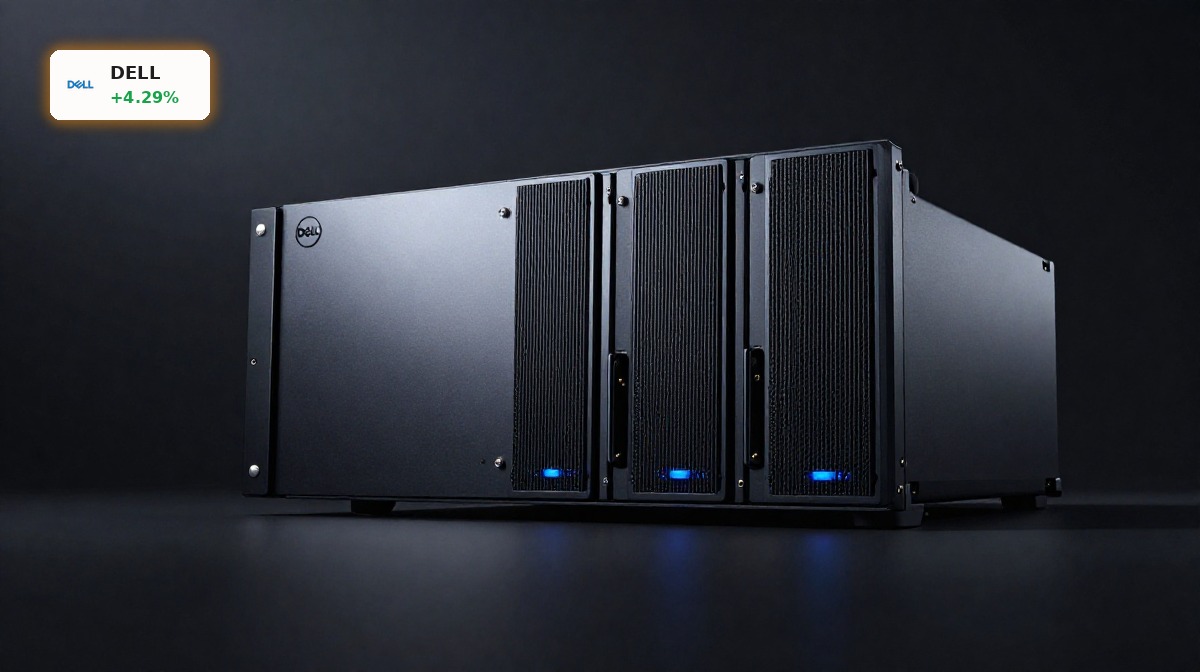
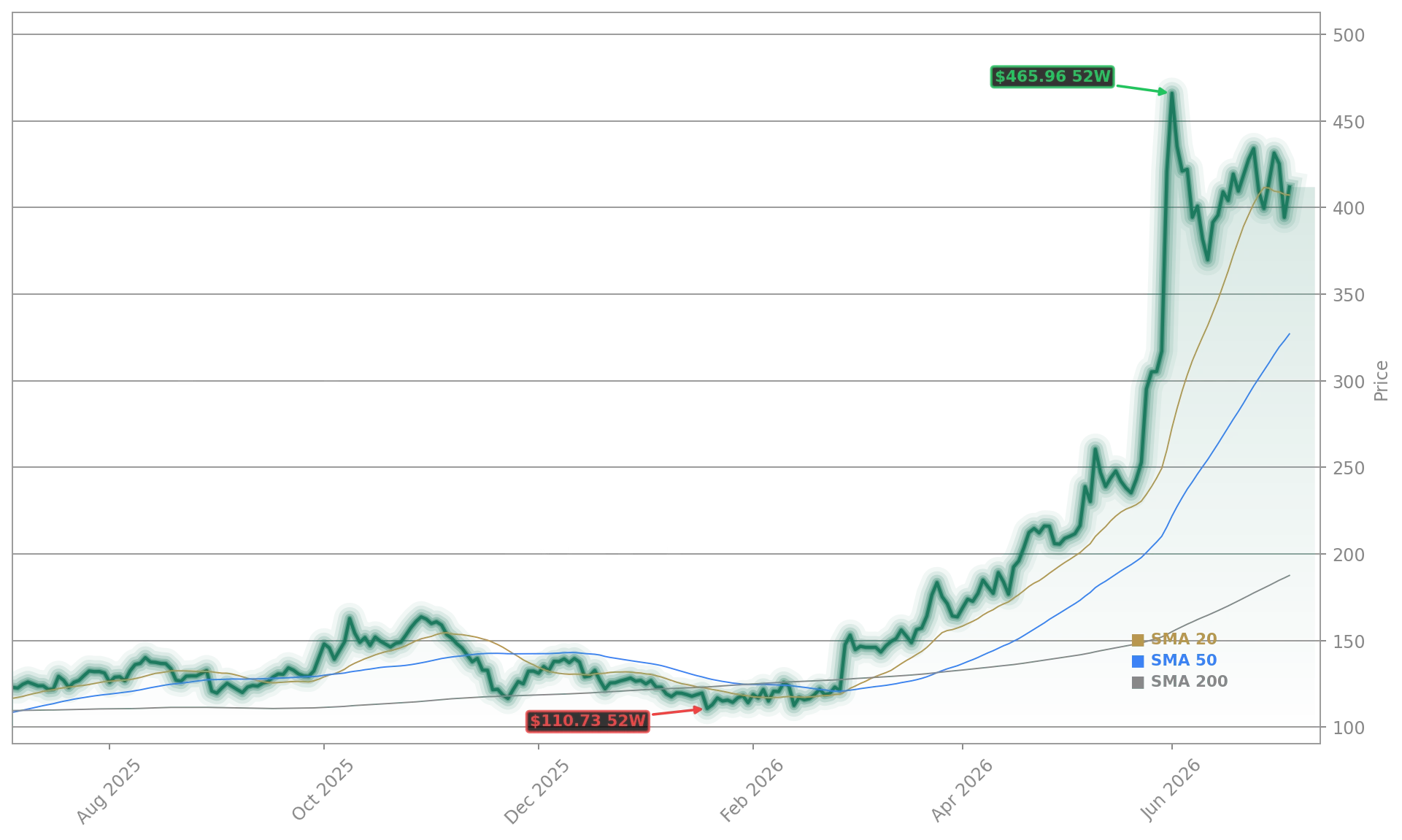
DELL rose 4.29% to $411.24 — outperforming the S&P 500 (+0.7%) and Dow Jones (+0.3%) — and traded near the top of the large-cap tech leaderboard on Monday. The rally followed Trump’s direct appeal in the first-ever joint NYSE–Nasdaq opening bell ceremony held at the White House. Notably, this wasn’t Trump’s first endorsement: in May, similar remarks triggered a 12% intraday surge. His personal stake is evident — Barron’s reported $5.1 million in Dell stock purchases during Q1 2026, and his 2025 financial disclosure documents 24 Dell-related trades across five accounts, with purchases totaling up to $770,000. The market response confirms that Dell Trump Accounts are now a material driver of short-term price action and options activity, with implied volatility spiking to 80% — making put spreads a favored hedge for institutional traders.
What Do the New 8-K Filings Reveal?
On July 6, Dell Technologies Inc. filed two material 8-Ks: one amending its bylaws to affirmatively elect governance under Section 21.373 of the Texas Business Organizations Code, and another modifying shareholder rights. The revised bylaws now require any shareholder proposal submitted under SEC Rule 14a-8 to meet stricter thresholds: $1 million in market value (or 3% of outstanding voting shares), continuous six-month ownership, and solicitation of at least 67% of voting power on the proposal. These changes enhance board control amid rising activist interest — a move analysts at Raymond James noted reflects Dell’s shift toward long-term capital discipline, especially as it navigates AI server demand alongside peers like NVIDIA and Hewlett Packard Enterprise. The filings underscore that governance is now tightly aligned with strategic execution — not just political optics.
How Strong Are Dell’s Fundamentals Amid the Hype?
Fundamentals remain rock-solid: Dell Technologies Inc. reported record full-year fiscal 2026 revenue of $113.5 billion (+19% YoY), diluted EPS of $8.68 (+36%), and $11.2 billion in operating cash flow. Its AI infrastructure segment — competing directly with Super Micro and Apple-aligned server partners — drove outsized growth. Raymond James clarified that recent concerns over Dell’s termination of its Arrow Electronics distribution agreement were overblown: the cited $1.4 billion figure represents gross billings, not revenue, and the earnings impact is ‘likely immaterial.’ With a 20% dividend hike and $10 billion added to its share repurchase program, Dell is balancing growth investment with capital return — a dual mandate that resonates across the S&P 500’s tech-heavy index. Technicals support continuation: DELL trades 0.8% above its 20-day moving average ($407.12) and well above all longer-term SMAs — a golden cross confirmed in March remains intact.
What’s Next for Dell Technologies Inc.?
Go out and buy a Dell computer.— Donald Trump
Investors now pivot to execution. With Trump Accounts scaling rapidly — and $250 per eligible child already flowing — Dell stands to benefit from indirect demand via portfolio allocations, brand reinforcement, and ecosystem partnerships (e.g., DXC Technology’s new Dell-powered private cloud). The $444.00 resistance level looms as the next technical hurdle. Should DELL break through, analysts at Sahm Capital note ‘significant room to run’ given its AI server valuation discount relative to intrinsic estimates. For U.S. portfolios, this isn’t just a political story — it’s a convergence of policy tailwinds, governance clarity, and AI infrastructure leadership. The Dell Trump Accounts narrative is now a structural catalyst, not a headline event.