
Can Dell AI Servers turn a massive $43 billion backlog into lasting upside, or is NVIDIA dependence the real risk?

How Much Upside Remains for Dell?
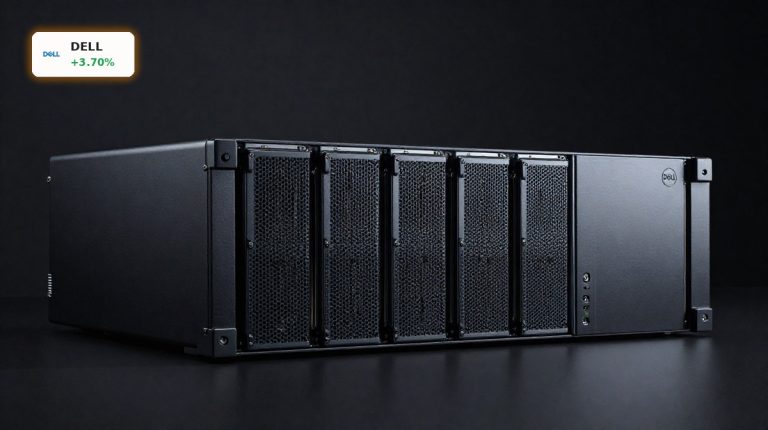
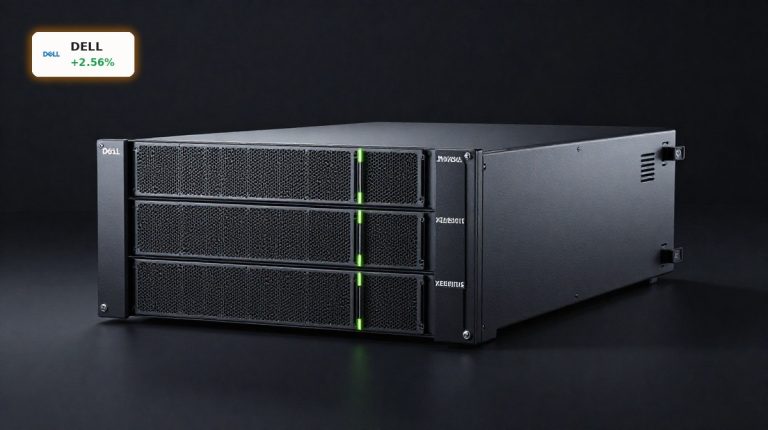
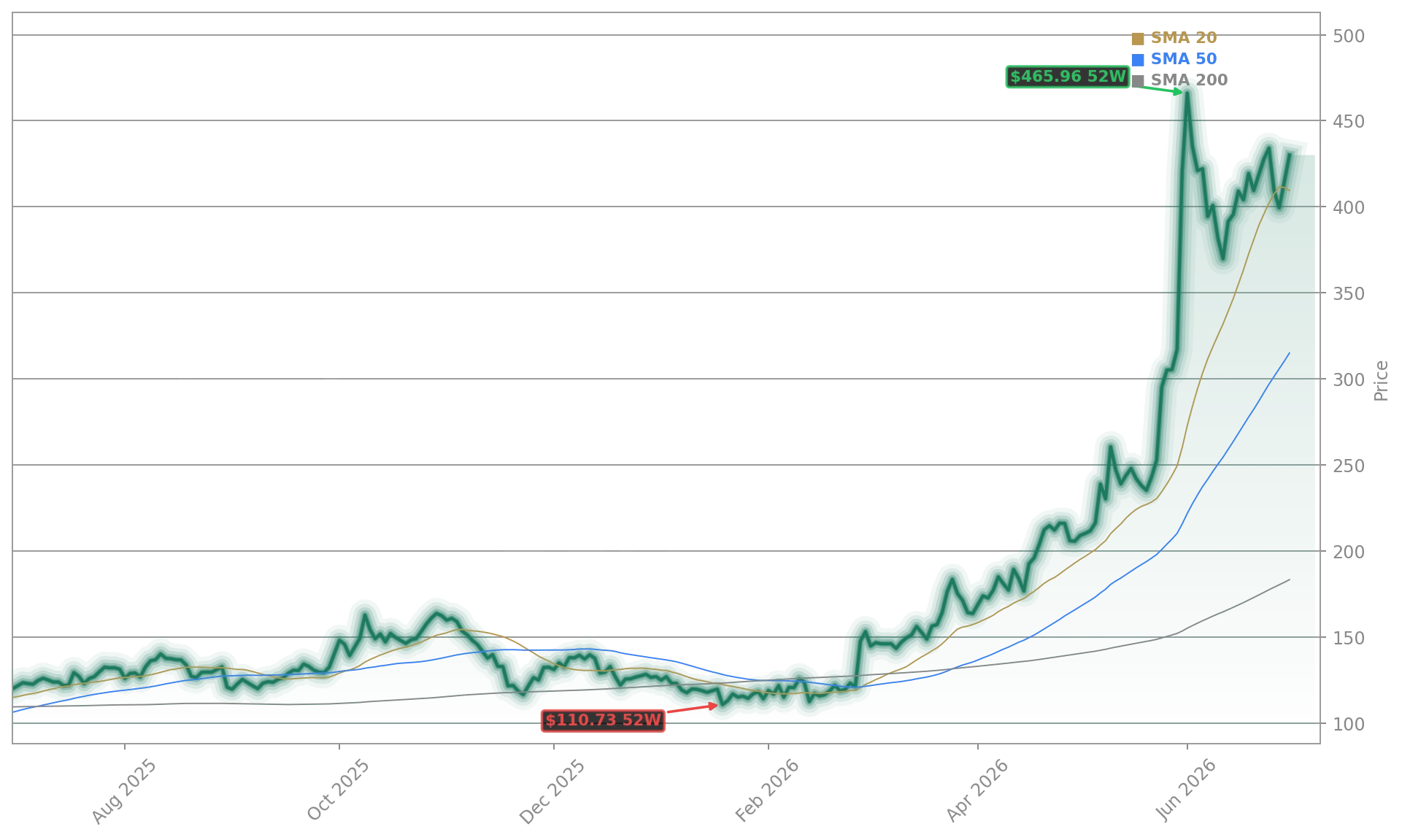
Dell Technologies Inc. closed Tuesday at $414.28, up 3.70% on broad AI-sector momentum — a move that followed a 4% gain the prior day alongside Super Micro Computer (SMCI) and amid no new company-specific catalyst. The rally reflects sector-wide dip-buying after SMCI’s 8% drop tied to a Taiwan probe into alleged NVIDIA (NASDAQ:NVDA) chip smuggling. Notably, Dell AI Servers are now the dominant driver of investor sentiment, not legacy PC or enterprise services. Wall Street’s consensus price target stands at $503.22, per 24/7 Wall St., implying 22.9% upside with a 90% confidence score — the highest among major infrastructure peers. Morgan Stanley recently raised its target to $477, citing stronger-than-expected enterprise server demand and the June launch of the PowerEdge XE8812, built for NVIDIA’s AI Factory architecture.
What’s Behind the $43 Billion AI Backlog?
Dell booked $24.4 billion in AI server orders in Q1 FY27 alone — more than 1.5x its AI revenue for the quarter — and now holds a $43 billion backlog, per the May 28 earnings release. That figure dwarfs Hewlett Packard Enterprise (HPE), which reported a $28 billion AI backlog in its latest quarterly filing. The scale is strategic: Dell’s integration with NVIDIA’s Vera Rubin NVL72 rack-scale architecture — validated last week by CoreWeave and highlighted in SiliconANGLE — positions Dell PowerEdge servers as critical infrastructure for agentic AI workloads. A $1.4 billion Microsoft deal inked in mid-June further validates demand. Yet the surge brings risk: AI server gross margins sit at just 18%, down from 21% a year ago, dragging overall profitability as low-margin hardware dominates the mix.
Are Dell AI Servers Too Dependent on NVIDIA?
Yes — and that’s a growing concern for analysts. While Dell’s AI server revenue grew 757%, nearly all of that growth flows through NVIDIA GPU supply chains. The unresolved Taiwan probe into alleged NVIDIA chip smuggling — involving SMCI, not Dell — underscores systemic vulnerability. Dell’s reliance on NVIDIA is deeper than NVIDIA’s own ecosystem partners: unlike Apple or Tesla, Dell lacks in-house silicon or AI software to diversify revenue streams. Citigroup notes the “supply-chain concentration remains the single largest near-term overhang,” even as it maintains a Buy rating. Meanwhile, Dell’s decision to end its decade-long distribution partnership with Arrow ECS opens up $1.4 billion in North American channel revenue — a move analysts at Insider Monkey say strengthens Dell’s direct control over AI server deployment timelines and firmware integration.
How Does Dell Compare to AI Infrastructure Peers?
On valuation and growth, Dell sits between Super Micro and Hewlett Packard Enterprise. SMCI trades at a forward P/E of 42x, HPE at 13x, and Dell at 26x — reflecting its hybrid model (infrastructure + services). Yet Dell’s AI server revenue growth (757% YoY) far exceeds HPE’s 312% and SMCI’s 498%. RBC Capital Markets rates Dell as ‘Outperform’, citing “unmatched scale in AI server volume and enterprise trust.” Still, Zacks Investment Research recently excluded Dell from its top 10 AI stocks list — a reminder that while Dell AI Servers are in high demand, the stock’s valuation premium may pressure near-term returns. The company’s inclusion in Investor’s Business Daily’s ‘Big Cap 20’ list alongside Applied Materials signals Wall Street’s growing view of Dell as a foundational AI hardware leader — not just a systems integrator.
Dell’s AI server pipeline is at multiples of its $43 billion backlog — this isn’t cyclical demand, it’s structural infrastructure buildout.— 24/7 Wall St. Analyst Team
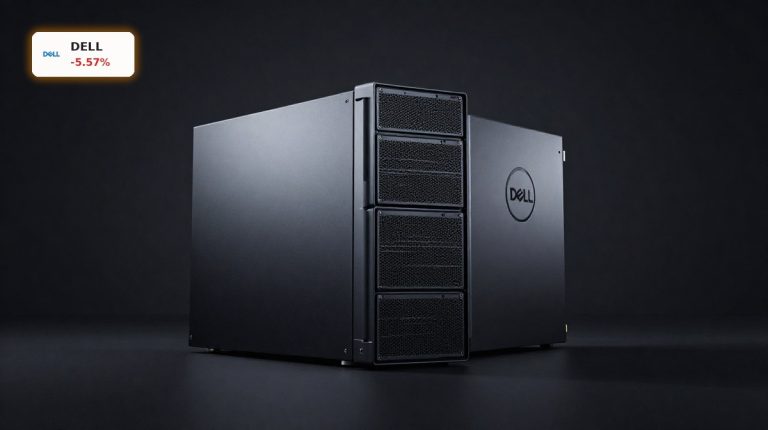
Related coverage includes a deep dive into the recent Dell Technologies Downgrade Triggers -5.6% Warning, which explores whether the AI rally has stretched valuation too far. Also relevant is Enphase Energy Inverter Ban Drives 2.8% Gain on AI Push, highlighting how regulatory shifts are unexpectedly boosting AI infrastructure exposure across adjacent sectors. Both articles underscore the broader theme: AI infrastructure is no longer niche — it’s systemic.