
Can Eli Lilly LillyDirect turn obesity drugs into a full-service care platform that rivals cannot easily copy?

What does Weight Watchers Med+ add to Eli Lilly LillyDirect?
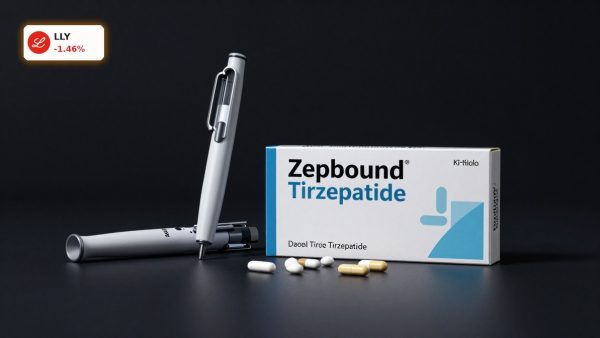
Effective immediately, Weight Watchers Med+ is fully embedded in Eli Lilly’s LillyDirect digital platform — offering eligible patients seamless access to licensed clinical providers, pharmacy fulfillment, nutrition coaching, and FDA-approved GLP-1 medications including Zepbound and Mounjaro. Unlike standalone telehealth models, LillyDirect now functions as a vertically integrated care pathway: patients receive prescriptions, ongoing monitoring, and behavioral support within a single, branded interface. This isn’t just distribution — it’s clinical integration. According to WW International, the collaboration directly supports its mission to pair ‘brand-name GLP-1 medications with comprehensive clinical and behavioral support, designed for real life.’ For U.S. investors, this reinforces Eli Lilly’s shift from pure drug manufacturer to care orchestrator — a model increasingly rewarded on the NASDAQ, where platform-driven health tech firms like Teladoc trade at premium multiples.
How is Eli Lilly funding its pipeline diversification?
Eli Lilly is deploying its GLP-1 windfall with unprecedented speed: $10 billion in upfront acquisition costs across eight deals in Q1 and Q2 2026 — double its 2025 total. The $3.83 billion triple acquisition in May (Curevo, LimmaTech Biologics, and The Vaccine Company) targets infectious disease vaccines, while April’s $2.3 billion purchase of Ajax Therapeutics bolsters oncology. Crucially, these aren’t bolt-on buys — they’re strategic infusions into late-stage pipelines. Eli Lilly’s R&D spend rose 31% year-over-year, and its 42 Phase 3 trials represent the deepest clinical-stage pipeline among S&P 500 pharmaceuticals. Citigroup recently raised its price target to $1,220, citing ‘unmatched execution in capital allocation and clinical de-risking.’
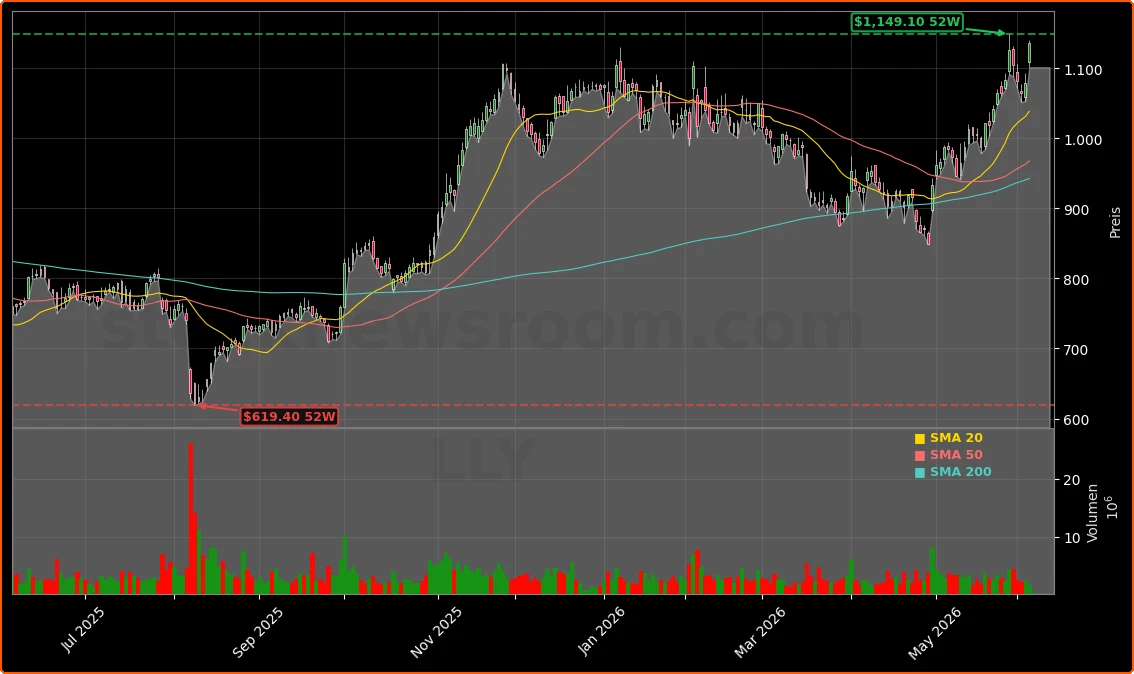
Why is Eli Lilly LillyDirect a competitive moat against Novo Nordisk?
While Novo Nordisk leads in global GLP-1 volume, Eli Lilly’s U.S. advantage is structural: Mounjaro and Zepbound delivered 125% and 80% sales growth in Q1 2026, respectively, and now account for 64% of total revenue. But the real differentiator is LillyDirect — a proprietary, scalable infrastructure that Novo Nordisk lacks. Where competitors rely on fragmented pharmacy and telehealth partners, Eli Lilly controls the full patient journey. That control enables faster reimbursement alignment, richer real-world data collection, and higher adherence — all critical as payers tighten GLP-1 access. RBC Capital Markets upgraded Eli Lilly to ‘Outperform,’ noting ‘LillyDirect is becoming the de facto digital front door for metabolic care in America.’
What’s next for Eli Lilly’s valuation and earnings trajectory?
LillyDirect is becoming the de facto digital front door for metabolic care in America.— RBC Capital Markets
At 29x forward P/E, Eli Lilly trades at a significant premium — but one justified by its Q1 2026 EPS growth of 49.7% at the midpoint ($36.25) and $83.5 billion full-year revenue guidance. With donanemab now FDA-approved and imlunestrant in late-stage breast cancer trials, non-GLP-1 revenue is accelerating — up 160% year-over-year in Q1. The Weight Watchers Med+ integration is not a standalone play; it’s the latest node in a broader ecosystem that includes CVS coverage restoration (a key catalyst covered in Eli Lilly Zepbound Coverage +5.2% as CVS Restores Access) and partnerships with AI drug discovery leaders. Morgan Stanley sees the company’s 2027–2029 earnings CAGR sustaining above 20% — a rare feat among mega-cap healthcare stocks.