Can Exxon Mobil Earnings really be called a beat when headline profit just hit a five-year low amid war-driven oil chaos?

How did Exxon Mobil Earnings surprise Wall Street?
Exxon Mobil Corporation reported adjusted earnings per share of about $1.16–$1.17 in Q1 2026, roughly $0.20 above the average analyst estimate around $0.96–$1.10. Revenue grew roughly 5% to about $82.5 billion, supported by a near-60% jump in oil prices since the start of the Iran war. However, the adjusted company-wide profit dropped from about $7.7 billion a year earlier to roughly $4.9 billion, its lowest level in five years on that basis, highlighting how volatile trading and derivatives activity can mask the underlying strength of the core business.
Exxon said the quarter included substantial temporary losses on hedging contracts that were put in place to protect against lower crude prices earlier in the cycle. On a more normalized basis – excluding one‑offs and timing effects – internal metrics pointed to underlying earnings closer to $8.7 billion, better reflecting the benefit from triple‑digit Brent and tight refined product markets. Even so, Exxon Mobil Earnings landed in a complex macro backdrop where investors are rewarding clean cash flow and visibility more than noisy headline beats.
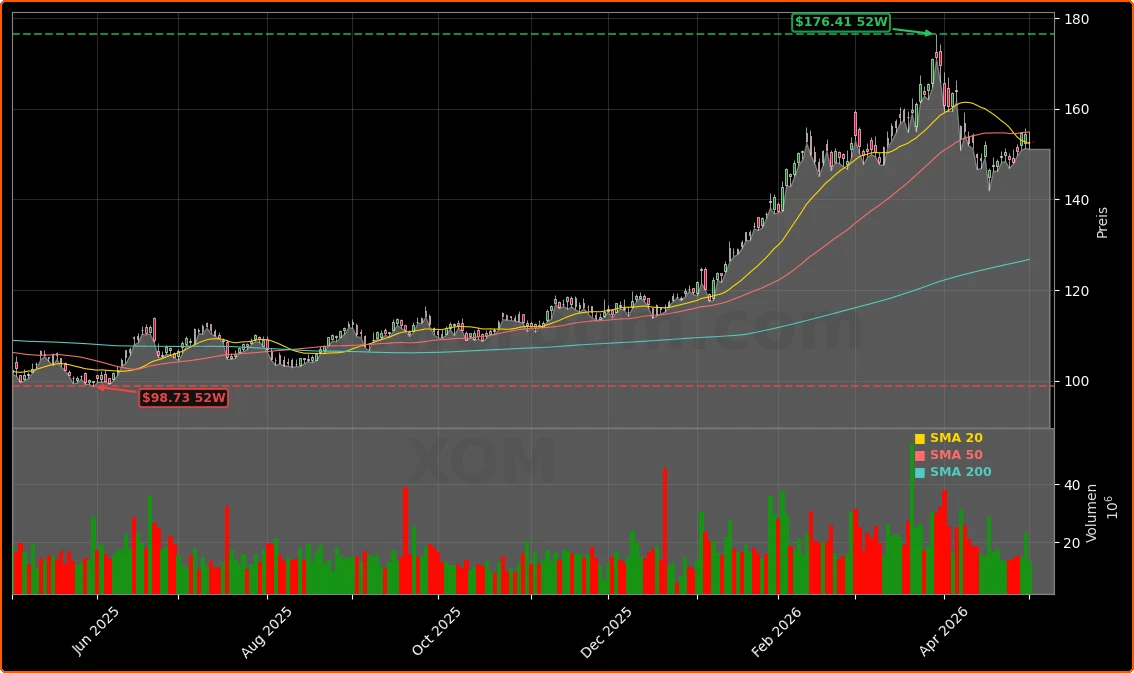
On the market side, Exxon Mobil (XOM) closed at $152.75 on Friday, down about 1.7% from the prior close of $155.43, and slipped another 0.1% to $152.60 in after‑hours trading. The stock has traded sideways despite elevated crude, underperforming some high‑beta energy names and growth leaders like NVIDIA and Tesla this year.
How big is the Hormuz hit to Exxon Mobil?
The dominant risk factor behind Exxon Mobil Earnings is the ongoing closure of the Strait of Hormuz, triggered by the Iran war. Management estimates that about 15% of its global production is currently offline as a result, equating to a hit of roughly 750,000 barrels per day versus 2025 levels if the strait remains shut through the end of Q2. Refinery throughput worldwide could fall about 3% versus late 2025 because less feedstock can be shipped from the Gulf.
Chief Executive Darren Woods told investors that the oil market has not yet fully absorbed the impact of this unprecedented disruption. Part of the short‑term cushion has come from tankers that were already loaded and in transit when the conflict broke out, along with releases from strategic reserves and draws on commercial inventories. As those buffers deplete, Woods warned that crude prices could face another leg higher if Hormuz stays closed, even from already elevated $100‑plus levels.
At the same time, Exxon is leveraging its global footprint to replace some lost barrels. Production is increasing outside the Middle East, and the company highlighted rising volumes from other upstream hubs, including offshore projects that tie into its longer‑term deepwater strategy previously outlined for investors in comparison with peers such as Apple-like cash‑flow stability but energy‑sector risk.
What role did hedging and trading play in Exxon Mobil Earnings?
Both Exxon Mobil and sector peer Chevron reported that their Q1 profits were tempered by trading impacts and hedging strategies that did not fully pay off during the quarter. To protect against a potential downturn earlier in the year, Exxon had entered derivatives positions designed to cushion earnings if oil fell. Instead, prices surged on the Iran conflict, and delivery delays and timing mismatches created significant paper losses on those contracts in the first three months of 2026.
Management emphasized that these are largely timing effects: the company expects the hedges to unwind favorably over the coming months provided high prices persist. Still, the headline drop in adjusted profit to $4.9 billion, and the accounting quirk that pushes underlying performance to around $8.7 billion, left some investors wary. The reaction on Wall Street was negative, with Exxon’s share price slipping roughly 1% during the New York session despite the EPS beat.
Strategically, Woods struck a cautious tone on new long‑cycle investments, signaling restraint until there is greater clarity on how long current price levels can last. He also pushed back against ideas in Washington for export restrictions or price caps, arguing that such policies would deter investment and ultimately reduce global supply just when it is most needed.
How do Exxon Mobil Earnings compare with Chevron and the S&P 500?
For U.S. investors, Exxon Mobil Earnings arrive in a market that has just seen the S&P 500 log one of its strongest months since 2020, with risk appetite improving while the “fear index” remains in greed territory. Yet energy has been a mixed performer. Like Exxon, Chevron’s Q1 results topped consensus on an adjusted basis, but trading losses and hedging noise led to lower year‑over‑year profits and a muted share‑price response.
Oil majors are also navigating a rapidly shifting policy and supply landscape. Washington is debating how to respond to the Hormuz shock, while countries such as Australia accelerate diversification of import routes and renewables build‑out. At the same time, higher crude prices are reviving interest in previously “uninvestable” jurisdictions like Venezuela, where Exxon is reassessing opportunities after regulatory changes under the post‑Maduro regime.
Against that backdrop, Exxon continues to lean on its balance sheet strength, integrated model and commitment to aggressive share buybacks and dividends to appeal to long‑term holders, similar to how mega‑caps like Apple and NVIDIA have used capital returns to anchor investor loyalty despite cyclical swings. The key difference is that energy earnings are now far more tied to geopolitics than those tech giants, adding another layer of risk premium for portfolio managers.
Related Coverage
Investors who want to dig deeper into the strategic backdrop behind recent Exxon Mobil Earnings can look at how the company is positioning for the long term. An in‑depth feature on Exxon’s capital allocation, deepwater bets and cash‑flow profile is available at Exxon Mobil Strategy Boom With Deepwater Bets And Cash Flow. That analysis examines whether the stock’s valuation can continue to command a tech‑like premium as management balances high oil prices, geopolitical risk and consistent dividend growth.
It’s obvious to most that if you look at the unprecedented disruption in the world supply of oil and natural gas, the market hasn’t seen the full impact of that yet.— Darren Woods, CEO of Exxon Mobil
In summary, Exxon Mobil Earnings for Q1 2026 highlight a company benefiting from higher oil and gas prices while wrestling with war‑driven supply disruptions and hedging volatility. For Wall Street, the key takeaway is that the underlying franchise remains robust even as reported profit looks weaker and the stock trades below recent highs. The next set of Exxon Mobil Earnings will be crucial for showing whether Hormuz disruptions ease, hedging losses reverse and the company’s capital‑return story can regain momentum in U.S. portfolios.