
Can Ford Energy Strategy turn a legacy automaker into an AI infrastructure play before the market’s excitement runs ahead of reality?

Why is Ford Energy Strategy driving shares?
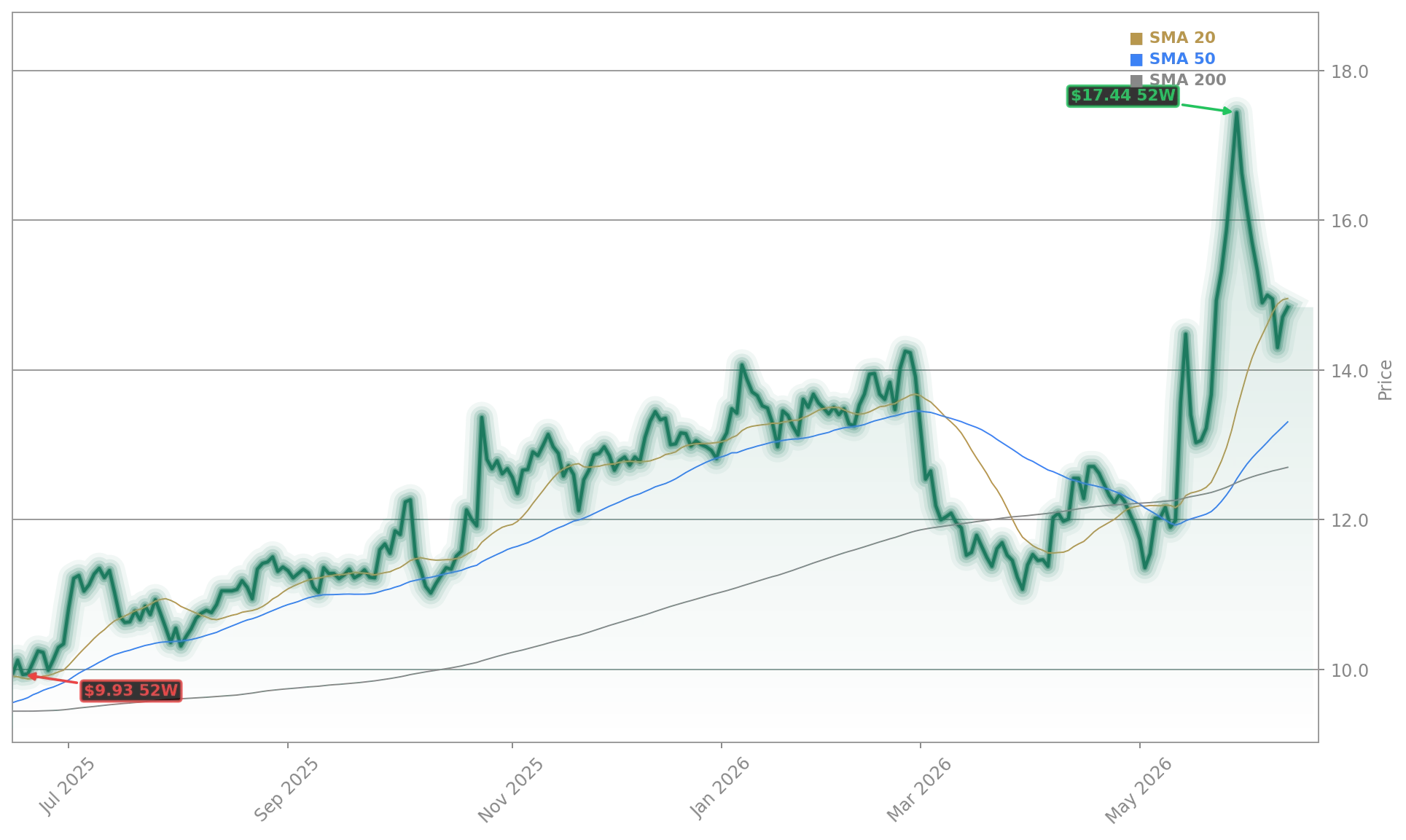
Ford’s latest rally has been fueled by enthusiasm around Ford Energy, a newly launched subsidiary aimed at battery energy storage systems rather than passenger EVs alone. The business repurposes parts of Ford’s battery manufacturing base after the company pulled back from a more aggressive EV buildout. Investors reacted strongly after Ford disclosed its first sales agreement for the unit, a five-year deal to supply battery energy storage systems to EDF power solutions for large-scale projects across the United States.
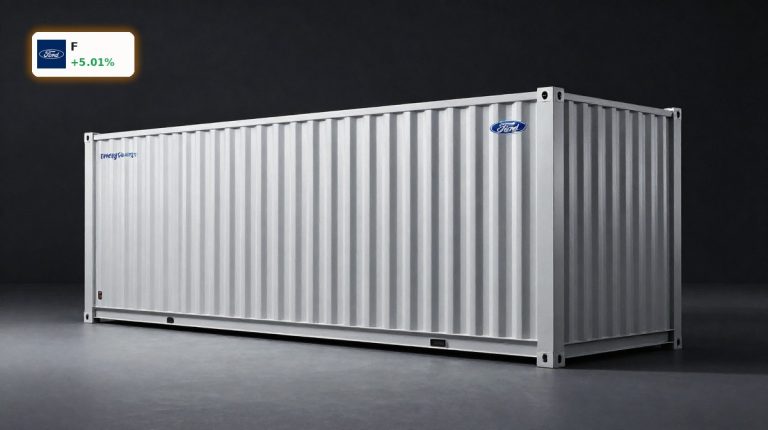
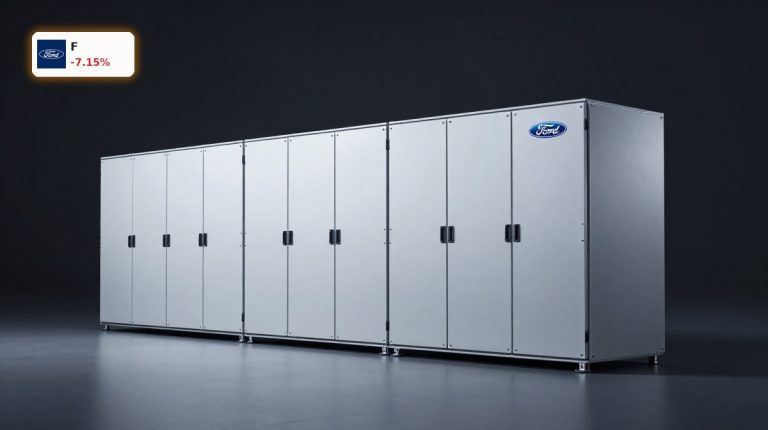
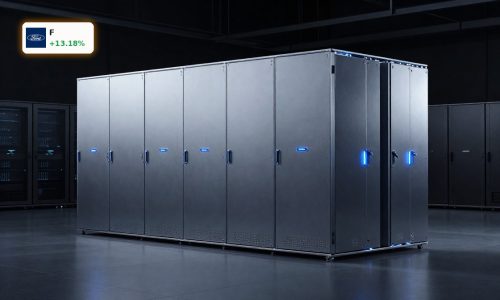
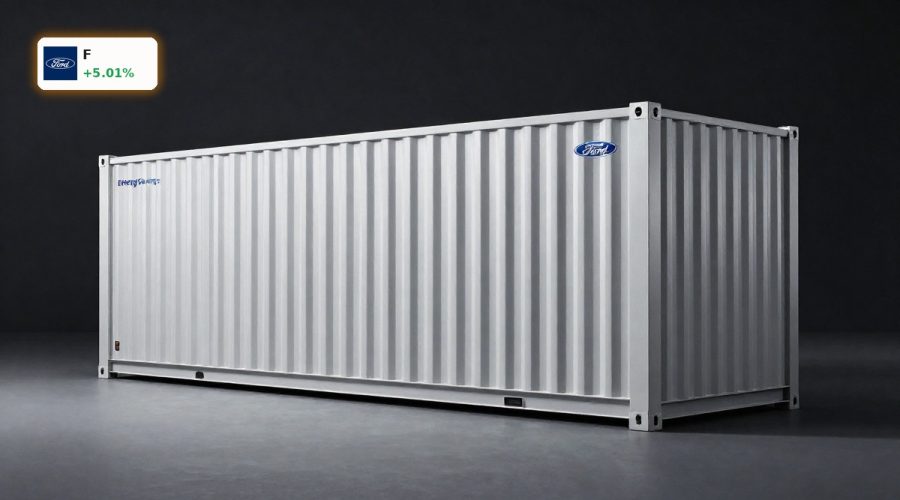
That contract matters because it gives the Ford Energy Strategy commercial validation. Ford’s flagship product is a standardized 20-foot containerized battery storage block designed around long operating life, serviceability, and thermal stability. In practical terms, this puts Ford into a market where customers need backup power, grid balancing, and resilience for industrial sites and potentially for AI-linked data center applications.
How do Tesla and NVIDIA fit in?
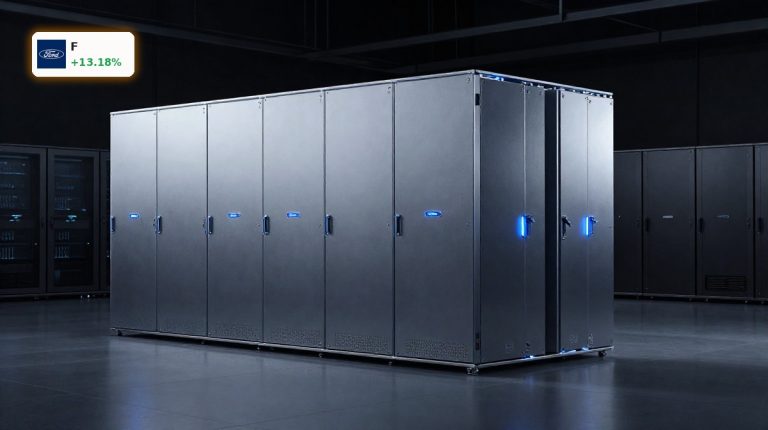
Wall Street’s excitement comes from the idea that AI is now an electricity story as much as a software story. As large compute clusters expand, operators need dependable power and storage to limit downtime and manage grid volatility. That is why Ford is being discussed alongside Tesla, whose Megapacks already serve similar use cases, and indirectly alongside NVIDIA, whose chips are at the center of the AI buildout. Ford is not becoming an AI chip company, but it is being recast as an enabler of AI infrastructure.
Fast Company highlighted that shift this week, noting Ford’s stock surge has little to do with car sales and much more to do with batteries for data centers. At the same time, Barchart argued the recent valuation jump may have outrun the fundamentals, warning that Ford’s core auto operations still face profitability questions. That split explains the current setup: bulls see a higher-margin growth platform, while skeptics see a hype cycle that still needs earnings proof.
Can Ford Pro support the bull case?
The second leg of the thesis is Ford Pro, the company’s commercial-vehicle and services division. Ford is expanding that business in Europe with new models and connected-vehicle tools for fleets. That matters because Ford Pro is already Ford’s most profitable segment, and its subscription-style software and services revenue carries better margins than traditional vehicle manufacturing. Combined with the Ford Energy Strategy, investors are starting to see two businesses that could improve Ford’s multiple over time.
There is also a broader industry backdrop helping Ford’s narrative. Reuters reported Thursday that the GM-LG Ultium Cells plant in Ohio delayed the return of laid-off workers because EV demand remains weak. That contrast is important: while some legacy battery investments tied directly to EV volume are under pressure, Ford is trying to pivot part of its battery footprint toward stationary storage, where demand may be steadier and tied to utility and industrial spending rather than consumer EV adoption alone.
What should Ford investors watch next?
The next test is execution. Ford is targeting at least 20 gigawatt-hours of annual production capacity for Ford Energy, and bullish estimates in the market have pointed to roughly $3 billion in incremental revenue potential if the ramp succeeds. Investors will also watch whether federal manufacturing incentives improve economics for domestically produced cells. Unlike a pure story stock, Ford still offers income support through its dividend, which remains part of the appeal for value-oriented portfolios.
Related Coverage: Our earlier piece, Ford Energy Storage -7.1%: AI Power Boom or Value Trap?, examined whether Ford’s battery pivot is a durable earnings lever or simply a sentiment trade. That analysis remains relevant now because the stock’s latest move makes the debate even sharper for investors comparing Ford with Tesla, Apple, and other market favorites tied more directly to AI or software.
Ford Energy Strategy has clearly become the market’s new lens for valuing Ford, and Friday’s move shows investors are willing to pay more for optionality tied to energy storage and AI infrastructure. The opportunity is real, but so is the need for execution, margin delivery, and follow-on contracts. If Ford can prove this business scales alongside Ford Pro, the rerating may have further to run.
Fazit folgt.